


From Ireland to China: Discovering the World—and Herself
Issue date:2026-07-24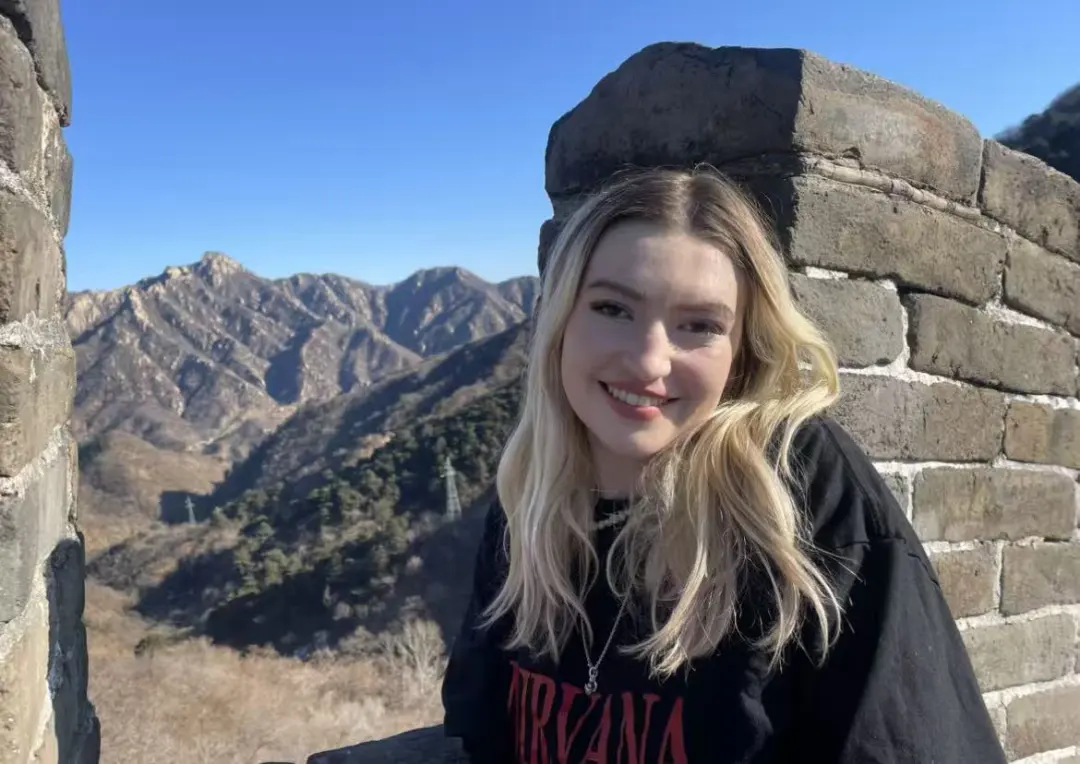
From a traditional girls' school in Cork, Ireland, to the UWC campus in Changshu, China, Cliona Eve Marshall, a member of the Class of 2026, travelled halfway around the world with a simple curiosity: she wanted to see how people in other countries lived and thought, and to encounter cultures she had never known before.
What she did not expect was that her outward exploration of the world would first take her inward.
Living alongside classmates from more than 90 countries and regions led her to consider questions she had never examined closely before: What did it mean to be Irish? Which parts of her culture did she want to share with others? Which traditions deserved to be remembered and passed on?
In trying to understand other people, Cliona gradually came to understand herself. That process of self-discovery eventually shaped another important decision. After graduating from UWC Changshu China, she chose to remain in China and study Politics, Philosophy and Economics at Duke Kunshan University.

Seeing Ireland Anew
Through Different Perspectives
Cliona comes from Cork, Ireland's second-largest city. Locals often joke that Cork can experience "four seasons in one day." Clouds roll in from the Atlantic without warning, rain falls sideways in the wind, and a sunny day feels almost like an occasion for celebration.
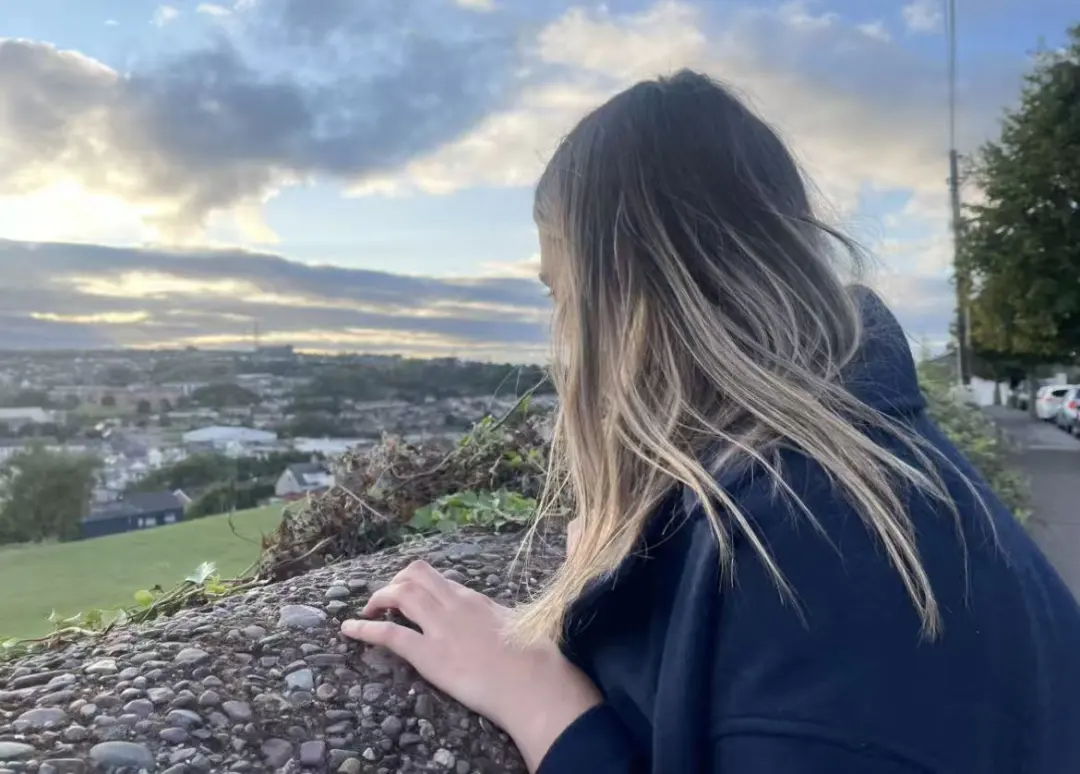
The unpredictability of the weather has also shaped Cliona's approach to life. She is used to adjusting as circumstances change. She does not insist that every plan unfold exactly as intended, and even when things take an unexpected turn, she can usually find something worthwhile in the experience.
Cork's character resembles its weather: changeable and full of contradictions, yet grounded in a strong sense of itself. Corkonians will tell you, with perfect seriousness, that their city is the true capital of Ireland and that Dublin simply claimed the title first. It is a city of fierce pride and easy self-deprecation, home to one of Europe's oldest covered markets, where strangers will happily stop and talk to you at length. It also carries a proud history of rebellion, worn almost like a badge of honour.
Growing up there, Cliona had never felt the need to examine what it meant to be Irish. It was only after travelling more than 8,000 kilometres to Changshu and becoming the only Irish student on campus that what had once seemed ordinary began to look different.
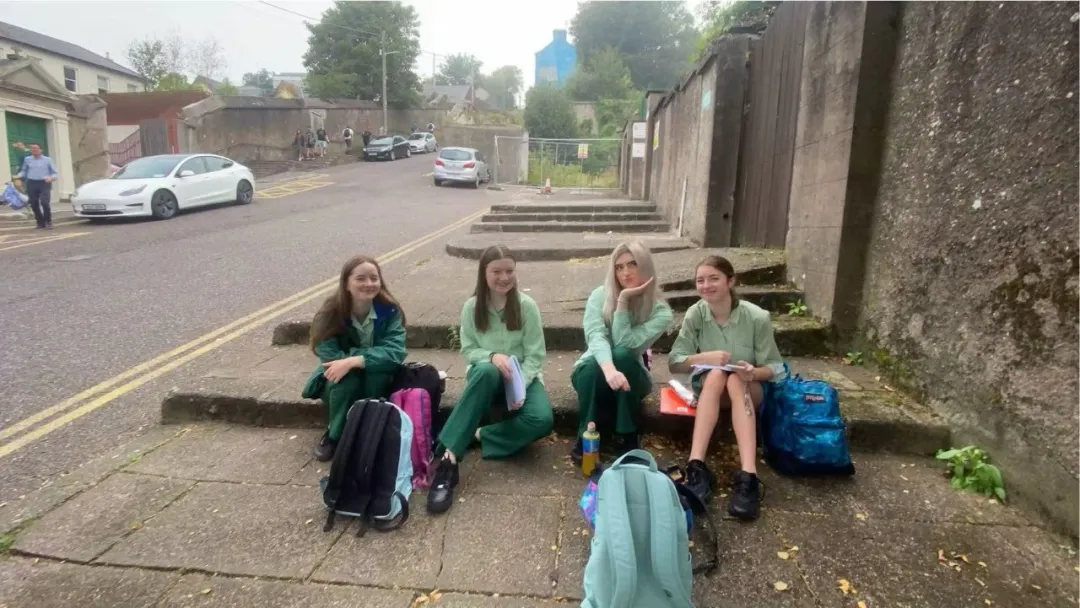
Her classmates were curious about Ireland. They often asked her: What is Irish culture like? What represents Ireland?
The questions sounded simple, but she often struggled to answer them. At times, she even wondered whether she was "Irish enough."
Before coming to UWC, she had felt somewhat removed from her own cultural heritage. In a country where English is spoken by almost everyone, Irish had been little more than a compulsory school subject to her. She resisted attending Irish-language summer camps and saw little practical value in learning the language.
"Whenever someone asked me what it meant to be Irish, I wanted the ground to swallow me up," Cliona recalled. "I always felt my answer wasn't good enough. I didn't have the same cultural confidence as some of my classmates, who could proudly wear traditional clothing, cook food from home and speak their own languages fluently."
Watching the people around her only sharpened that feeling. When classmates called home, they would naturally slip back into their first languages. Some jokes were funny only in the language in which they had been imagined. Sometimes people would stop halfway through a sentence because English could not quite express what they wanted to say.
One Chinese friend once tried to explain why she often said she was "going back to her ancestral home" rather than simply "going home." The Chinese expression did not refer to the house where she lived, nor was it exactly the same as "hometown." It pointed instead to the place where her family's roots lay, even though she herself had never lived there for long.
"We have a word for it in our language," she explained, "but there doesn't seem to be an exact equivalent in yours."
A Bulgarian friend told Cliona that English was the language she used to get things done: precise, efficient and widely understood. But when it came to expressing the emotions and thoughts that mattered most, English was not enough.
After that, Cliona began noticing such moments everywhere: the brief disappointment on someone’s face when they could not find an English word for what they felt.
For the first time, she understood that language was more than a means of communication. It also carried memory, belonging and identity.
"I know that having English as my first language is an advantage. It allows me to move through the world easily," Cliona said. "But I began to envy my friends. Their languages connected them to something deeply their own—something that could never be fully translated."
That realisation transformed the way she saw her own culture.
Instead of asking, "What is the point of Irish in an English-speaking country?", she began to ask: What would we lose if no one spoke Irish anymore?
In UWC's intentionally diverse environment, Cliona unexpectedly found her way back to home.
She began learning Irish again—not only for herself, but because she wanted to share it with others.
During Europe Week in her first Diploma Programme year, she organised an Irish language and culture workshop. Working with classmates from Hungary and Belgium, she developed a session that moved beyond familiar stereotypes and represented their respective cultures with greater care, while highlighting the diversity of European languages.
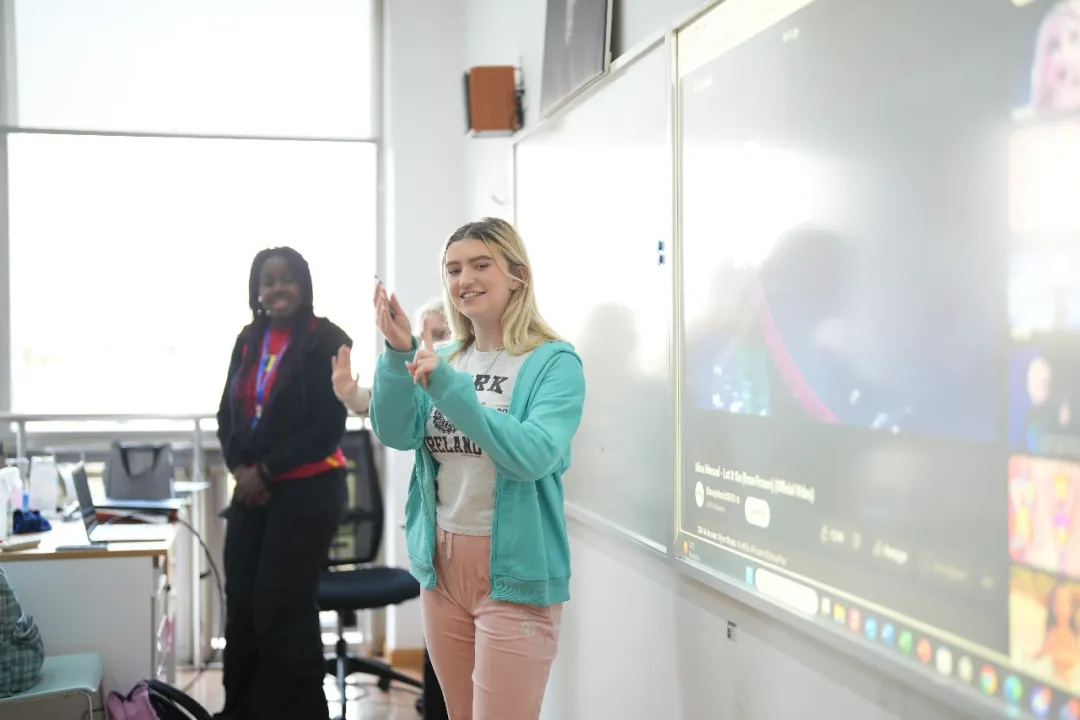
Cliona did not want the workshop to remain at the level of familiar cultural symbols. She explained that Irish is one of only six surviving Celtic languages—a living branch of a language family once spoken across much of pre-Roman Europe.
She spoke about Ireland's proximity to the UK, and how that geography had drawn the language into centuries of historical struggle, during which its use and preservation were repeatedly suppressed.
For Cliona, this history helped explain why Irish had come to feel like "just another compulsory subject." The language had survived repeated attempts to erase it, only to be handed back to generations of students as something to endure rather than something to treasure.
She also showed her audience what Irish looks like today. Groups such as Kneecap perform rap almost entirely in Irish to sold-out crowds, and Harry Potter has been translated into the language. The language that had once seemed lifeless on the pages of a textbook was still evolving, creating and growing. It had never truly disappeared.
"I used to think Irish was my worst subject, and now here I was, standing in front of a room full of people and teaching it," Cliona said with a laugh. "I wanted people to see another side of Ireland—not only the version they might know from Derry Girls. Although," she added, "it is a very good show."
For her, the workshop's most lasting impact came through a Ukrainian classmate. That day, he learnt the Irish greeting Dia dhuit, and he continued using it. From then until graduation, he greeted Cliona with those words every day. Whenever someone asked him why, he would grin and proudly explain that he was saying hello in her language.
If the workshop had given even one person a connection with Irish—if he had learnt, as one might say in Ireland, a cúpla focal, or a few words—that was enough.
At Europe Night, Cliona performed The Cranberries' "Linger" with a classmate in front of the school community. She also prepared traditional Irish stew, tea and soda bread for more than a hundred students, brewing pot after pot of Barry's Tea, the brand her family always kept at home.
In Ireland, "Will you have a cuppa?" is about much more than tea. It means: come in, sit down and stay for a while.
Cliona carried that custom with her to UWC. During long study sessions, a cup of tea made another hour in the library feel manageable. On lively evenings in the common room, tea passed from hand to hand amid games, music and people crowded together on sofas. At two in the morning, during quiet, intimate conversations, tea became an excuse to keep talking.
In preparing food and tea for so many people during Europe Week, Cliona wanted to share the Irish hospitality with which she had grown up—the feeling contained in the words: Come in, sit down and stay for as long as you like.
On UWC Day, she served as one of the event's hosts. Since she did not own traditional Irish clothing, she wore a green qipao, paying tribute to the country in which she was living. Alongside classmates from Ukraine, Bulgaria, Mexico, Vietnam and Eswatini, she also performed the traditional Irish dance "The Walls of Limerick."
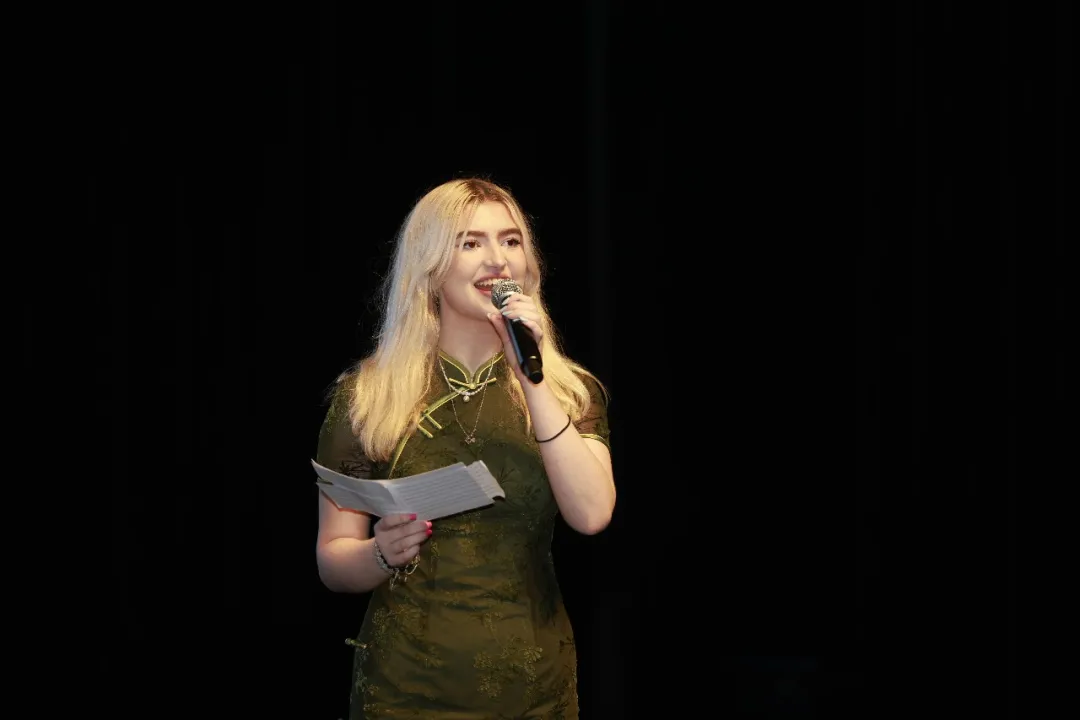
These moments taught her something important: being a cultural ambassador did not require a flawless performance or perfect command of a language.
Culture often revealed itself in the small, vivid details of everyday life in a diverse community: conversations over Irish crisps and butter; tea and scones shared with Australian and New Zealand classmates as they discussed their countries' intertwined colonial histories; or Cliona's habit of apologising so often that her friends joked she was "apologising for existing."
There was no standard answer to what Irish culture was, nor was there one correct or uniform way to represent it.
These ordinary details, she realised, were as much a part of Irish identity as any national symbol or inherited tradition.
"My country is much more alive—and much more beautiful—than I used to realise," Cliona said.

Building Connections
Across Difference
If rediscovering Ireland helped Cliona understand where she came from, life at UWC Changshu China taught her how to connect with people whose experiences were entirely different from her own.
She soon realised that most cross-cultural misunderstandings do not begin in prejudice or hostility. More often, they begin in habit.
In classrooms, residential houses and Zhi Xing activities, conversations would naturally drift back into people's first languages. Chinese students would switch to Mandarin; international students would default to English.
For Cliona, those moments could feel isolating. Yet she was not sure whether she had the right to say anything.
"Who am I to ask people not to speak their own language?" she wondered.
For a while, she remained silent. Eventually, she decided to speak up.
"I can't understand Chinese," she said with a smile one day. "Could we switch back to English? I'd like to be part of the conversation too."
Her classmates' response surprised her. They immediately apologised—not because they had done anything wrong, but because they simply had not noticed that she had been left out. They switched back to English and drew her into the conversation.
"It was such a small thing," Cliona said, "but it completely changed the way I thought about cross-cultural communication."
Looking back, she realised that she and her classmates were not so different. Just as Chinese students naturally spoke Chinese when they were together, international students instinctively turned to English. Retreating into the comfort of one's first language was a common human impulse.
She stopped treating difference as an obstacle and began to see it as an invitation to take the first step.
"UWC changed the way I see differences," Cliona said. "It didn't make them disappear—that is the overly idealised solution we often hear about. Instead, it made differences tangible and human, rather than abstract. Crossing those differences requires more than an attitude of passive acceptance or a set of beliefs we hold privately. It requires action."
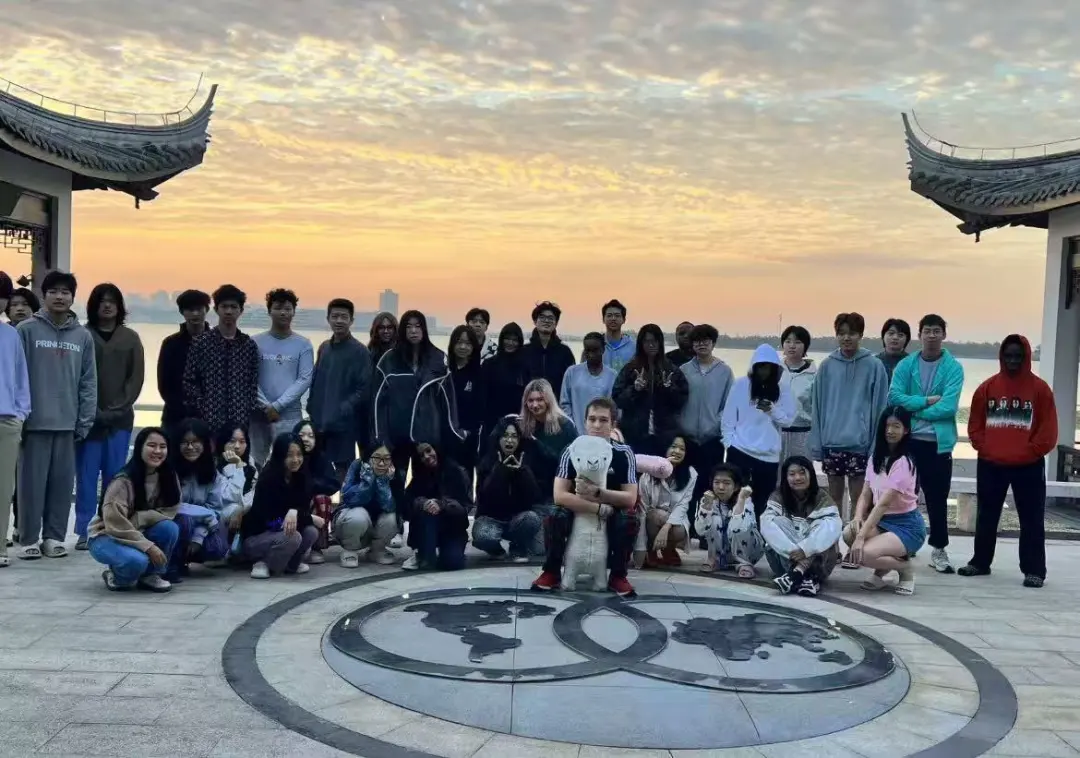
With this idea in mind, Cliona later launched Dinner with Strangers, a student initiative that brought together four students from different countries and year groups to share a meal.
The premise was deliberately simple. Students did not have to work out how to approach someone new or think of the perfect opening question. They simply had to show up.
Cliona had noticed that students arrived at UWC eager to meet everyone, but after a few months, many gradually settled into familiar friendship groups. This was only natural. Still, she believed that many people wanted to form new connections; they simply needed an occasion that made it easier to begin.
Dinner with Strangers offered that occasion. For younger students in particular, it became a relaxed way to meet older students, exchange experiences and find their place within the wider school community.
"I wanted people to realise that stepping outside their comfort zone is worth it," Cliona said. "The awkwardness usually lasts only a few minutes, but the friendship can last much longer."
Four students with little apparent connection might begin the meal feeling uncomfortable, only to discover the beginnings of a close friendship. Not every conversation took off immediately. Some groups never progressed beyond the planning chat. But for those willing to take the first step, the dinners could produce remarkable moments.
Ninety minutes later, the fried rice in the dining hall would be cold and stuck to the plates, but the students would still be sitting around the table, telling stories about home and debating which national cuisine was the most misunderstood.
A Canadian student might defend poutine against the accusation that "chips covered in gravy don't count as real food." A Vietnamese student might point out that many people knew only bánh mì while overlooking dishes such as bánh xèo. An American student might explain why the "Chinese food" many Americans grow up eating bears little resemblance to what Chinese students consider food from home.
By the end of the evening, they would exchange contact details and promise to keep in touch.
Months later, during a late-night conversation, a first-year Chinese FP student told Cliona that this single 90-minute dinner had helped her find a sense of belonging on campus. By the following semester, she had begun organising events herself, hoping to create more opportunities for cross-cultural connection.
Experiences like this helped Cliona understand that building a community does not mean eliminating difference. It means choosing, again and again, to cross the distance between people.

Staying Curious and
Continuing Her Journey in China
Staying in China after graduation had never been part of Cliona's original plan. She had always assumed she would return to Ireland, with Trinity College Dublin as her intended destination.
Her connection with China began before she arrived at UWC Changshu China. Through a sister-city programme between Cork and Shanghai, she received a language scholarship that introduced her to Chinese. But studying a language abroad and using it in everyday life after arriving in China were entirely different experiences.
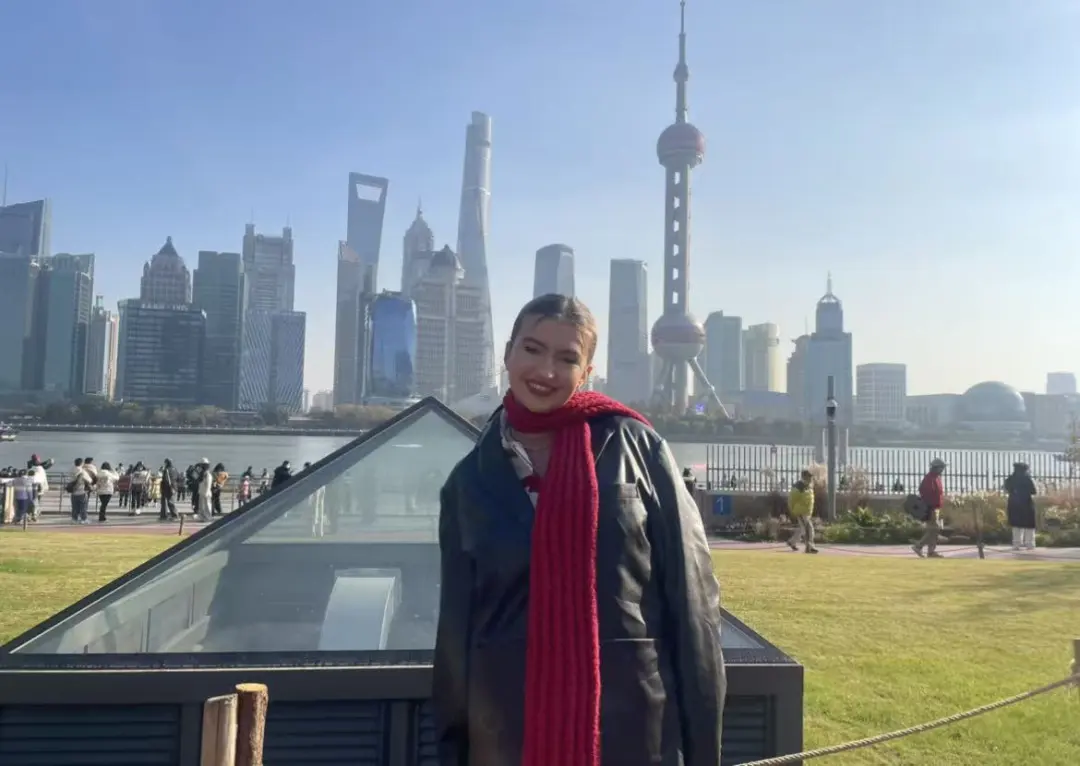
When she first came to UWC, her Mandarin was sufficient only for simple conversations. Chinese classes gave her a strong foundation, but it was the patience and kindness of the people around her that gave her the confidence to keep speaking and making mistakes. Her classmates encouraged her constantly and celebrated even the smallest signs of progress.
The greatest breakthrough in her Chinese came not in the classroom, but in real situations beyond campus.
During one winter holiday, she took a 24-hour sleeper train to Harbin. Throughout the journey, she relied entirely on Mandarin to ask for directions, order meals and deal with the practical details of daily life. The trip was exhausting, but it was also the first time she realised that she could live independently in Chinese.
Cliona often says that her Chinese did not improve through memorisation alone. It improved because the people around her continued to include her and were willing to communicate with her patiently.
As her Chinese became more fluent, her understanding of China also expanded beyond the language itself. She was drawn to the country's long history and rich culture, as well as the warmth and vitality of ordinary life.
She was no longer observing China politely from a visitor's distance. She had begun to let go of the tourist's perspective and to love the place from within the rhythms of everyday life.
In conversations among international students, the subject repeatedly returned to the same observation: how willing people in China were to help. Even when strangers could exchange only a few complete sentences, their interactions were often marked by unmistakable kindness.
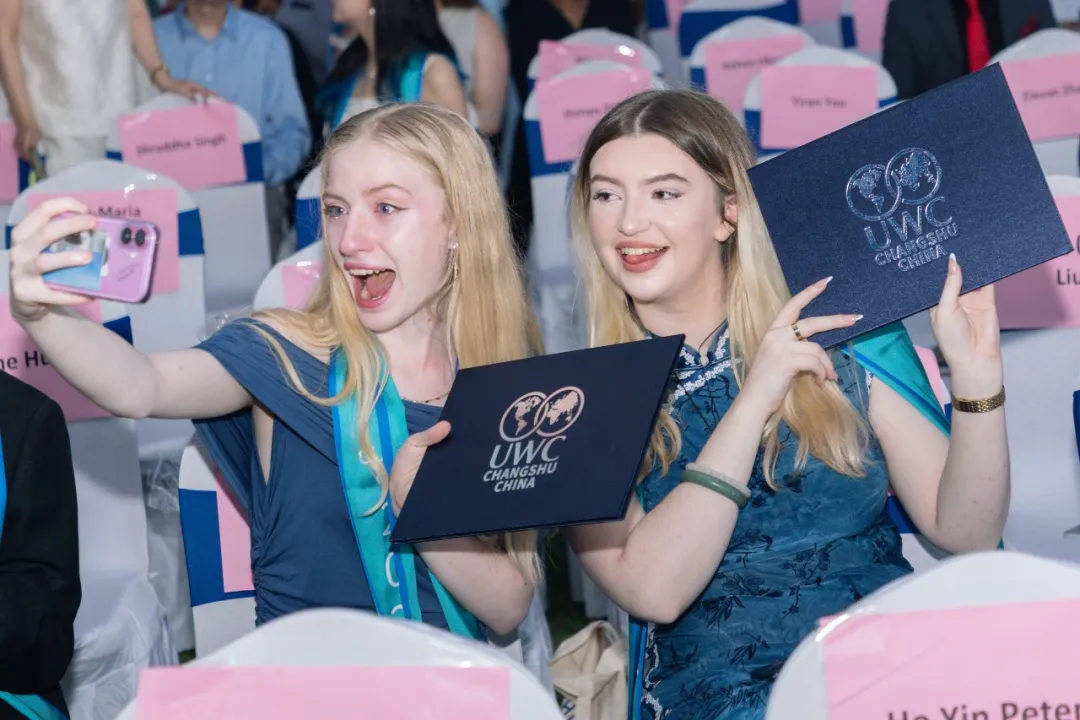
For Cliona, China did not become a "second home" in the sentimental sense. It became something different: a place that continually rewarded curiosity.
Every conversation and every unfamiliar situation reminded her that another culture cannot be understood all at once. Understanding grows through countless ordinary encounters—and through the willingness to keep learning.
"Curiosity helps fill the spaces left by what we don't yet know," Cliona said. "Every conversation gives you something, and every small effort eventually adds up."
When the time came to decide what she would do next, remaining in China felt like a natural continuation of the journey she had begun at UWC.
This autumn, Cliona will begin studying Politics, Philosophy and Economics at Duke Kunshan University. She will continue improving her Chinese while exploring the country alongside students from around the world.
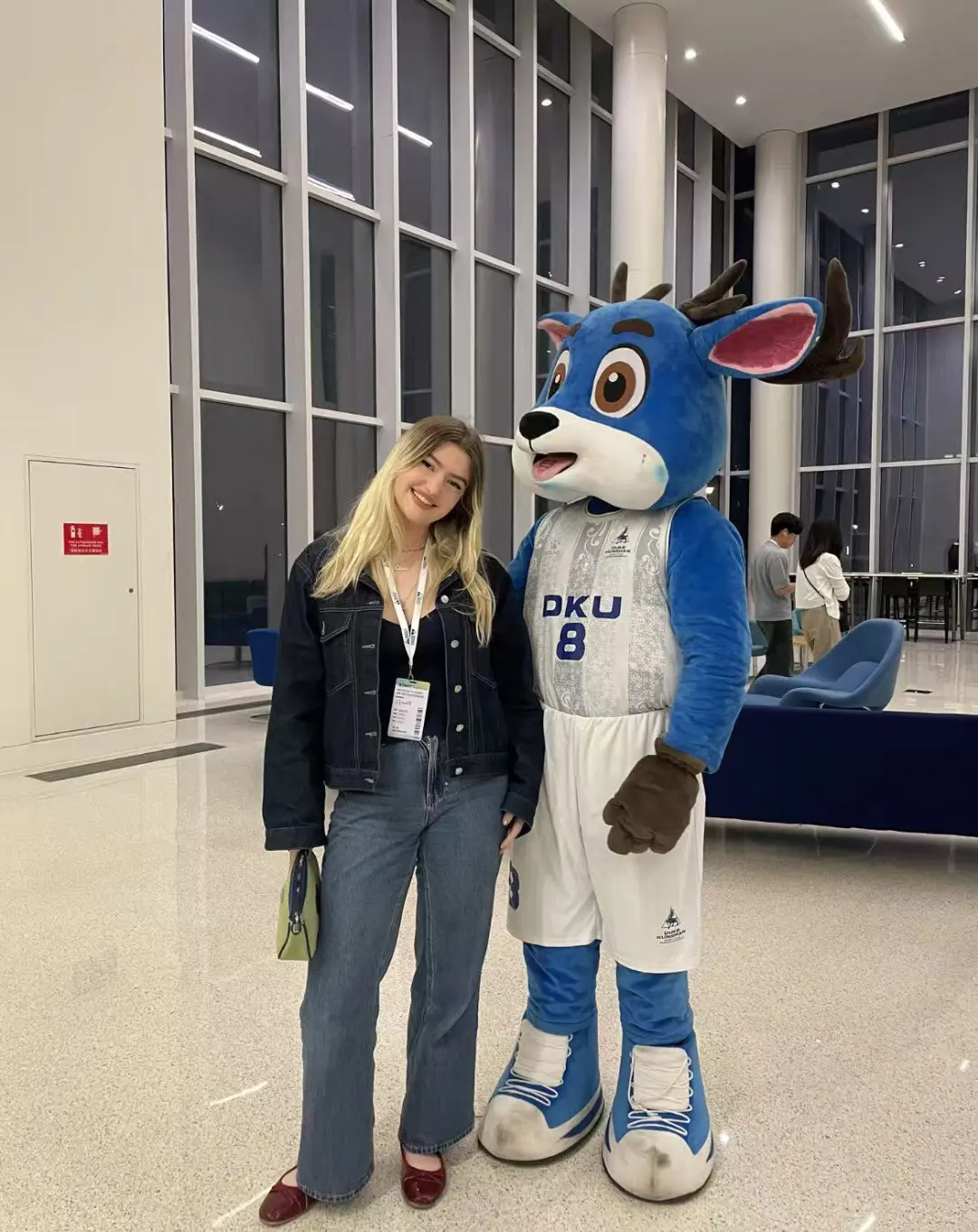
She says the decision grew directly out of her UWC experience. She now genuinely wants to understand how global systems operate, how diplomacy works and how people can build cooperation across cultural differences.
Looking back, Cliona believes that her two years at UWC gave her far more than an international education.
They gave her a clearer understanding of herself, the confidence to embrace uncertainty and the conviction that genuine connection begins with curiosity.
"I understand much more clearly now who I am and the kind of person I want to become," she said. "I want to treat people with kindness, keep learning from those who are different from me, seize every opportunity and do as much meaningful work as I can."
"If I'm fortunate enough," she added, "I'd like to become a bridge between the place I've left and the place I'm going. And wherever I go, I hope to leave it just a little better than I found it."
-End-