

It All Began with "Why": My Journey of Inquiry and Growth at UWC Changshu
Issue date:2026-05-14
In an era when AI generates answers instantly and algorithms increasingly shape how people think, the ability to question deeply and think independently matters more than ever.
Richard Gu's journey at UWC Changshu China began with a simple question: "Why?" Over three years, that question shaped the way he learned, thought, and acted.
This story traces how childhood curiosity grew into a lasting habit of inquiry during his time at UWC Changshu.

The Beginning of Inquiry
If I trace the beginning of my growth at UWC, it begins with one word: "Why?"
When I was a child, I encountered an idiom fill-in-the-blank question: "___帆风顺," meaning "smooth sailing." Most children would write "one sail," but I focused on the number. I first wrote "two sails," then asked my father, "Wouldn't three sails be faster than one?" I had just built a Lego pirate ship, and in my mind, more sails meant more speed.
My father did not correct me immediately. Instead, he sat down with me, and together we searched online. That night, one small fill-in-the-blank question led us to the square sails of ancient Egypt, the bamboo-ribbed sails of traditional Chinese ships, and the three-masted vessels of Spain and Portugal during the Age of Exploration.
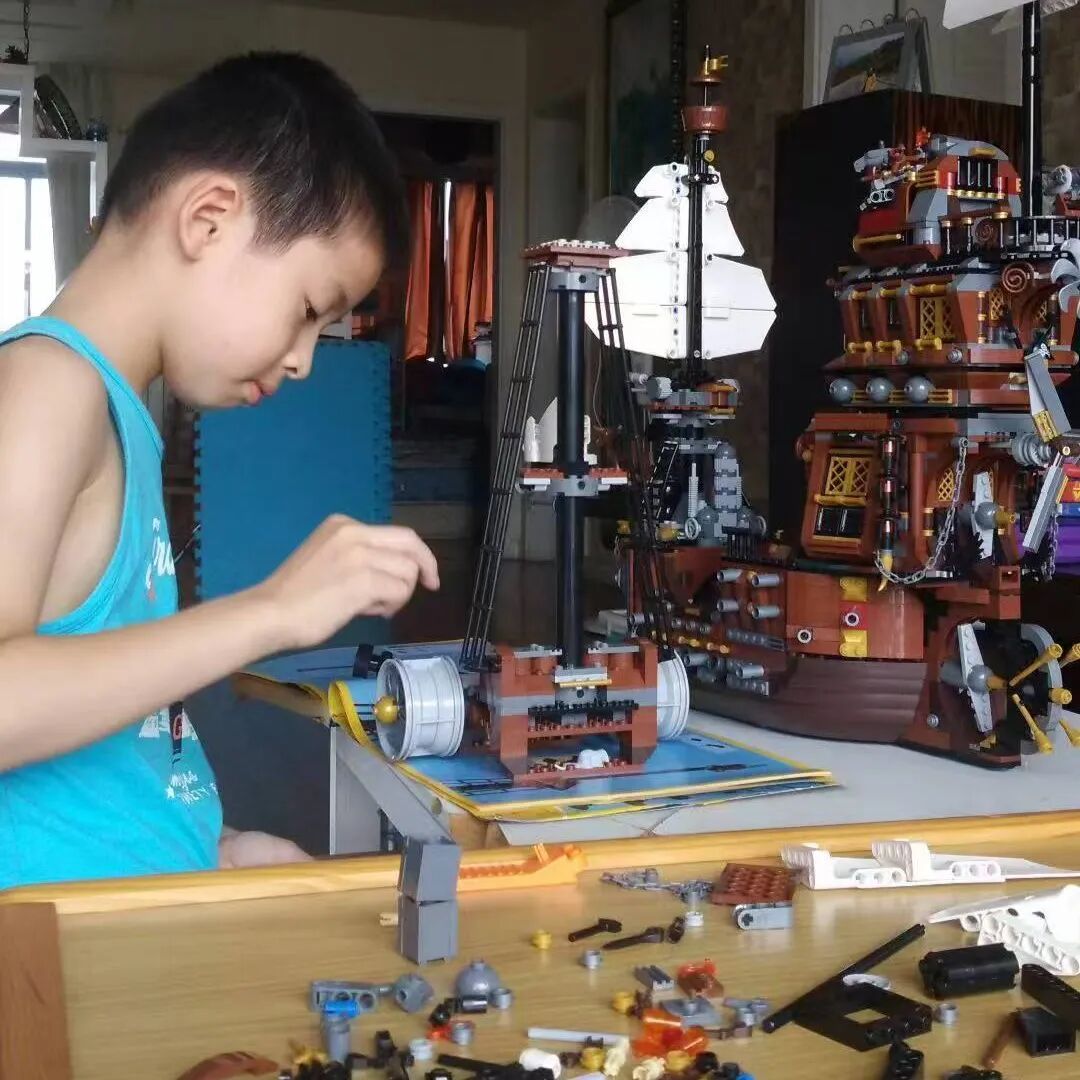
In the end, we returned to the idiom itself. We realized that "一帆风顺" does not mean that more sails are better. It describes a boat catching the wind in the right way. That night, I learned more than an idiom. I learned that a single question could lead far beyond the original problem.
As I grew older, my questions led me into a broader world.
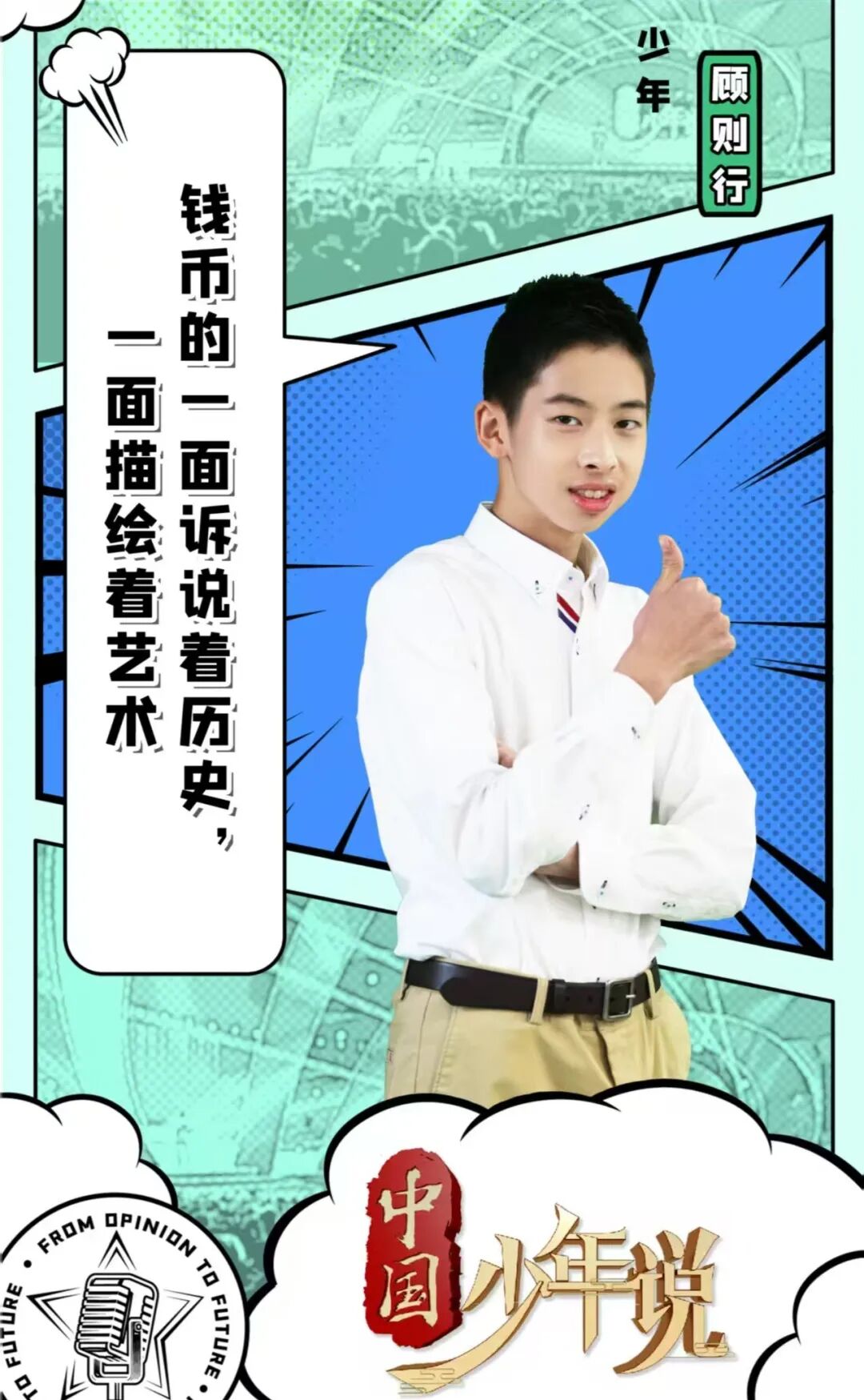
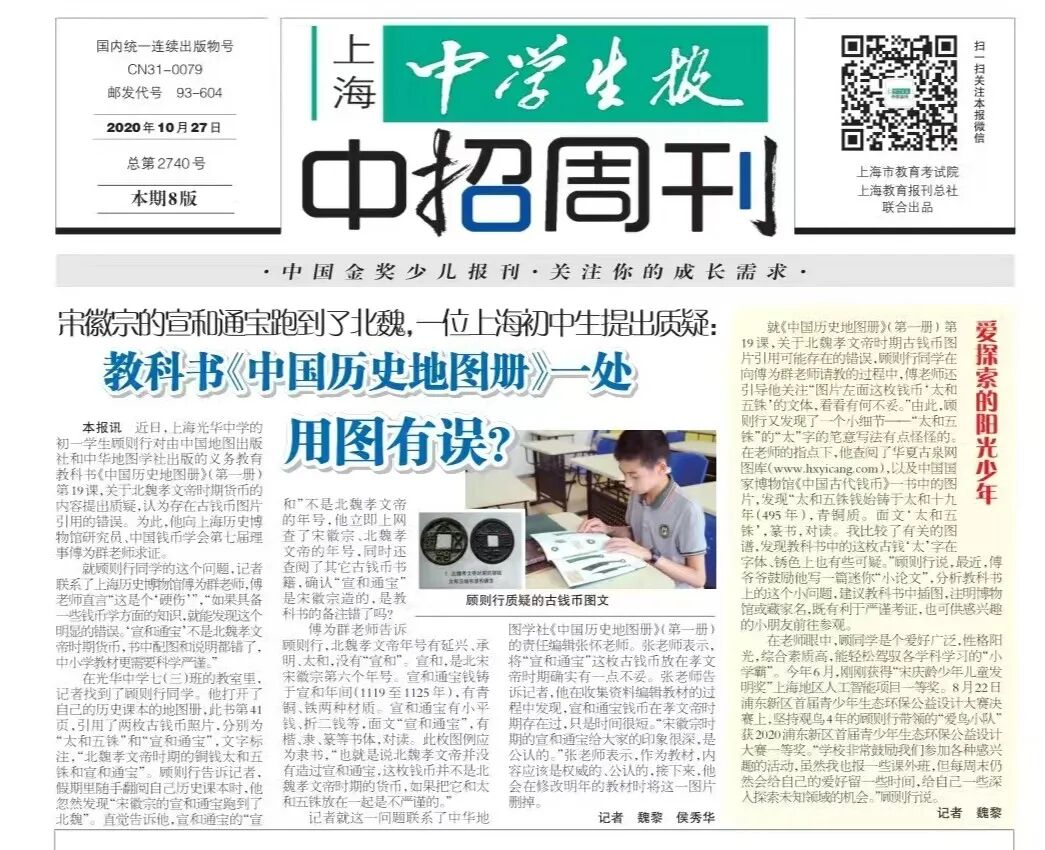
I have always loved ancient coins. Once, while studying, I noticed that a "Xuanhe Tongbao" coin was listed as belonging to the Northern Wei dynasty. I froze: "Xuanhe" was the reign title of Emperor Huizong of the Song dynasty. How could the coin belong to Northern Wei?
I went home, checked historical timelines, compared sources, and consulted Fu Weiqun, a coin expert at the Shanghai History Museum. The conclusion was clear: the coin belonged to the Northern Song dynasty, not Northern Wei.
But that discovery raised another question: Can textbooks be wrong? And if they are, should a student point it out?
I later wrote an article about my research. The article spread far more widely than I expected. For the first time, I saw that a student's question could enter public discussion and even correct an error.
Inquiry at UWC
2.1 Classroom Inquiry:
Learning How Different Subjects Ask Questions
When I arrived at UWC, I realized that questions are not simply shallow or deep. Different disciplines teach different ways of questioning.
This shift began in history class. In my first IB History essay, I focused on events, background, and perspectives. My teacher responded with one question: "But why did this matter?"
That question changed how I approached history. History was no longer just about what happened or who was right and wrong. More importantly, it became about understanding why it mattered: What did this event mean to different people? Why does the same historical fact carry different weight in different narratives?
From then on, I examined sources more carefully, considered the narrator's position, and questioned the limits of interpretation. Inquiry was no longer about finding a single answer. It was about understanding how explanations take shape.
Theory of Knowledge deepened this shift. In class, we often asked:
How do we know?
What is the relationship between experience, language, evidence, and authority?
Why can the same fact be understood differently across knowledge systems?
These discussions rarely ended with answers. Instead, they taught me that many real-world problems do not come with standard solutions. Often, the challenge lies in framing the question itself.
Over three years at UWC, I came to see that education does not simply encourage students to ask questions. It teaches us that each discipline has its own method of inquiry.
History taught me to question significance, evidence, and narration. English and Chinese classes taught me to question the text itself: Why is a word placed here? Why does an image recur? What does the narrator choose to say—or leave unsaid?
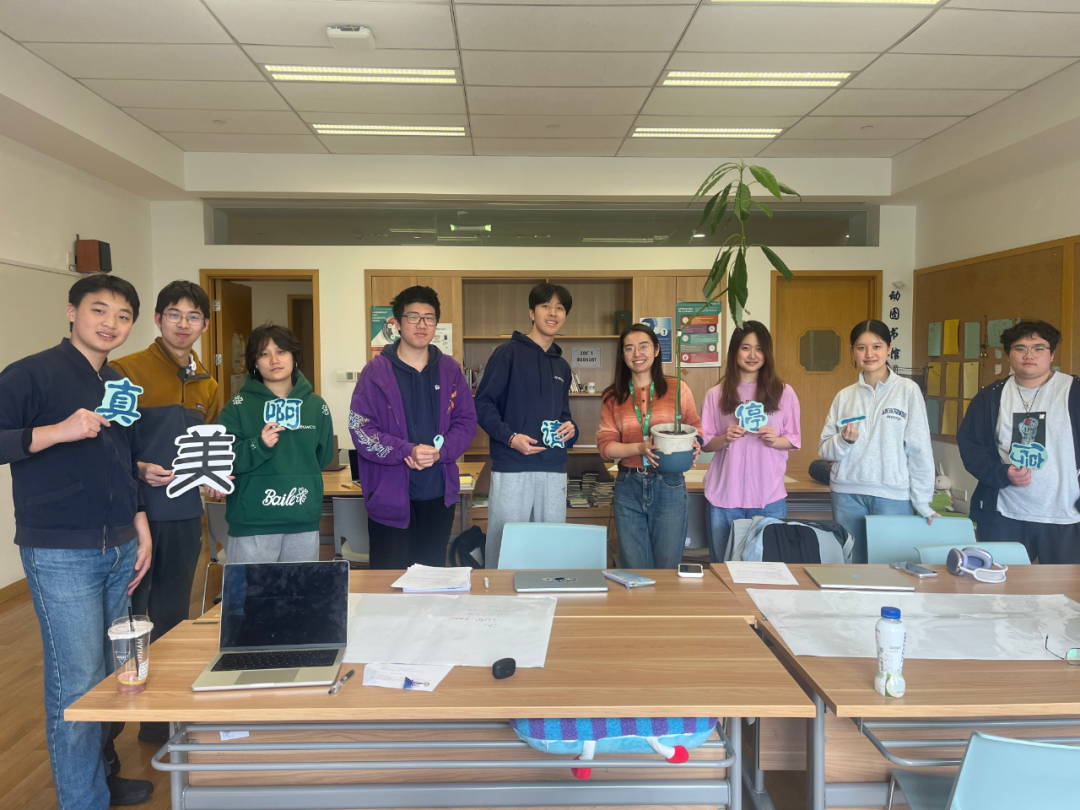
▲ A group photo with my Chinese class
In Physics, questions took another form: What laws govern the phenomenon? Can a hypothesis be quantified, tested, and verified? Mathematics sharpened my attention to structure: Are the conditions sufficient? Is the model valid? Are the derivations rigorous?
Computer Science introduced another perspective. Questions could help us understand systems, but also build them. I began thinking about how technology defines problems, organizes information, and shapes human judgment.
UWC changed the way I thought. I still cared about factual accuracy, but I began asking further questions:
Why does this fact matter?
How is it interpreted?
Within what disciplinary framework does it reveal deeper meaning?
That was when my questions began to take root.
2.2 Interdisciplinary Inquiry:
Questions Beyond a Single Subject
At UWC, I discovered that important questions rarely remain within a single discipline. My Extended Essay on Richard Stallman and the GNU movement made this clear. At first, I approached the topic as history. But as I researched, I realized that the project also involved technology, law, social movements, and ethics.
The question was no longer simply "What happened?" It became: How do ideas shape technological movements, and how do those movements reshape society?
The process taught me that studying a subject is not enough. What matters is building a way of understanding it.
The ClioCards project pushed this idea further. Together with a classmate, I combined historical study, game design, and AI tools to explore new ways of questioning.
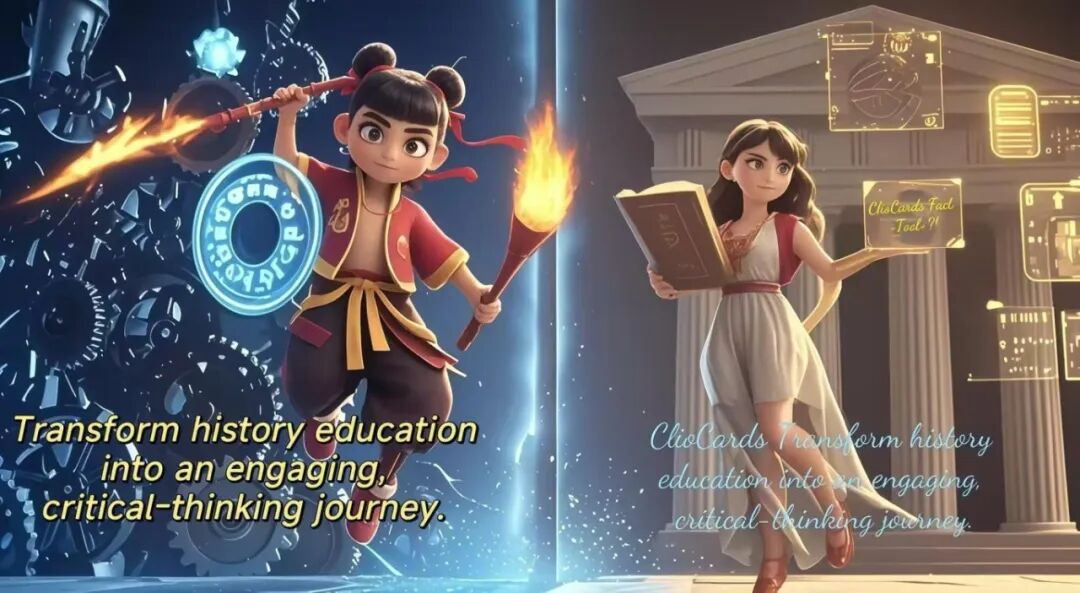
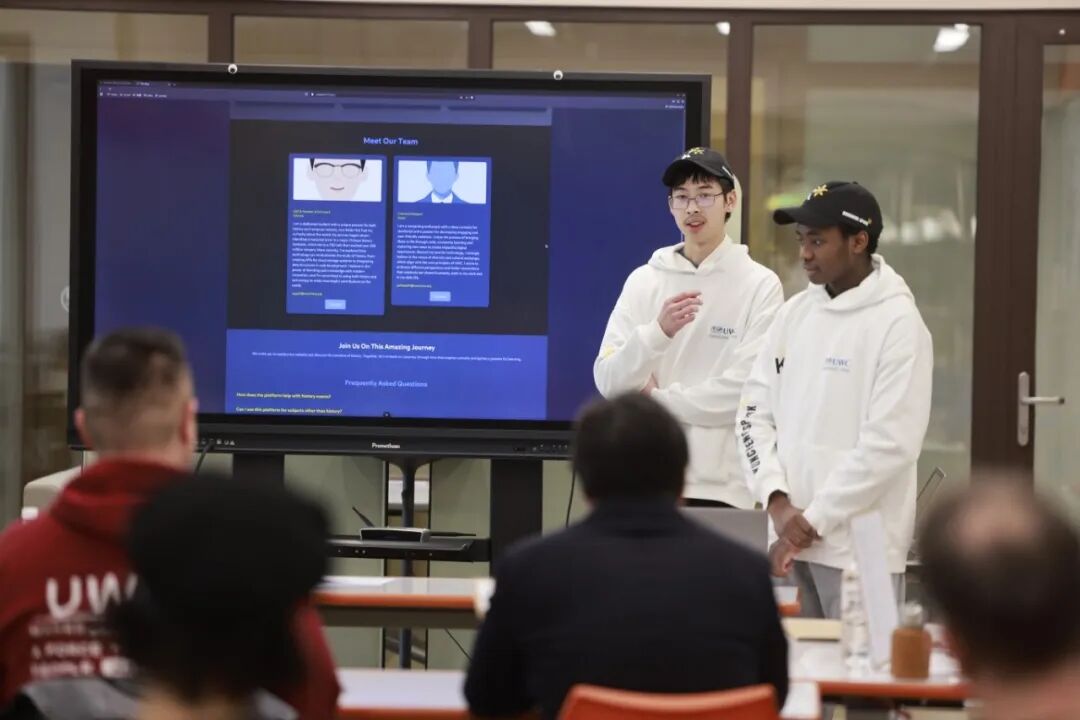
▲ClioCards is a project that my teammate Philani and I launched through Kuncheng Spark. The photo below was taken during our project pitch.
Players are not only recalling events but using thinking tools such as empathy, cause and effect, and historical context to analyze and reconstruct narratives. The question thus shifted from "What is history?" to "Can technology help people think historically more effectively?"
These experiences taught me that strong questions often grow at the intersection of disciplines. They require technical knowledge, historical understanding, ethical judgment, and the ability to connect ideas across fields.
2.3 Collaborative Inquiry: Thinking with Others
At UWC, I learned that questions become stronger when explored with others.
I used to pursue questions alone. Living with classmates from different countries and cultures, I realized that dialogue pushes questions in new directions. Some people focus on facts, others on structure; some care about technical feasibility, others about interpersonal impact. My questions shifted from "What do I think?" to "How can we think about this more fully together?"
I saw this vividly in the Archive project. The project began with a casual conversation at the dining table. Joseph, editor of The Challenger, asked me: "How can we preserve our stories online?"
The question soon opened onto larger issues: digital storage, retrieval, layout, categorization, and how a school preserves its collective memory. Through repeated discussion with editors, classmates, and teachers, I realized that questions grow richer when more people engage with them.
The ClioCards project followed a similar pattern. My partner Philani, from Africa, approached the same historical events with different instincts. Through constant discussion, we began asking how history could be not only remembered but genuinely discussed. Collaboration was no longer just a division of labor. It became a shared inquiry.
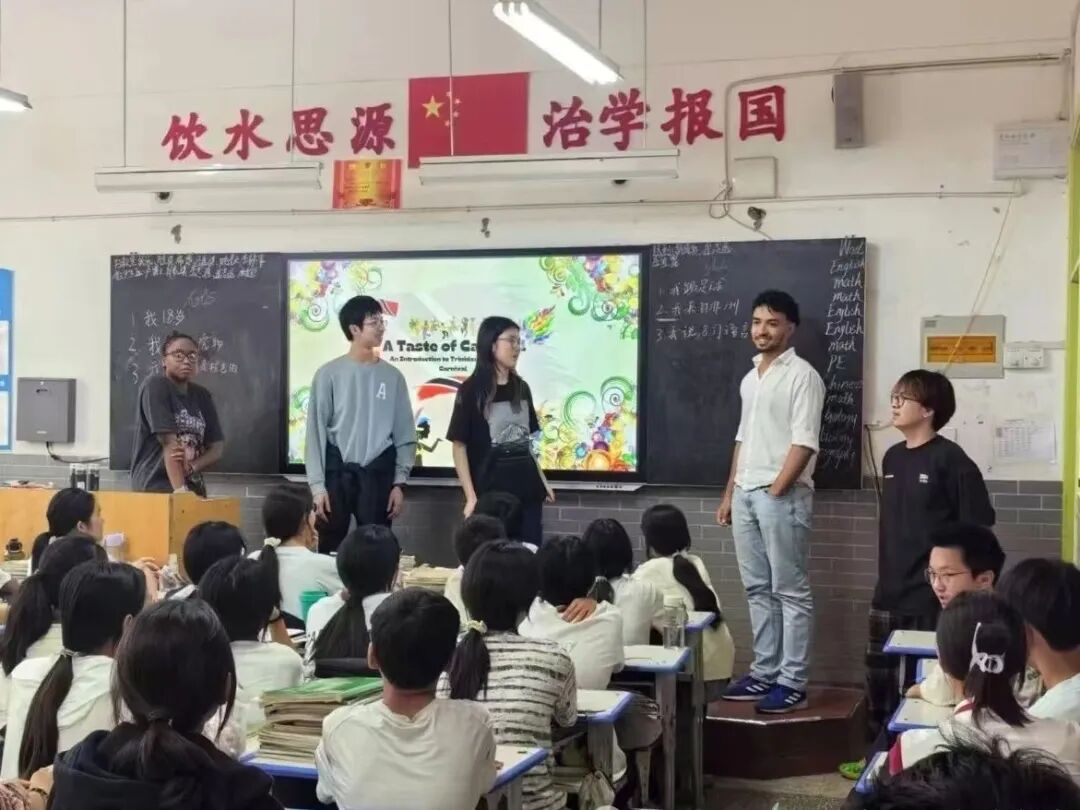
▲ During DP1 Project Week,
my classmates and I visited Siyuan School in Henan
Dragon dance practice taught me another form of collective inquiry. No words are needed, yet the practice constantly asks: how can one person dance a dragon alone? Amid precise rhythms and coordinated steps, each person must find their place.
When one movement falls out of sync, the whole flow falters. Repeated mistakes and restarts taught me that teamwork is not a slogan but a process of adjustment. The question shifts from "Am I doing this correctly?" to "How can we succeed together?"
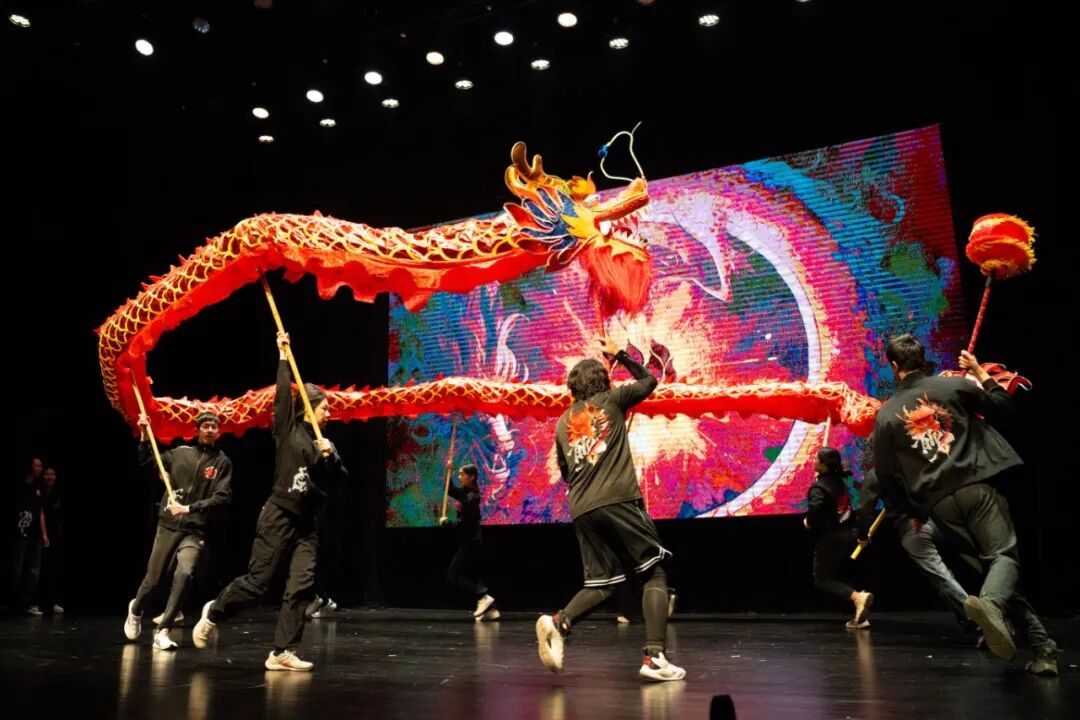
▲ The dragon dance team performing at the 2025 CCE
In Computing Society Zhi Xing, questions changed again. As a leader, I realized that a club must ask not only "Can we complete this project?" but "How can the club consistently deliver meaningful results over time?" If knowledge remains with a few, the club cannot truly grow; if new members remain passive participants, questions cannot advance.
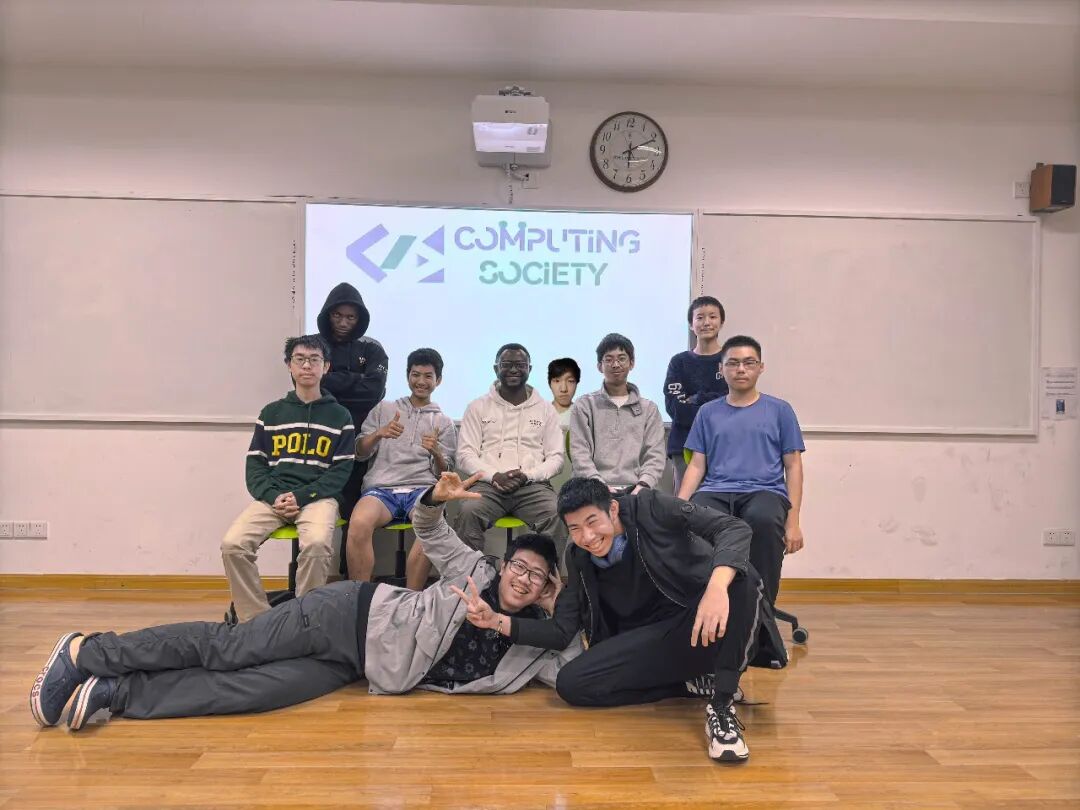
▲ A photo with my teammates during my
DP1 Computing Society Zhi Xing project.
2.4 Inquiry in Practice: Turning Questions into Action
At UWC, I also learned that some questions naturally move beyond the classroom.
This became clear during bird conservation work on campus. At first, my peers and I focused on identifying species. But under the guidance of Ms. Qiu Dong and the Action team, our attention shifted.
Instead of asking only, "What bird is this?" we began asking:
How can we protect birds on campus?
How can we help people notice the ecological impact of the campus environment?
We observed birds, recorded data, and documented collisions. Soon, another question emerged: How can we make invisible ecological problems visible to others?
To address this, I built the Webird platform. The website organized birdwatching records, locations, frequencies, and collision data into a shared database. Club members contributed historical records, while Chen Che worked on design and presentation.
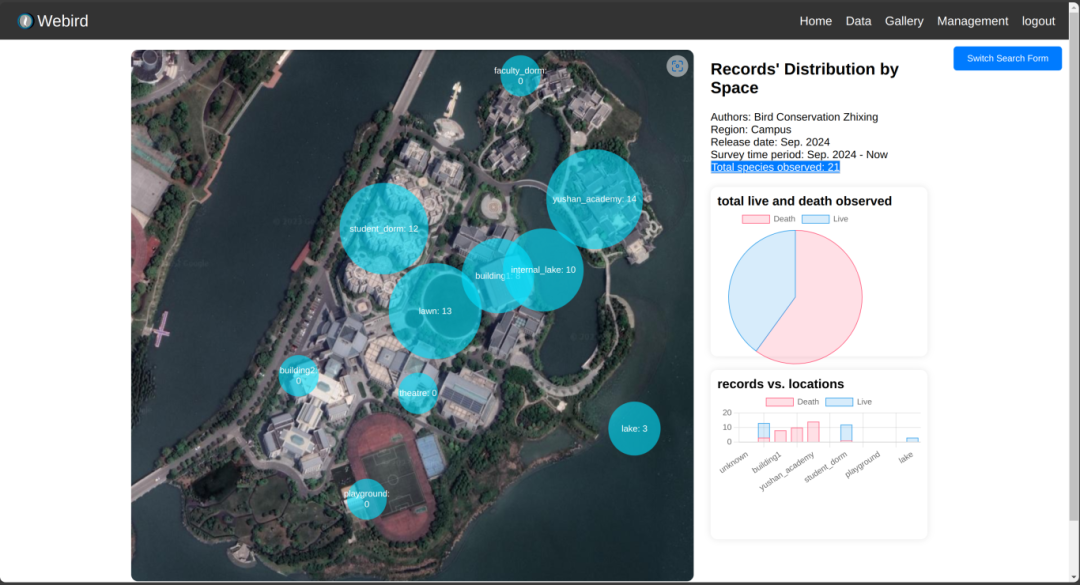
▲Webird Website
The platform did more than store information. It turned scattered observations into a collective ecological record and a tool for environmental awareness. The question shifted from "What did I see?" to "How can we help others see?"
The work also forced us to confront difficult realities. While investigating bird collisions, we recorded more than twenty incidents. Loving nature means not only observing and naming but also confronting human-caused harm. The next question emerged naturally: "Now that the problem is visible, what can we do next?"
Later, we initiated the installation of anti-collision stickers on the campus's transparent glass. Bird Conservation Week was not just about organizing events or exhibitions. It aimed to help more people understand that the campus environment is never neutral; it directly affects the lives of other beings. Practice taught me that action does not end a question. It expands it.
Ideas that seem complete in the classroom grow more complicated in reality. They encounter habits, limited resources, collaboration challenges, and unexpected obstacles. I learned not to force ideals onto reality, but to let inquiry continue through practice, adjustment, and feedback.
Inquiry in the AI Era
The AI era does not lack answers.
Type a question, and a system quickly produces summaries, frameworks, and explanations—often in polished language. In such a time, asking questions matters even more. Answers are now easy to produce. The harder task is knowing what is worth asking.
I have come to see that the art of inquiry I learned at UWC is more than a study habit. It prepares us for the future. In an era flooded with AI-generated answers, we must still look up at the stars while listening to the rules within our own hearts.
A good question does more than produce knowledge. It shapes how we take responsibility, how we relate to others, and how we decide what kind of people we want to become.
-End-
Article and photos by Richard Gu, UWC Changshu China Class of 2026, incoming student at The University of Hong Kong Class of 2030.