


Life, Seen Up Close | My UWC Story
Issue date:2026-08-28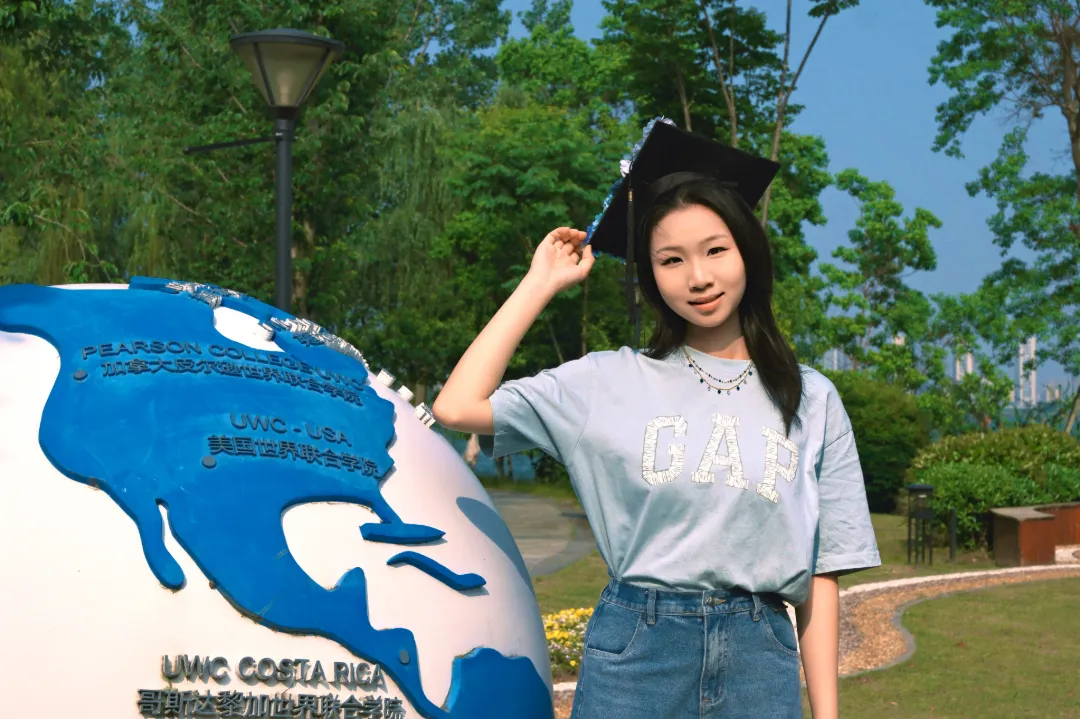
As the new university year begins, UWC Changshu China Class of 2026 graduate Calla Yifan Zhang is starting a new chapter in her education.
A Shanghai native with a dream of becoming a doctor, Calla joined UWC Changshu three years ago from a local bilingual school. Looking back on her time at UWC, she says the classroom gave her a strong academic foundation, but many of the experiences that truly shaped her happened beyond it.
Her curiosity about life first drew her toward the natural world, then inward toward a deeper understanding of herself, and eventually outward toward the lives and experiences of others. At UWC, these experiences became part of her broader exploration of life.

At five, I received a microscope for Children's Day. Suddenly, an unseen world came within reach. I placed a drop of pond water on a glass slide and turned the focus knob slowly, until the blur gave way to tiny organisms drifting through the water. I pressed my eye to the lens and stayed there, reluctant to look away.
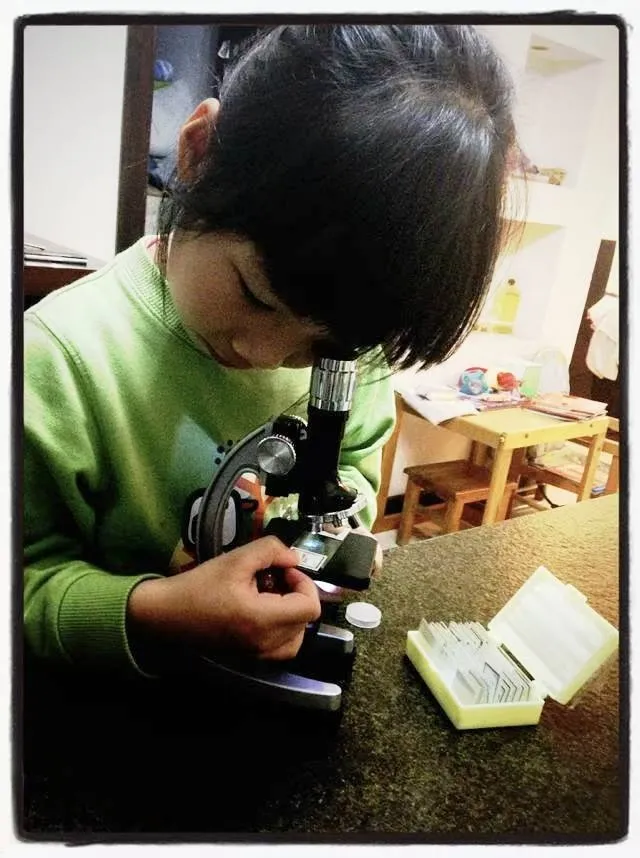
▲My first microscope
As I grew older, I began tracing the living world in crayon. I drew plants, fish, birds, and insects I came across. Sometimes it was a koala curled in sleep; other times, it could be the wake of a seabird skimming the water. Their forms fascinated me, but I was even more drawn to the hidden logic beneath them. Why do birds gather in flocks? How can the same patch of earth give rise to flowers in so many colors?
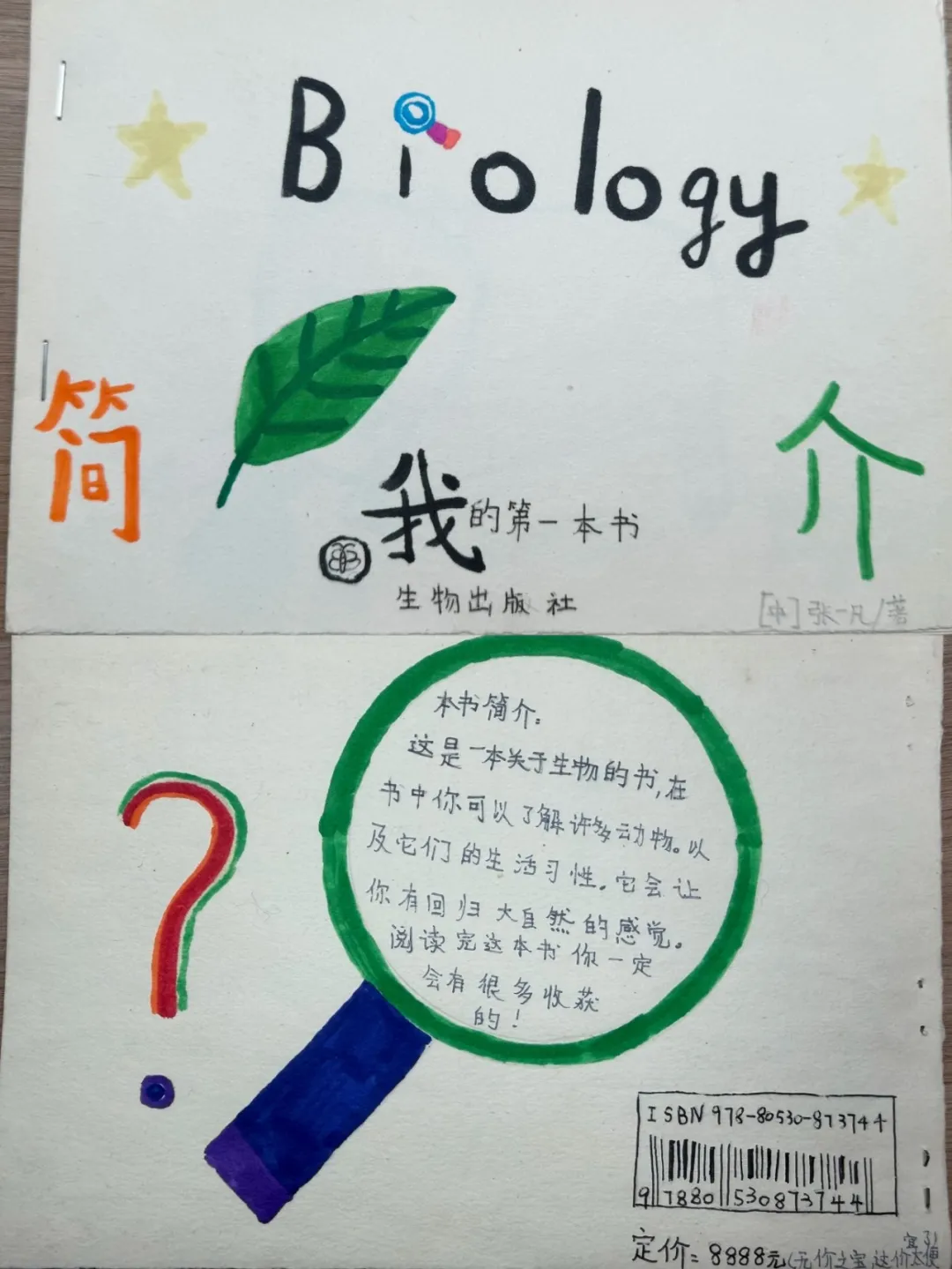
▲A biology book I made
In time, observation was no longer enough. I still remember how I took a needle holder in my hand to pull thread tight. Something about that precision held me—it was my first glimpse into the world of modern medicine and physiology. I had begun with observing, then recording. Now I wanted to touch, understand, and take part. That curiosity stayed with me, carrying me toward questions larger than the ones I had first learned to ask.
Before UWC, I attended a bilingual school in Shanghai, where ideas were never in short supply. We debated, questioned, and challenged one another in class. Yet beyond those conversations, many of us had grown up in worlds much like one another's, shaped by similar cultural surroundings. I often felt that the world I knew was simply too small. I wanted to step beyond it, to encounter a more diverse world, and perhaps find different answers. That desire eventually led me to UWC Changshu.

Once at UWC, the classroom became the first place where my expectations began to change. Learning here never meant simply receiving knowledge. There was room to wander, follow an interest wherever it led, and keep digging once something caught my curiosity.
When I began preparing for my Biology Internal Assessment, I instinctively chose a topic that felt safe, perhaps too safe. But I had overlooked crucial external factors in designing the experiment: I had no choice but to start over.
With no idea where to begin again, I went to my Biology teacher, Brandon, hoping he might give me the "correct" answer. Instead of handing me another topic, he offered a simple suggestion: "Start with something you've noticed in everyday life, probably something you're genuinely curious about."
I thought back to a childhood memory of my grandparents cooking amaranth: the green leaves would slowly release a startling crimson juice. That small memory became the starting point for my new investigation into how temperature affects the permeability of the membrane in Amaranth tricolor leaves. As the red pigment slowly seeped into the water in the test tubes, I finally had the chance to investigate a question that had stayed with me since childhood.
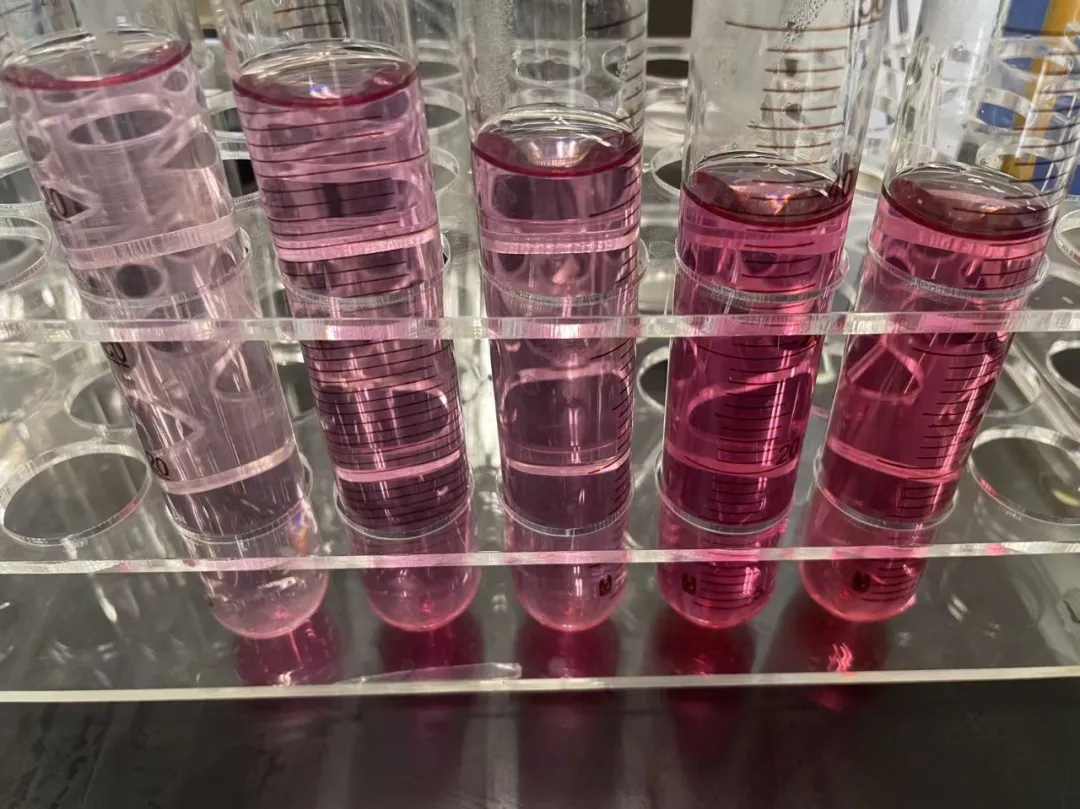
▲Investigating the membrane
permeability of amaranth leaves
I began paying closer attention to the world around me, looking for moments that made me stop and wonder. My curiosity about life no longer stayed neatly within the boundaries of biology.
While reading medical materials, I found myself lingering over several X-rays of patients with scoliosis. In the X-ray images, spines that should have descended straight down the body curved gently to one side. Clinically, doctors often assess the severity of scoliosis using the Cobb angle, a measurement of spinal curvature. But I found myself wondering: could mathematics describe not just the angle of the curve at particular points, but the shape of the entire spine? Could it tell us not only how far a spine had curved, but what kind of curve it had become?
That question eventually became the subject of my Mathematics Internal Assessment. I imported more than twenty X-rays into Desmos and traced the coordinates along each spine, point by point.
As the coordinates accumulated, scattered points began to resolve into continuous curves. For a moment, I thought I had found what I was looking for: translating a medical image into mathematical language.
But then what?
I had curves, but I wasn't sure what to do with them next. So I brought my fitted models to my Mathematics teacher, Harsha. Again, instead of giving me a solution, he gave me a question:
"How do you know the curve you fitted is reasonable, and not simply that it looks right?"
I stopped. It had never occurred to me that even a "proof" might need to be justified.
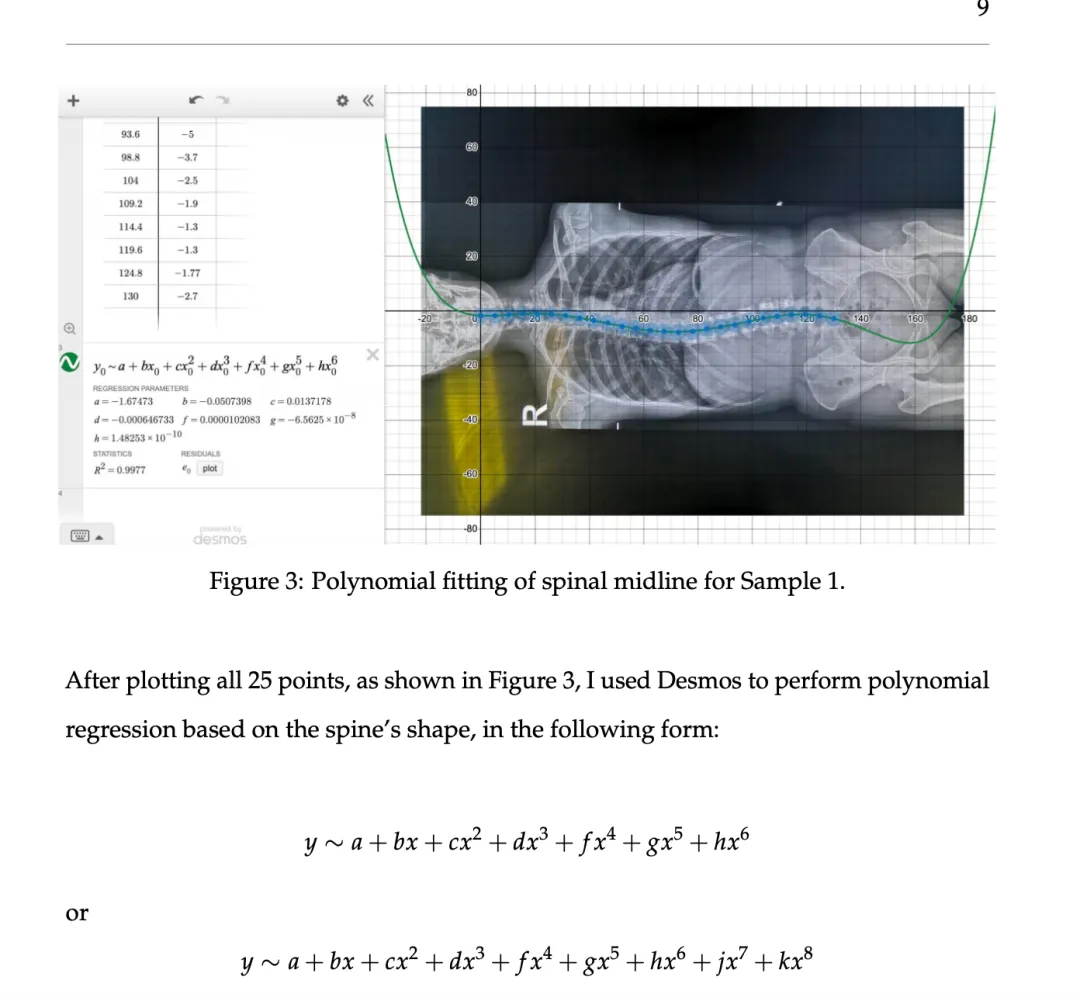
▲ Fitting spinal curvature using functions
for my Mathematics IA
Harsha then introduced me to differential equation analysis, which gave me a way to examine whether the curve changed smoothly. More importantly, he kept pushing me to look beyond the function itself and explain why the method behind it made sense. With his guidance, the question eventually became my investigation: "Modelling Spinal Curvature and Comparing with the Cobb Angle to Assess Scoliosis Severity."
I had imagined that my exploration of life would remain somewhere between the laboratory and the world of mathematics. Only when experiences beyond the classroom began to unfold did I realize that I was not merely observing life. I, too, was part of its story.

I have loved performing since I was little. I have always loved stepping into different roles, standing beneath the lights and telling someone else's story as if, for a moment, it were my own. But the stage almost always involved singing, something I had never felt confident doing. During junior high school, I auditioned for several musicals and never made it past the first round. Eventually, I set that dream aside and stopped talking about it.
Even after I arrived at UWC, I kept my love of performing to myself. I rarely mentioned it, thinking I had left it behind. Then one day, in the common room, Yolanda, whom I met on UWC Selection Day, held out a poster to me.
"Rhinoceros in Love. There's a character named Lily who feels just right for you! Come try?"
At our first rehearsal, we sat in a circle and took turns reading our lines. It had been so long. Halfway through, my voice tightened and began to tremble beyond my control. The words barely left my mouth. Yolanda paused for a moment.
"The emotion was right," she said. "Try it again. This time, forget the script. Look at me."
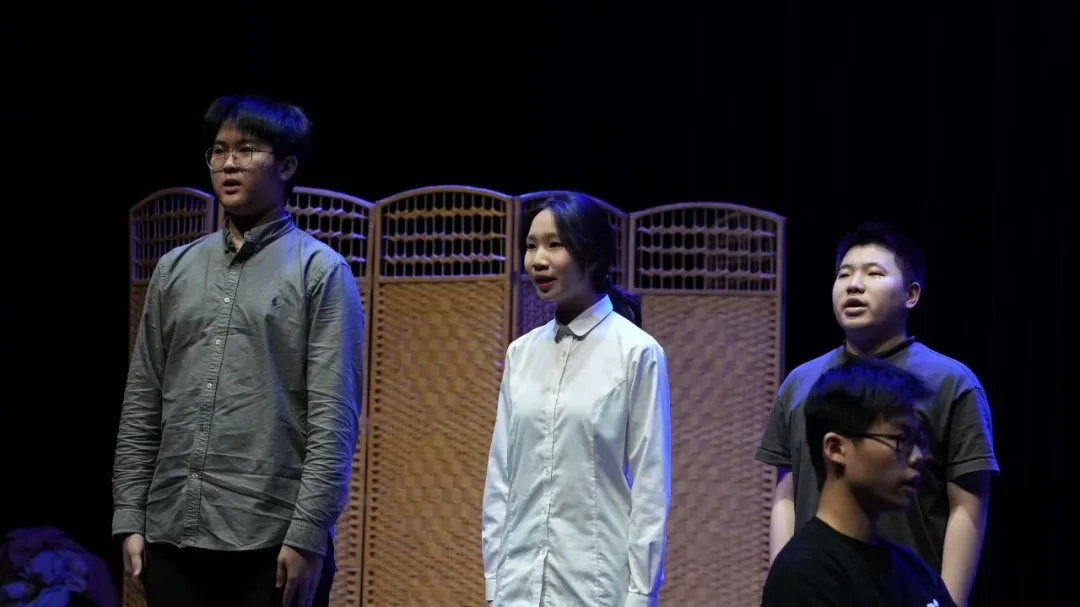
▲ Playing Lily in Rhinoceros in Love
After rehearsal, a message from her appeared on my phone: "I didn't see you acting. I saw Lily speaking."
Something in me shifted.
The part of myself I had tucked into a corner began to unfold slowly. When the first stage light shone on me, I felt almost dazed: returning to the stage felt less like starting again than finding something in myself that had never really left.
After that, whenever a new production was in the works, my friends came to me first, often with a role already in mind.
That sense of safety soon extended beyond the stage. Several classmates studying film invited me to take part in their short films. I still remember how, when the camera turned toward me, my shoulders instinctively drew back, and then, almost without noticing, slowly relaxed as I let the lens settle on my face.
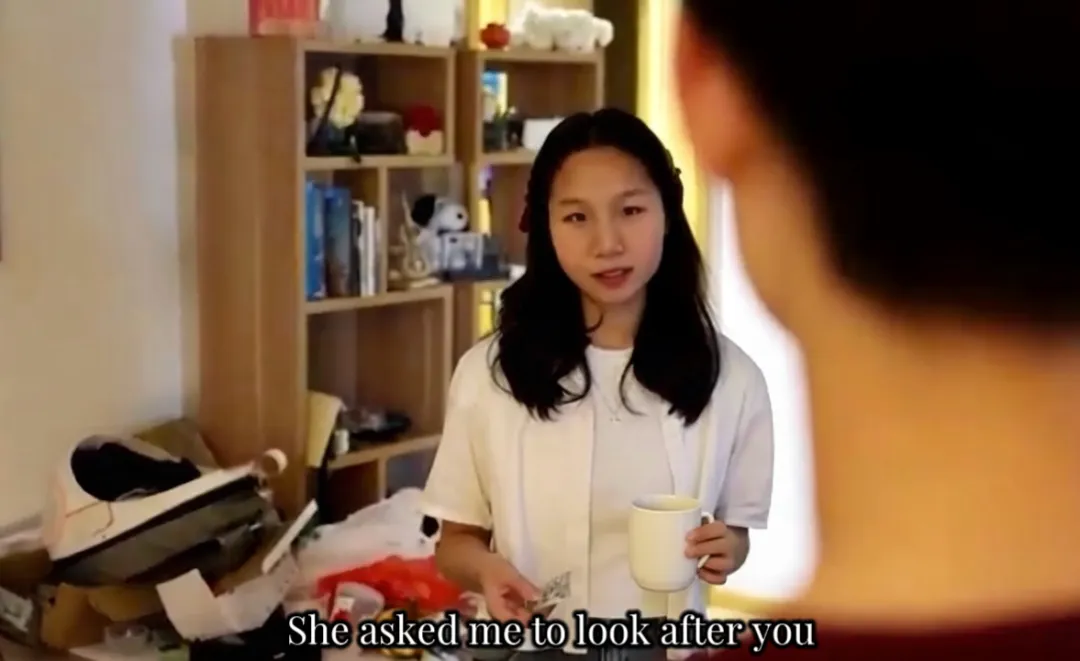
▲ Acting in the short film
The Longest Autumn
At UWC, I found more than opportunities to return to the stage. I found friends who were willing to believe in me before I had fully learned to be confident in myself. On that stage, my steps still faltered and my breath still caught, yet somehow, I had never felt more alive. When I stopped trying to be a flawless performer, I found the courage to allow myself to be imperfect.
I found something similar in Dragon Dance. I had never imagined that dragon dance would become part of my life. It had always seemed too traditional, quite different from the diverse and open UWC experience I had pictured for myself. But after several invitations from friends, I finally gave it a try. At first, I carried the dragon ball, spending most of my time practicing the running patterns and movements on my own. With few chances to rehearse alongside the full team, I still felt a certain distance between myself and everyone else.
However, that sense of distance disappeared during our first CCE performance. The drums thundered across the stage as the golden dragon twisted and surged to their rhythm. My foot slipped, and I fell hard onto the stage. As soon as the performance ended, my teammates turned back and gathered around me. The hands that had been gripping the dragon sticks now hovered carefully beside my shoulders as they bent down to ask whether I was hurt.
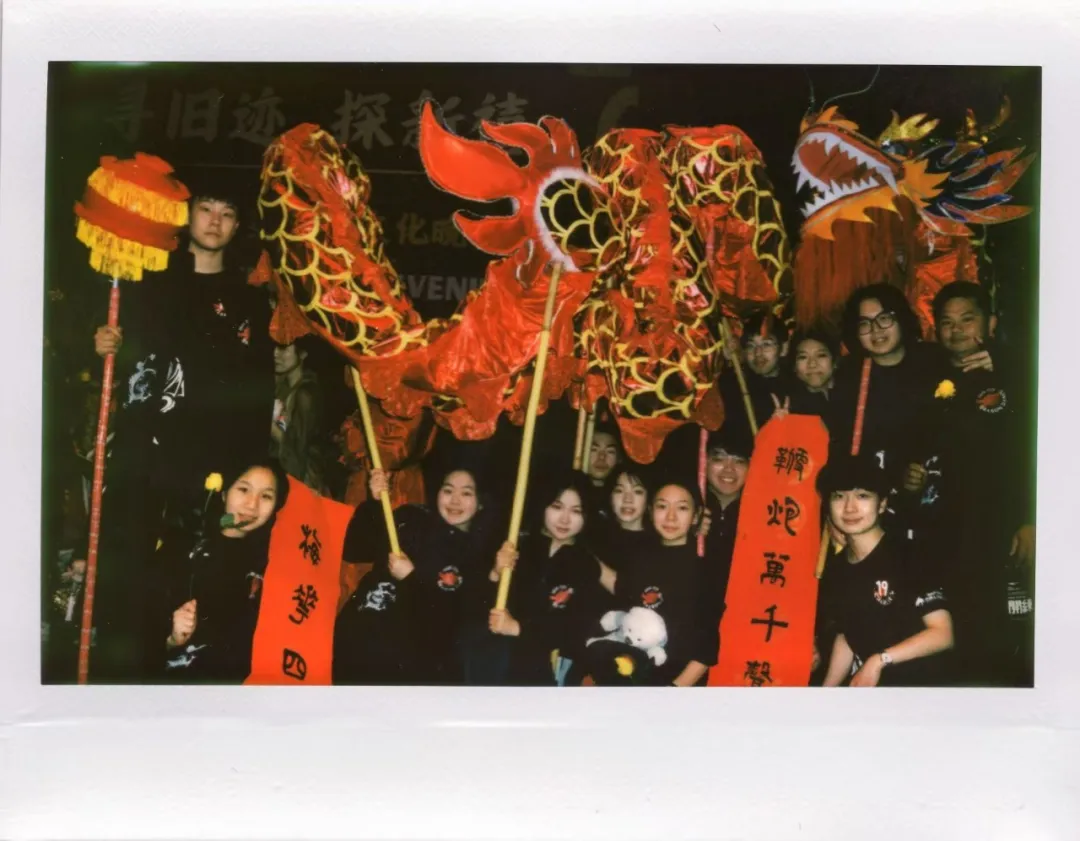
▲The Dragon Dance team at CCE 2025
Later, I moved from carrying the dragon ball to performing as part of the dragon's body. From the tenth-anniversary event to graduation, I took part in almost every performance across campus. The dragon, never part of any plan I had made for myself, wound its way through my time at UWC.
Not every new experience became something I wanted to hold on to. Kayaking gave me a different answer.
Having competed in rowing at the Shanghai Games, I had assumed kayaking would come easily. Instead, I could never quite find the rhythm. All I found was the unfamiliar feeling of being off balance. Kayaking gave me another way to explore who I was: not always by adding another experience or challenge, but by knowing when to let one go.
At UWC, my life rarely followed the path I had planned for it. I started to make room for answers different from the ones I had expected. Some things stayed and settled into me, while others slipped away. Sometimes life takes the long way round, and the world begins to look different somewhere along the way.
The support I received at UWC quietly shaped the direction of my life. If others had once helped lift me up, could I do the same for someone else? On stage, I had stepped into a character and felt others' emotions. Beyond the stage, I wanted to listen to the stories behind the lives of people I had never met.
During Impact Week in my FP year, regular classes were put on hold. We were encouraged to engage with the people and places around us. My friends and I made our way into the neighborhoods of Changshu. Through my friend Aria, we met Ms. Xuehua, a teacher who had long worked with the local Women’s Federation. She connected us with several local families facing difficult circumstances, and we began visiting them one by one.
I still remember one family we visited. Certificates and awards covered the walls of their small living room. But when the conversation turned to the future, the room fell quiet. The mother lowered her eyes, rubbed her fingers together, and finally spoke.
"For now," she said, "we're just trying to get through what's in front of us."
Many of these families had once lived peaceful and contented lives until an unexpected illness disrupted everything. A surgery could consume years of savings. Plans that had once seemed possible had to be set aside.
For years, I had studied life through textbooks, and somehow came to think that once a wound had healed, the illness was over. Only when I sat in those living rooms did I begin to understand: an illness does not end at the boundaries of one person's body.
We wanted to do something, so we worked with several other ZhiXing groups to organize charity markets. Stalls sold handmade crafts and snacks, and all proceeds went to support the families we had met. People moved through the market throughout the day, and many stopped to listen to the families' stories.
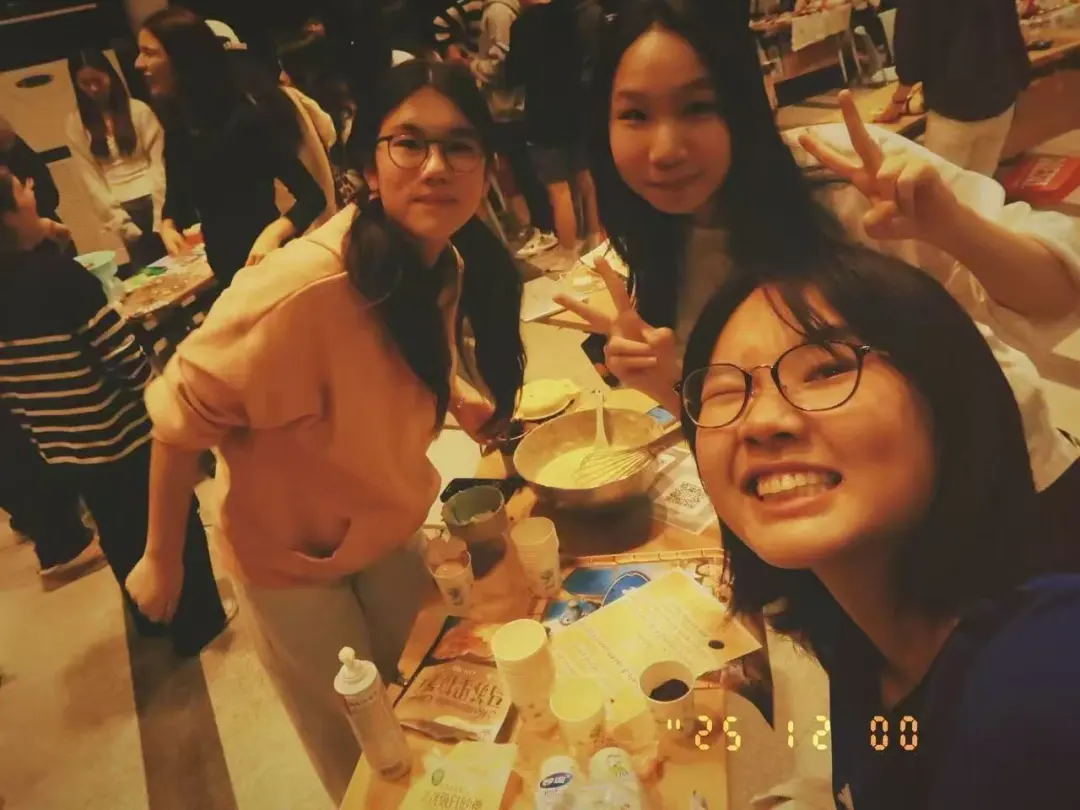
▲ Selling waffles with friends at a Charity Market
But a few hours later, the crowds thinned and the stalls came down. I felt proud of what we had raised, yet alongside that joy was a sense of helplessness. A charity market could end, while life could not. Medical bills and school expenses would still be there long after we had packed everything away.
As we visited more families, we gradually realized that one-off efforts could only go so far. By DP2, we applied to start a ZhiXing project of our own: Island to Infinity.
At UWC, a project does not have to begin as a perfect plan. If you have an idea and are willing to turn it into something real, the school offers resources and funding. That openness gave us the confidence to take on a reality far more complicated than anything we could neatly solve. What began as a team of four slowly grew into a social service project that we continued building.
Over time, the initial distance between us and the families gradually gave way to trust.
On one visit, we were talking with a mother about her work in clothing and textiles. Almost casually, we asked, "What if we made a batch of House hoodies together? We could start with my House, Ohana."
To our surprise, she immediately said yes. In the weeks that followed, messages moved back and forth as we discussed fabrics, colors, prints, and all the small details that would eventually become the finished hoodies.
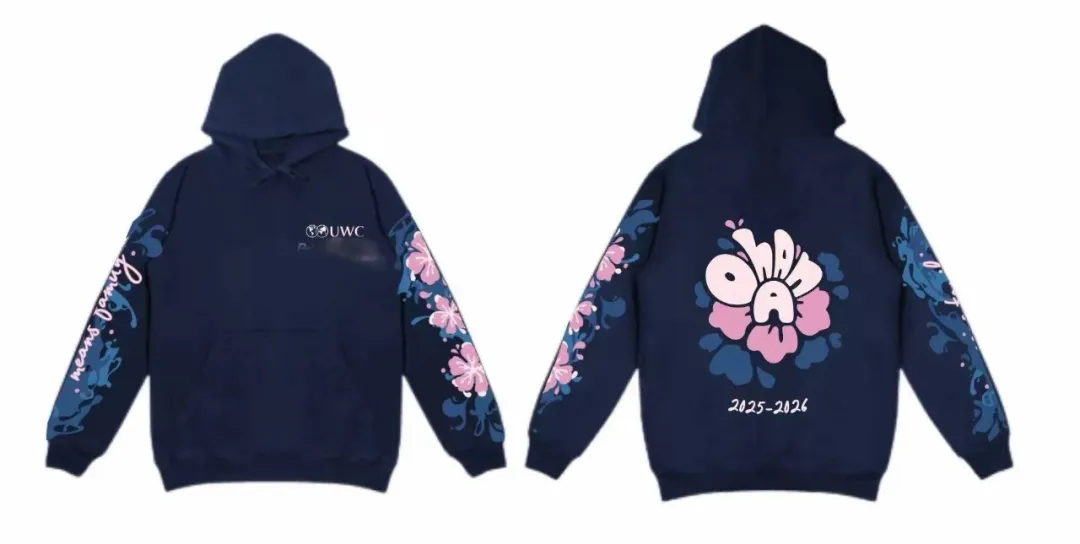
▲2025–2026 Ohana House hoodie design
When they finally reached our housemates, they carried different meanings in different hands. For us, the hoodies held memories of our house; for the people who made them, they carried the traces of their own hands and craft. Almost without intending to, we had moved from simply offering help to creating something together. Her craft became a connection between our campus and the wider community.
On weekends, we also tutored children from the families we visited. One girl kept getting stuck at the same step in fraction calculations. I tried explaining it in different ways. Suddenly, her pencil stopped above the page, and she looked at me in disbelief. I nodded.
She told me it was the first time a "teacher" had explained the same thing to her again and again. I watched her pencil hesitate, then touch the paper once more. I thought of Yolanda, and how she had once steadied me when my own voice trembled. "Take your time," I told her.
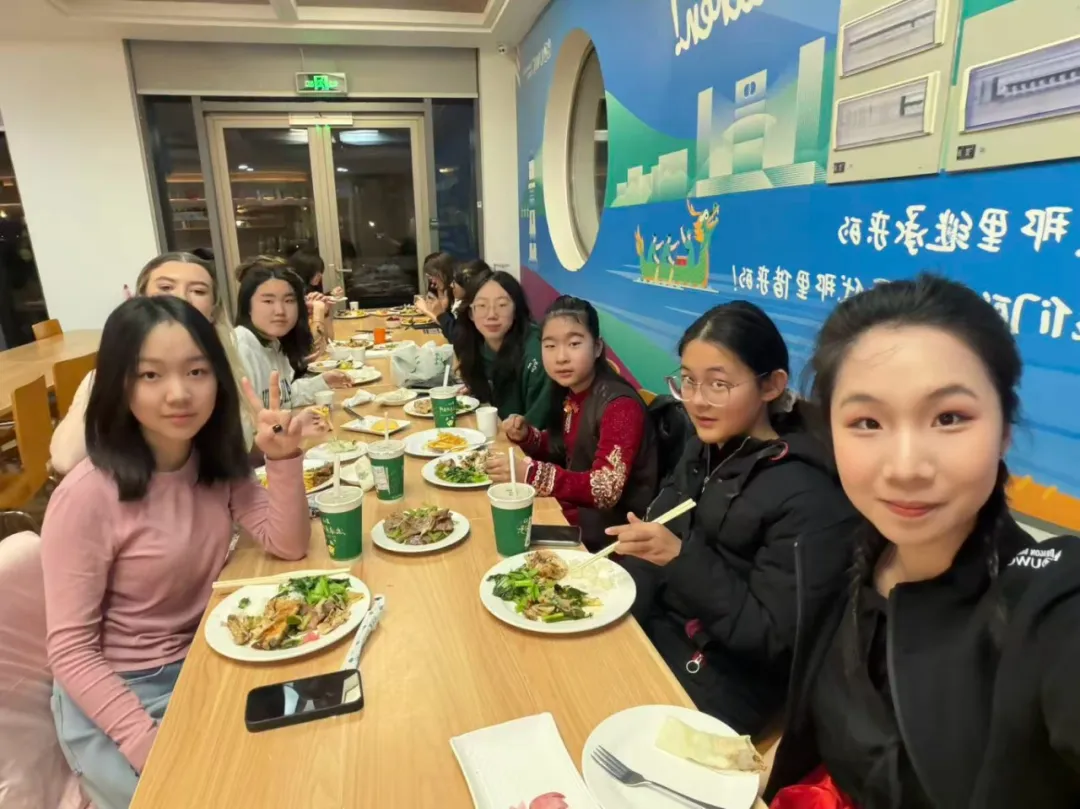
▲Inviting the children to campus
for CCE and a shared meal
Later, her father told me that those tutoring sessions had not suddenly improved her grades. But something had changed: she no longer resisted math in the way she once had. After school, she took out the math worksheets she had left untouched for half a semester and began again, working through the most basic problems one by one.
We were only a group of students. There was a limit to what we could do, and we were unlikely to transform anyone's life completely. But with every visit and every conversation, our worlds opened a little wider to one another.
When I first came to UWC, I thought life was something I could figure out. I wanted to understand how it worked, where I was going, and who I was meant to become.
UWC gradually changed the way I approached those questions. In class, instead of giving us answers, teachers taught us to pay more attention to the surrounding world and ask better questions.
Outside the classroom, I kept finding myself in places I never expected to be. Encouraged by friends, I found my way back to performing. I grew to love dragon dancing after resisting it at first, and learned to make peace with being far from good at kayaking. I became more willing to try, fail, and discover sides of myself I had never known before.
That openness also changed the way I saw the world beyond myself. I began to think less about what I could gain and more about what I could contribute. Through visiting families in Changshu whose lives had been affected by illness, medicine began to mean something different to me. Science and clinical knowledge remained essential, but I came to see that caring for someone also means understanding the life surrounding an illness: listening to their story, recognizing the challenges they face, and staying present when things are difficult.
By the time I graduated from UWC, I still didn't have the answers I had once been looking for. But I had come to realize that what mattered more were the people I met, the experiences I lived through, and the ways they changed how I saw the world.
Now, I'm at Wellesley College, where autumn is beginning to color the trees, and a new chapter is unfolding. Medicine remains the path I want to pursue, but I know there will be many questions ahead without easy answers. I no longer feel the need to have everything figured out. Instead, I hope to carry with me the courage and curiosity I cultivated at UWC, wherever the journey takes me next.
-End-
Article and photos by Calla Yifan Zhang | UWC Changshu China Class of 2026, Wellesley College Class of 2030. Cover photo by Jaye Zhang.