



A Companion Rope: Running, Trust, and Inclusion
Issue date:2026-05-08
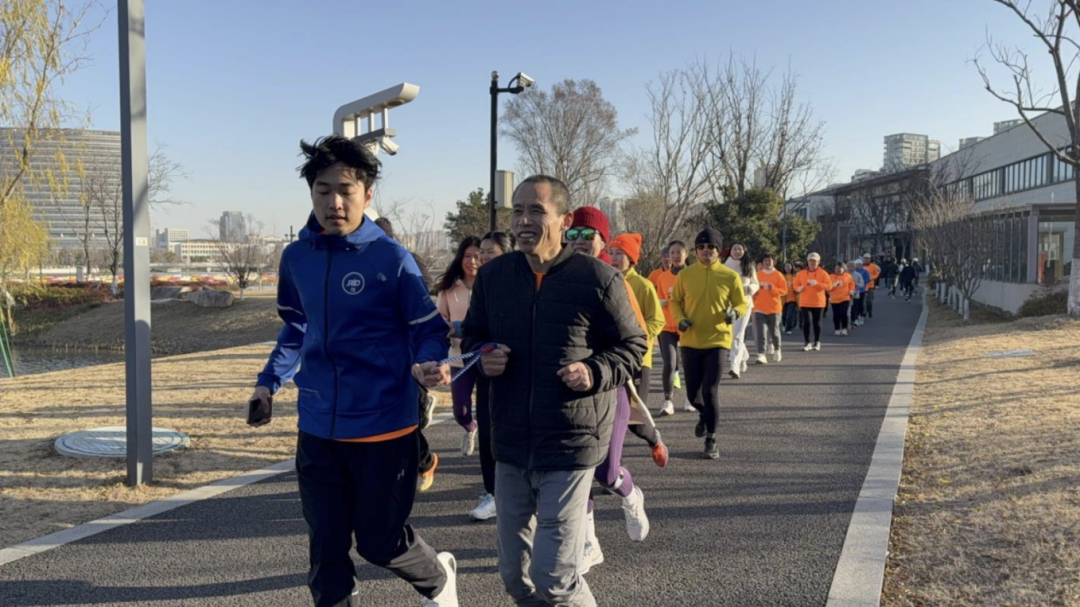
Every Sunday morning, Qinhu Park in Changshu hosts a unique scene. A 20-centimetre Companion Rope connects a volunteer and a visually impaired runner as they move side by side in steady rhythm.
This is Running in the Dark, a nationwide initiative Dialogue in the Dark China launched to promote inclusive running and community connection for people with disabilities.
The story of Running in the Dark in Changshu began with an encounter in Shanghai, where FP student Haolin Wu (William) discovered the organisation. He later brought the Companion Rope to Changshu and founded the city's first Running in the Dark station.
How many lives can one rope connect?
First Encounter with
"Running in the Dark"
The story began in spring 2025.
At that time, I was preparing for the first and second Zhongkao (High school entrance examination) mock exams. Under academic pressure, I started running to relax.
One Sunday morning at Shanghai Minhang Culture Park, I saw runners wearing orange or blue shirts. They ran in pairs. Some moved quickly, while others ran with care. A rope connected every pair.
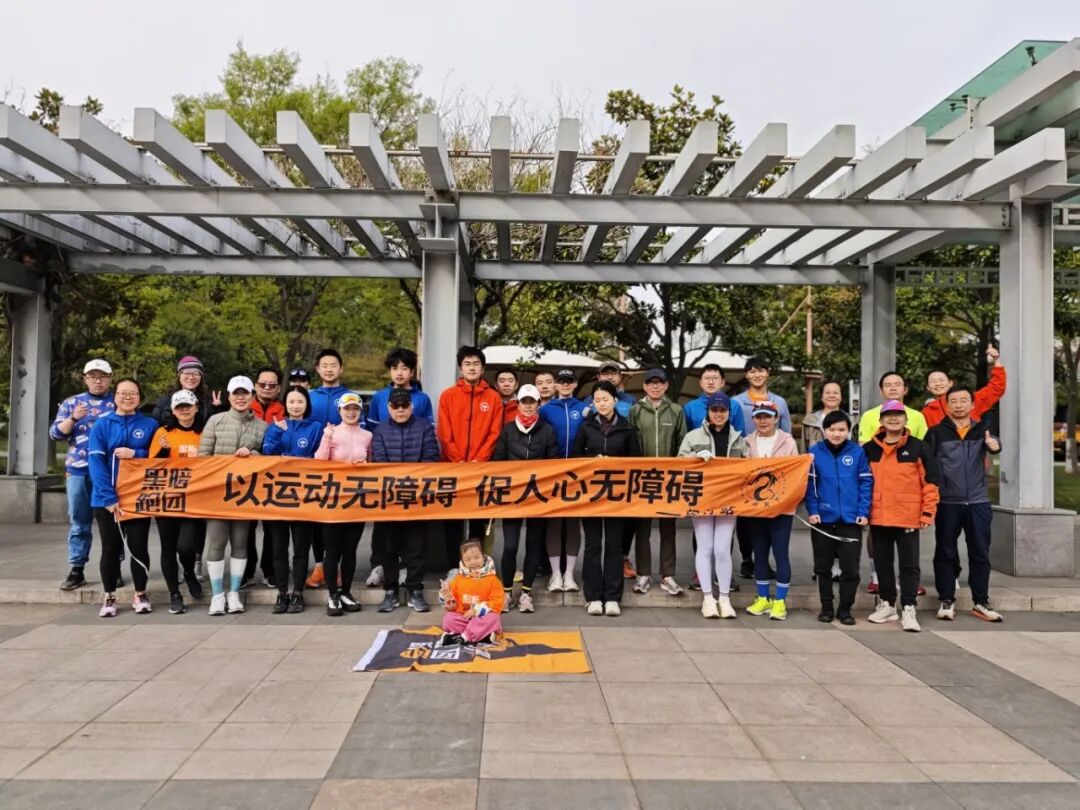
▲ March 2025, at Running in the Dark's
Shanghai Minhang Culture Park Station
After attending newcomer training, I learned how volunteers serve as eyes for runners with visual disabilities. They call the rope between them a Companion Rope. It provides direction and silently connects two people.
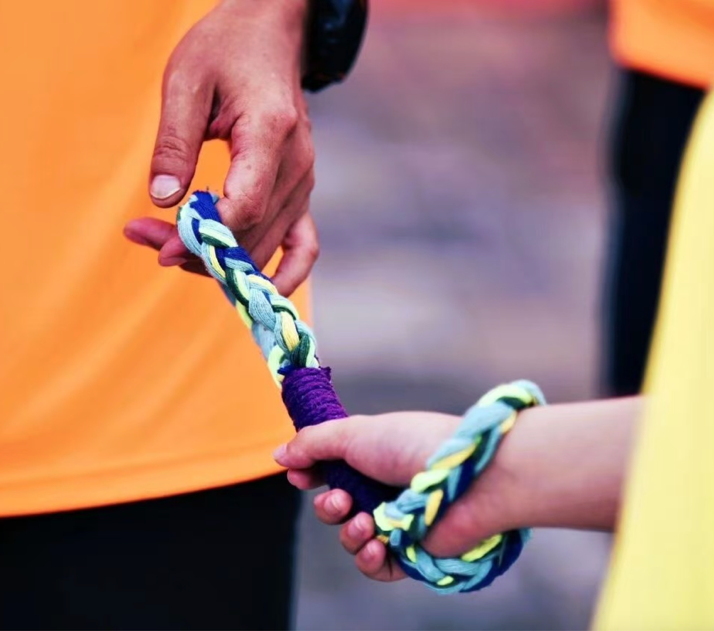 ▲Example of a Companion Rope
Over the next two months, I participated in activities at the Shanghai Minhang Culture Park Station, where I interacted with runners with visual and hearing disabilities, and other runners. I began to see their daily lives.
It was a new experience. Most people rarely contact these communities, yet through the running group, we spent time together regularly and meaningfully.
I discovered the difficulties associated with people with disabilities are their reality: limited employment choices, intense working conditions, lack of social opportunities, difficulty building interpersonal connections, and low confidence in social situations.
But their resilience, perseverance, and determination to keep moving forward moved me deeply.
Sometimes, one Companion Rope helps them start running, and lets them feel, strengthen, and show their power through running.
In English, "people with disabilities" is a respectful expression, rather than "disabled people." This phrasing reminds us to focus on what they have, rather than what they lack.
Building a Community
Through Running
In August 2025, I came to Changshu for school and brought that rope and the organisation's spirit with me.
To prepare for the Changshu Station, I visited massage shops people with visual disabilities run, hoping to recruit running group members.
One massage therapist left a deep impression on me. Even when walking a few steps to his massage bed, he moved with caution. He feared bumping into customers, tripping over a misplaced chair, or knocking over a cup left in the wrong place. Even in the place most familiar to him, obstacles filled his world.
I introduced Running in the Dark to him. To my surprise, he agreed quickly, but his reason defied my expectations.
He said, "I want to go out and make friends. I don't usually have many chances."
That sentence reshaped my understanding of what I was doing.
As China's welfare system improves, society provides people with disabilities more basic support. Yet many lack the confidence and freedom to move through society independently.
Many people with visual disabilities live within limited routines, moving only between home and work. Leaving often means uncertainty and risk. At that moment, I understood what the Changshu Station of Running in the Dark should become. It should help people with visual disabilities move freely and confidently, and build a bridge between people with disabilities and society.
Changshu, a county-level city, has many people with visual disabilities. According to statistics the Suzhou government released in October 2025, the local area had 408 working-age people with visual disabilities. Changshu also has sports resources: Yushan Park is ideal for hiking and mountain walking, while Qinhu Park is perfect for jogging.
Seeing the need and available public spaces strengthened my determination to bring the running model to Changshu and establish the Changshu Station of Running in the Dark.
Eleven months later, the running group has 46 members, including 11 runners with visual disabilities, 20 runners with hearing disabilities, and 15 volunteers.
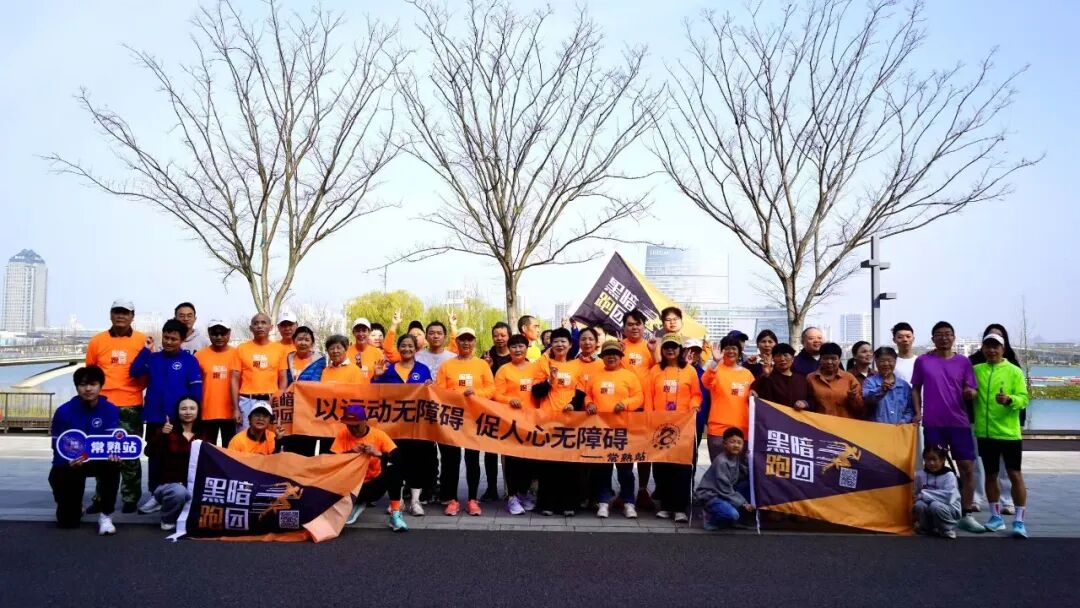
▲Group photo of Running in the Dark
Changshu Station
Every Sunday morning, we gather at Qinhu Park. Volunteers pair up with runners with visual disabilities and set running goals. The Companion Rope helps us move together, step by step, in the same rhythm. Runners with hearing disabilities do not need the rope, but they run alongside us, sharing the pace and energy.
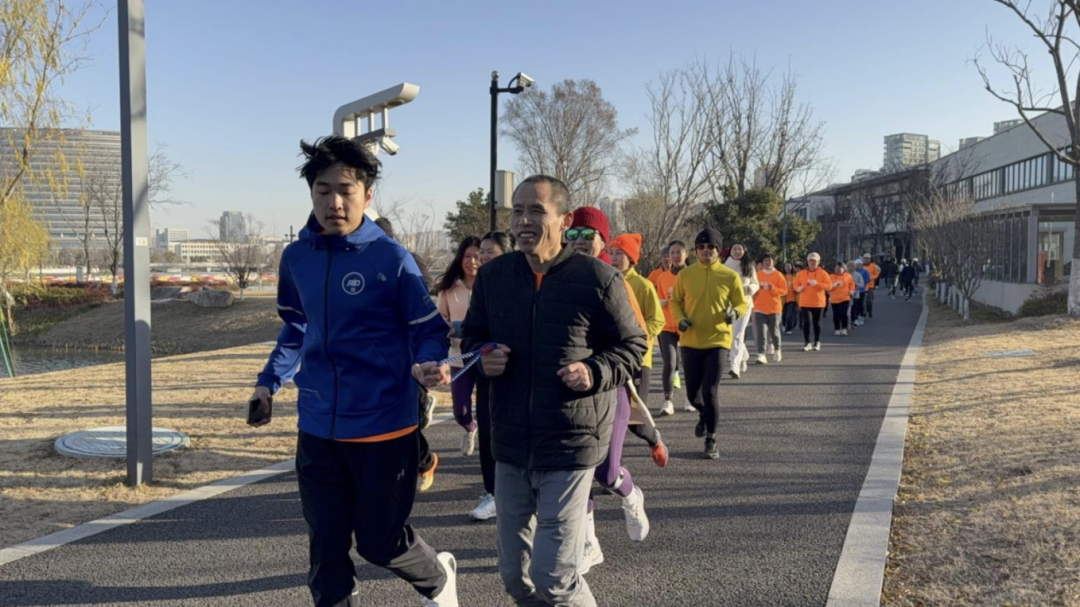
We occasionally organise social gatherings, such as drinking tea at Yushan or sharing meals at local restaurants. These gatherings strengthen the group's sense of belonging and enrich our running community. They provide an entry point for people who want to change their lives but lack the courage to take the first step.
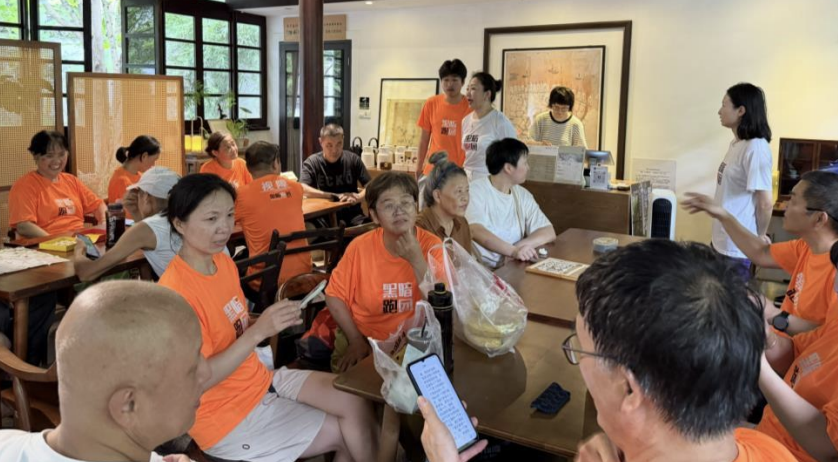
▲Members of the running group
drinking tea at Yushan Park
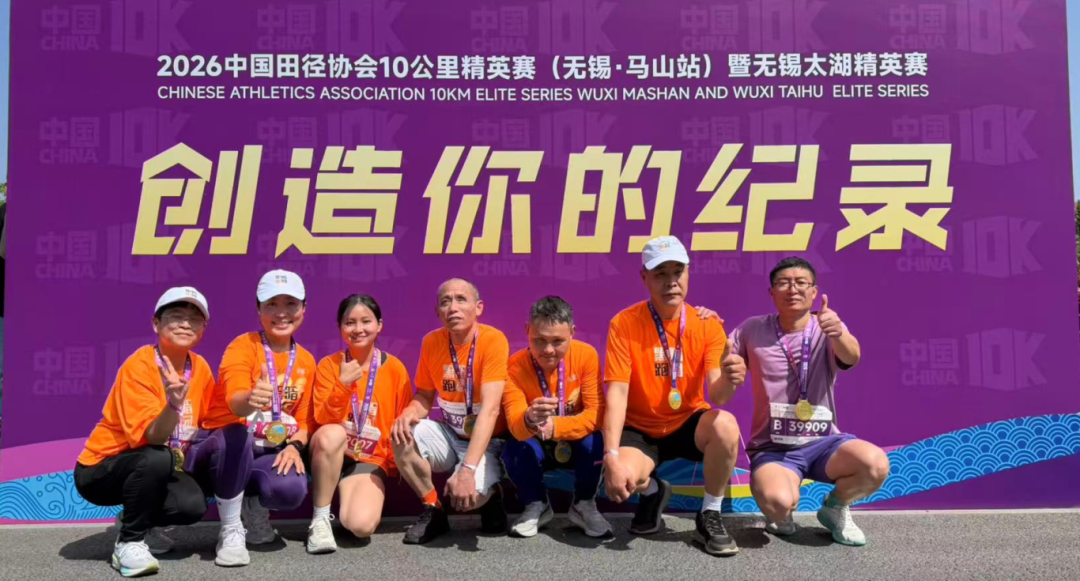
For runners with stronger athletic foundations, we encourage participation in 10-kilometre races, trail runs, and other competitions.
We recruited media volunteers to record the running group's daily life through videos, photographs, and articles, helping attract people to join us.
Running Together,
Growing Together
People often ask me, "William, can running really change anything?"
It changes more than the body. It helps people rediscover confidence.
Jianguo Zhang is a veteran. But after his eyesight deteriorated to near-total blindness, he lost not only light, but also the confidence to stand tall.
The first time we ran together, he held tightly onto my arm. With the rope in his hand, he was unsure whether he could trust me. His steps were heavy and slow, only slightly faster than walking. Every few steps, he would quietly ask about the road ahead, worried about slopes, obstacles, or pedestrians.
So I held the rope more firmly and told him that he could move forward with confidence, and that I would warn him of any danger.
"Trust me. Trust this rope. Just take the next step."
After several weeks, his grip gradually relaxed. He began to trust our shared rhythm. The toughness hidden deep inside him slowly returned.
He often called out marching commands while running: "One, two, one! One, two, one! One, two, three, four!"
His voice pushed the whole team forward.
Once, after we had already run six kilometres, he no longer asked whether the road was safe. Instead, he said, "Let's run one more lap today. Next week, one more again. Slowly, 10K and even a half marathon will all be possible."
Now, he can run 12 kilometres with his head held high.
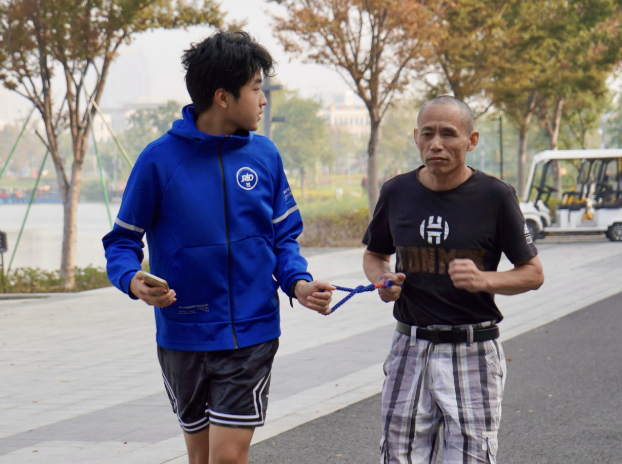
▲Zhang and me
Feilong is a runner with hearing disability. He works at an electronics company, where pressure is intense, and sometimes works more than 10 hours a day.
For people with hearing disabilities, outdoor streets contain hidden risks. He cannot hear car horns, bicycle bells, and warnings from people nearby. But when he runs with us in the park, he breaks through a barrier: from 3 kilometres to 6, then 9, then 12.
He participated in more races than anyone else in the group. Now, 10 kilometres no longer satisfies him. He sets his eyes on trail running and half marathons.
Every time he crosses a finish line, he grins at the camera. After returning, he hands me his medal and asks whether we can build a display wall for the team's medals.
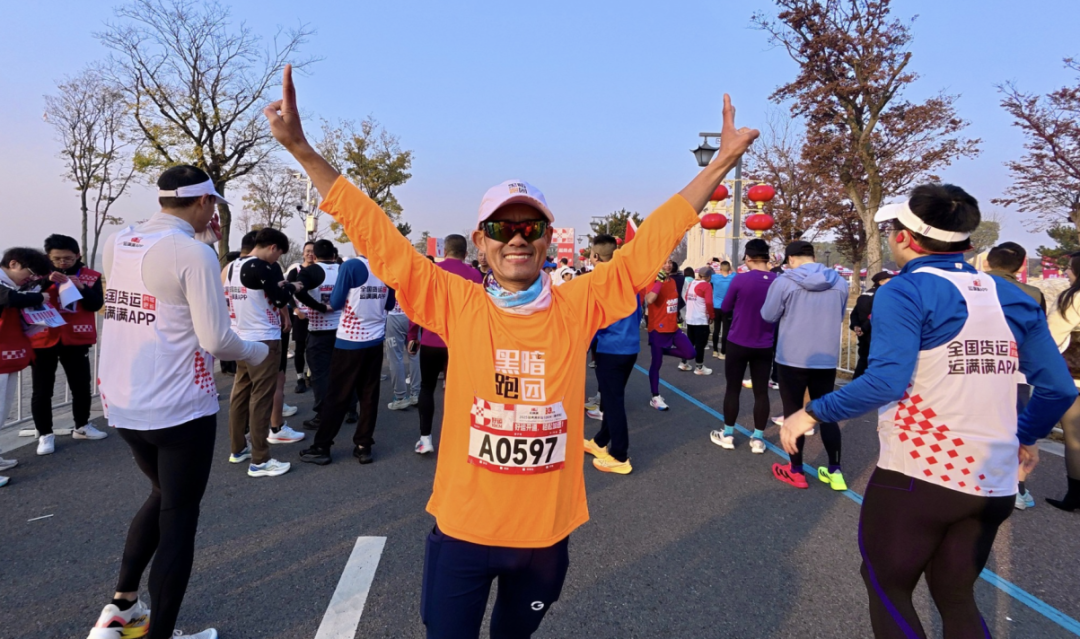
▲Feilong
Qiang Lin has a visual disability and runs a massage shop. A narrow massage room filled with the scent of essential oils used to confine his life. Running opened a door for him.
He began talking with volunteers about cadence, running form, and equipment. He remembered teammates' results and injuries. He brought these stories back to his massage shop and shared moments from the running track with his customers. Running gave him topics for conversation and connections with others.
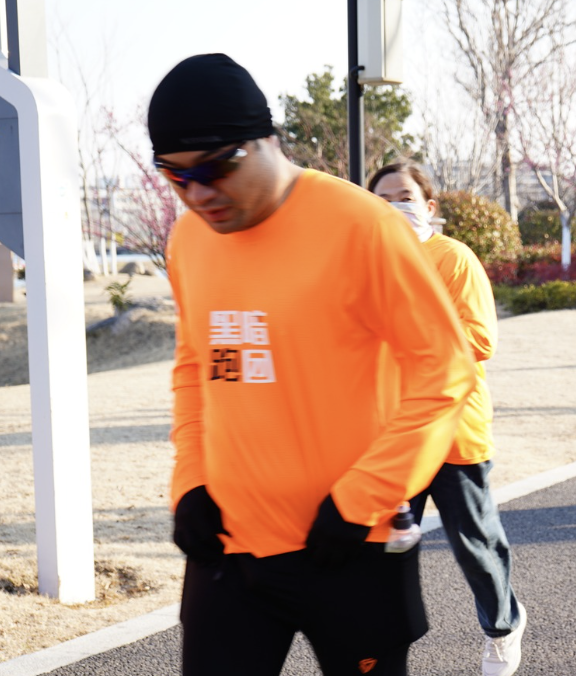
▲Lin
After witnessing how Zhang, Feilong, and Lin rediscovered themselves through running, I understood something deeper.
Hardware such as barrier-free ramps and Braille signs do not solely build inclusion. Connection builds it. Connection is never a one-way act of giving.
I remember one Sunday last winter. I finished a final exam week and arrived at the park exhausted. I wondered why I hadn't stayed in the dorm to rest.
Through the Companion Rope in his hand, Zhang sensed my condition from my tense grip and uneven breathing. Halfway through the run, he spoke first: "William, slow down. Find your rhythm."
Someone who could not see me understood me.
The person I was supposed to guide healed and guided me instead.
Our volunteers found a sense of family within the running group. They built connections with other members and see Running in the Dark as part of their lives.
How UWC Helped the
Running Group Grow
After arriving at UWC Changshu China, I thought about the social realities behind the running group through the lens of UWC values and idealism, and about how I could help the group grow.
UWC encourages students to care about society, explore social issues, and contribute to solving problems.
I stepped beyond the perspective of daily companionship and learned about the experiences of people with disabilities through books and documentaries.
Through reflection and observation, I learned about the "small social circles" phenomenon among people with visual and hearing disabilities, and the resulting lack of interpersonal connection. I compared these theoretical understandings with the lives of my running partners, which helped me understand public misconceptions and confirmed things I observed through the running group.
UWC provides resources that help students address social issues, gain funding, and build networks. I participated in the Young Aurora competition. According to the rules, the final winner receives 10,000 USD to support project development.
I submitted the Changshu Station of Running in the Dark as my project and represented UWC Changshu in the global final. During the proposal-writing process, I clarified the future direction of the running group and thought about how funding could support its growth.
Although I did not win the final prize, the committee's feedback introduced me to people in the field and partner organisations.
Driven by UWC values, teachers and students here have a spirit of service, making it easy to gather volunteers. As of May 2026, seven volunteers and Vice Principal Kate joined the running group and contributed their efforts.
Running in the Dark invites UWC teachers and students, and local Changshu residents, to join us as volunteers.
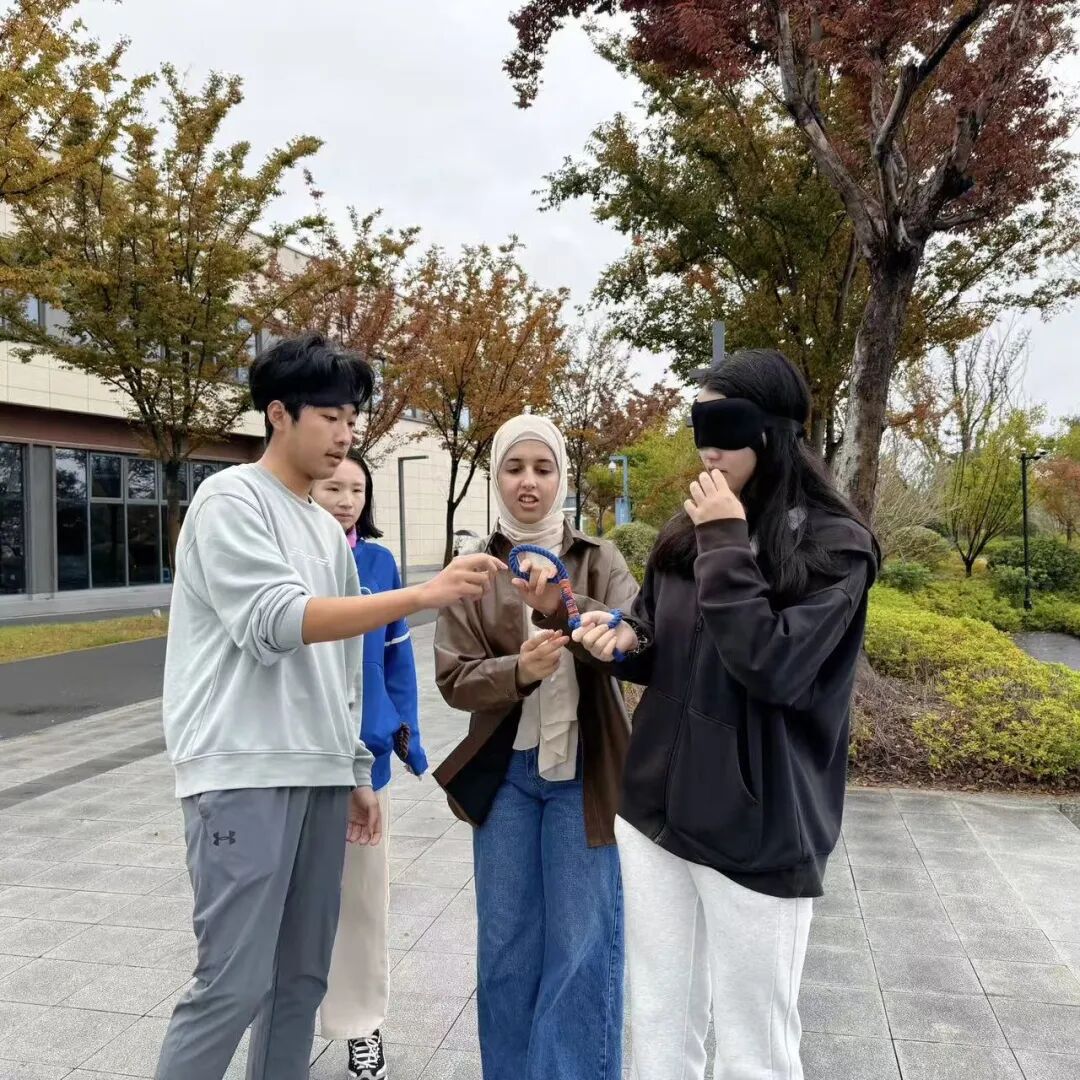
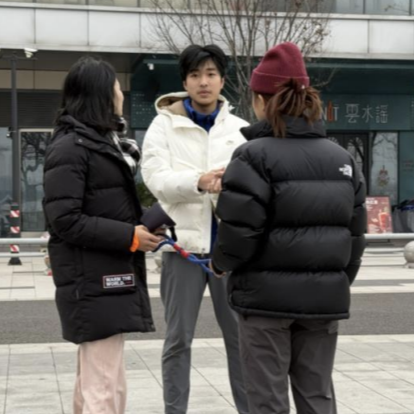
UWC provides a platform for diverse forms of expression and advocacy. The student-organised TEDxUWCChangshu event gave me the opportunity to share the stories behind the Companion Rope and the experiences of mutual support with an audience.
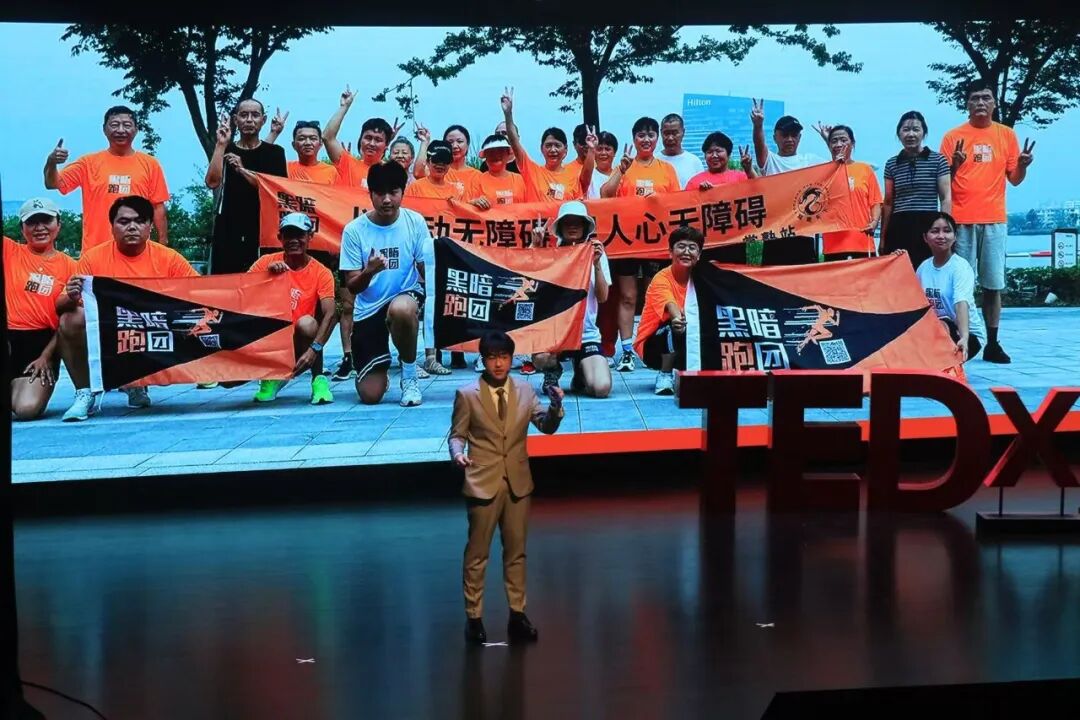
▲19 April 2026,
sharing at TEDxUWCChangshu
From my first encounter in a Shanghai park, to the founding of the Changshu Station, and to its growth within UWC Changshu's values-driven environment, Running in the Dark has never been a charity service for me.
It is a journey of learning about trust, courage, and social inclusion.
I hope this Companion Rope continues to extend: connecting people willing to step out of their homes, and people willing to reach out and move forward together.
-End-