


Be Crew, Not Passengers | UWC Day 2026: Action for Peace Planet People
Issue date:2026-09-24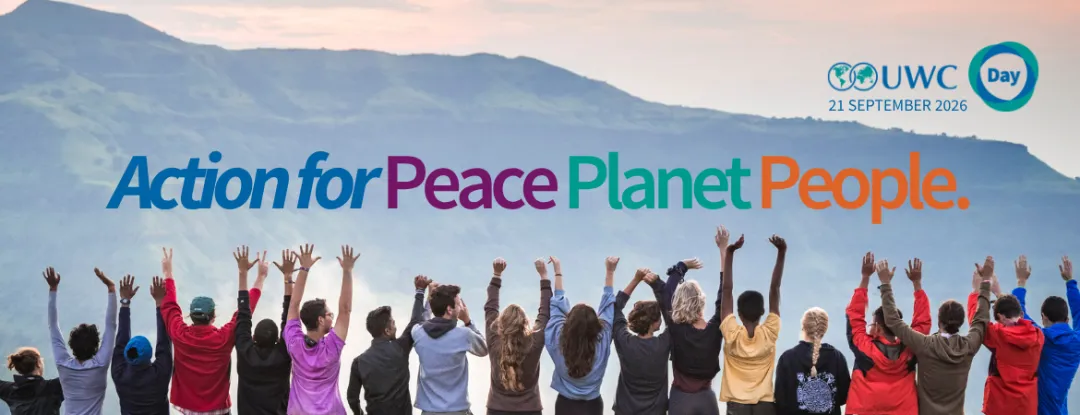
21 September marked UWC Day, the annual global celebration of the UWC mission and values, held each year to coincide with the UN International Day of Peace.
Across the UWC movement, 18 UWC schools and colleges, national committees in more than 150 countries and regions, alumni, students and faculty celebrated the day around this year's theme: Action for Peace Planet People.
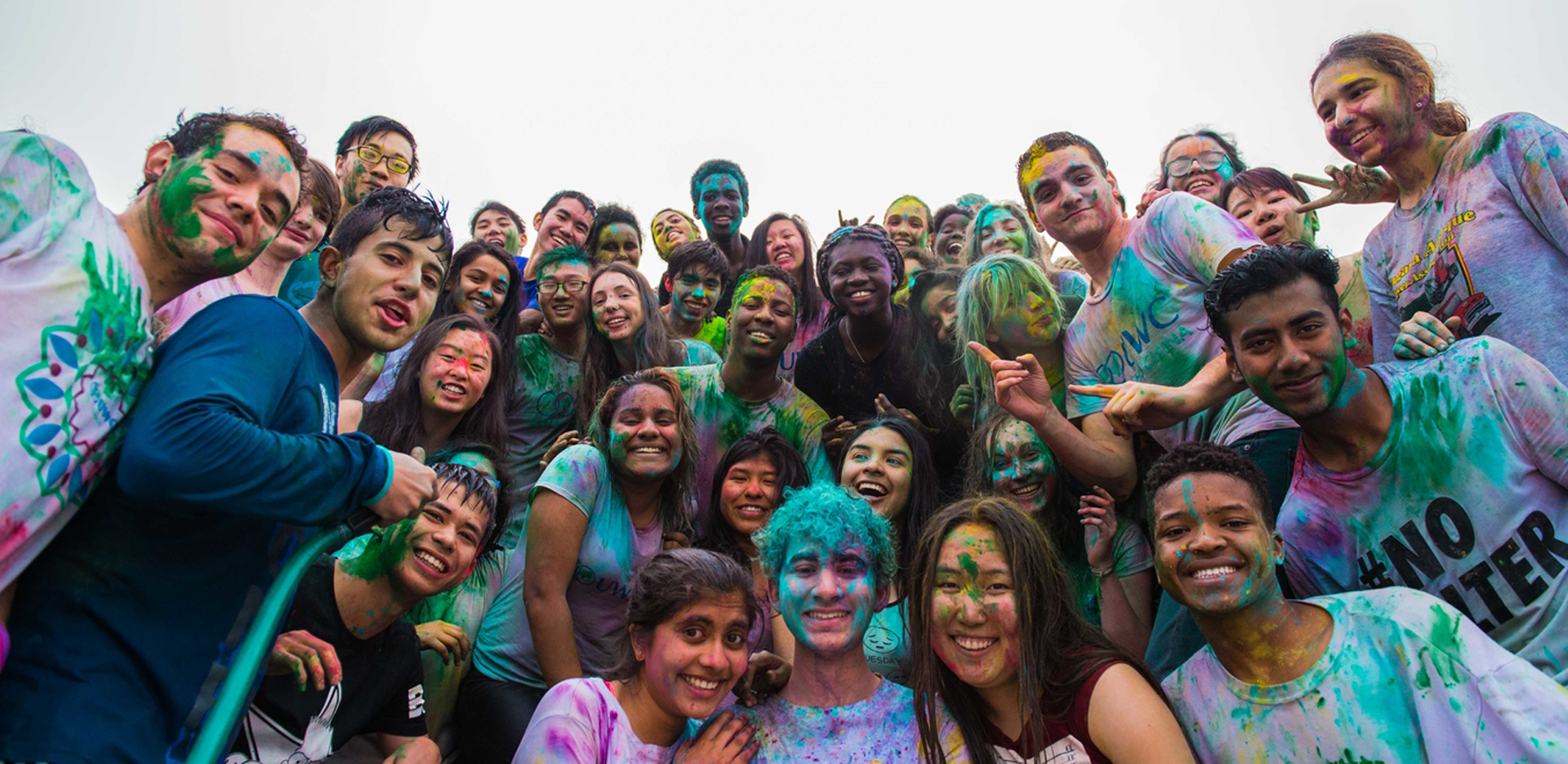
At UWC Changshu China, the celebration began with a Peace and Ecology Run along Kuncheng Lake. Later that morning, students and faculty from 98 countries and regions gathered in the Theatre for the opening ceremony, wearing traditional clothing that reflected their cultures and backgrounds. The whole school then came together for a community photo at Baijia Tan.
In the afternoon, more than 20 workshops and activities took place across and beyond campus. Students created, discussed, explored and collaborated, engaging with nature, culture and their communities while reflecting on what it means to take action.
As a central part of this year's UWC Day theme, Action for Peace Planet People, an ethics simulation turned the Theatre into a classroom without a single right answer.
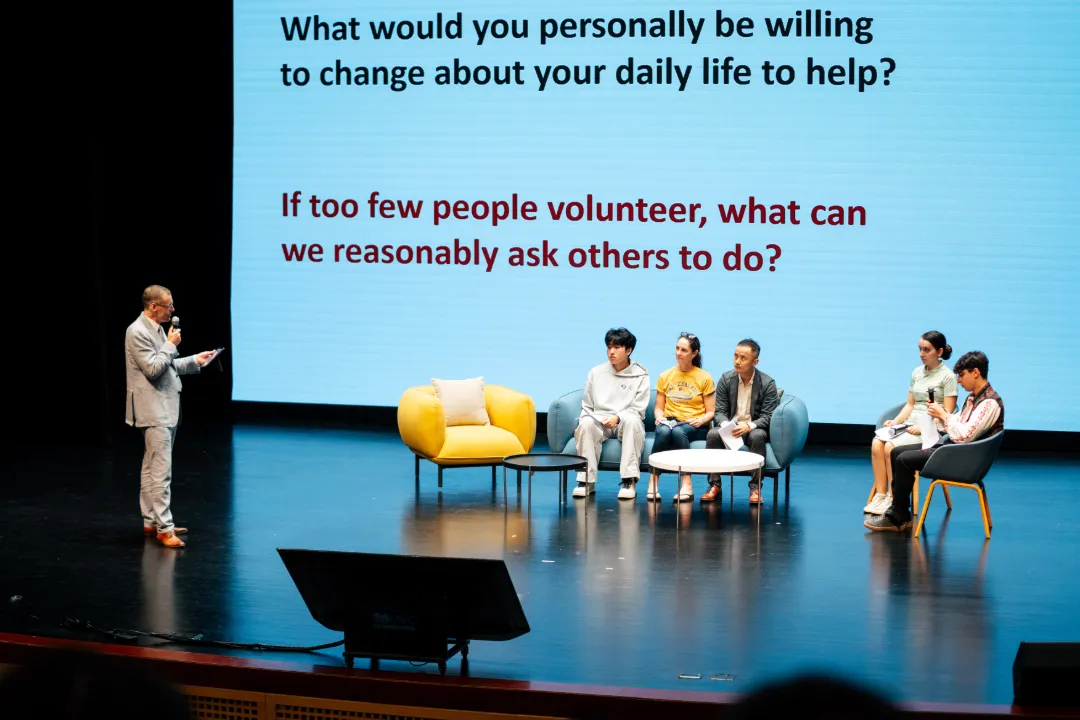
During the opening ceremony, Head of School Simon Head invited five students and faculty members to the stage for two rounds of scenarios, asking the whole community to consider a difficult question: when resources are limited, circumstances are complex and choices are difficult, how should we decide what to do, how should we act and what responsibility should we take?
The discussion began with a classic thought experiment by philosopher Peter Singer. If you were walking past a shallow pond and saw a child drowning, would you be willing to ruin an expensive pair of shoes to save them? Almost everyone would say yes. But what if the child were a stranger on the other side of the world and you could help them at the same cost? Would you make the same choice? Does distance, or how closely connected we feel to someone, change what we are willing to give?
That question became the starting point for the discussion.
The first scenario brought the question closer to home. A severe storm had caused flooding in Suzhou, and 30 students and teachers from a nearby school needed temporary accommodation on our campus. Some UWC students volunteered to share their rooms. But this raised another question: what would you be willing to change in your own daily life to help? And if too few people volunteered, how much could we reasonably ask others to give up?
The activity encouraged students to look beyond the initial impulse to help and consider what responsible action requires.
The second scenario was more difficult. A week later, another request for help arrived. Around 50 local residents had lost their homes and needed somewhere to stay. This time, UWC would need to make an entire residential floor available. The students who normally lived there would have to move into other houses and share rooms and living spaces for four to six weeks. And this time, we knew very little about the people who needed help.
The answers were no longer the same.
Some participants focused on the urgency of the need. Others considered the limits of what people could reasonably give. Some weighed the difference between choosing to take on a responsibility and asking others to take it on.
The differences did not mean that people were against one another. Each concern had its own legitimacy. Caring for people in need also means recognising the burden carried by those who provide the help.
Simon did not give the community an answer.
"Our scenario is fictional, but the questions behind it are very real."
When people are displaced, communities and countries face the same questions: Who should we welcome? For how long? How much capacity do we have? Who carries the cost? And does our response change depending on how close or familiar those people feel to us?
UWC does not give us simple answers to questions like these. Instead, it teaches us how to engage with them: to listen, question our own assumptions, recognise different perspectives and ultimately decide what responsibility we are willing to take.
That is the value of UWC Day. It allows us to think deeply, use real dilemmas to explore the boundaries of action, understand responsibility through difficult choices, and practise empathy and responsibility when we disagree.
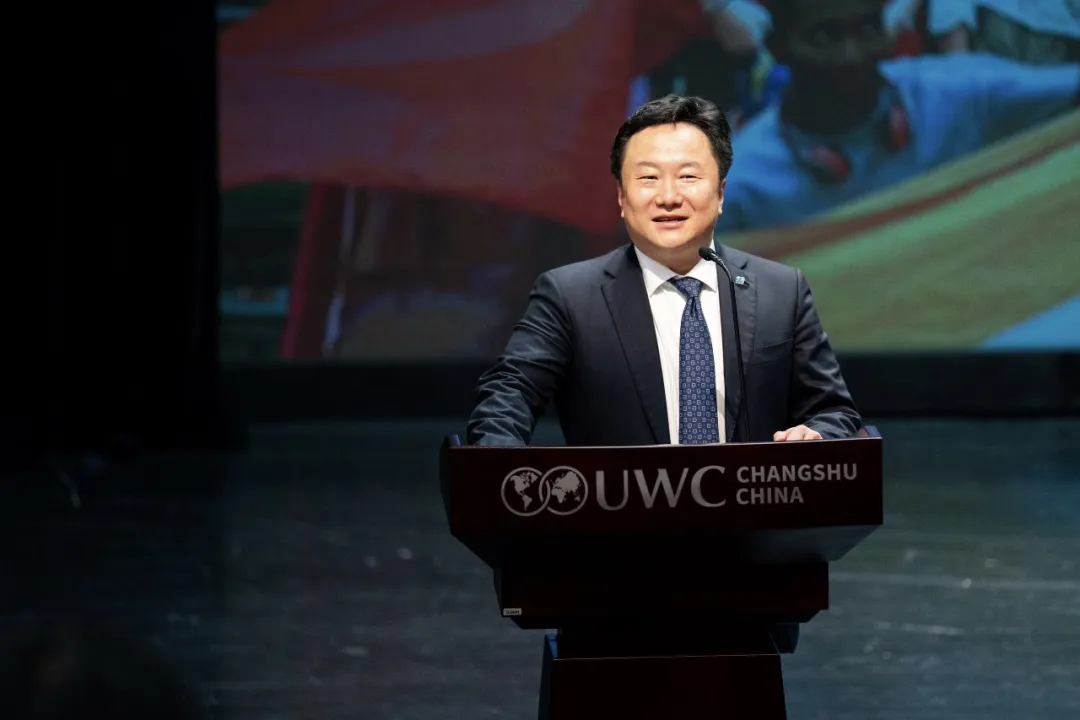
For Dr Mark Jiapeng Wang, Founder and Chair of the Board of UWC Changshu China, "Action" is something that turns vision into reality. The story of UWC taking root in the Chinese mainland itself is the result of years of action.
From the plane crash that changed the course of his life at the age of 12 to five long years in hospital, he held on to the one thing he could control: his time. He woke before sunrise every day and kept studying beside his hospital bed. Through changing seasons, he kept going until persistence became second nature.
He eventually left the hospital, travelled to Norway to attend UWC and won a gold medal in sport. At his UWC graduation in 2000, he made a wish: to establish a UWC school in China.
It took 15 years of persistence, countless conversations and repeated efforts to turn that wish into reality. Eleven years ago, the first students walked onto campus, and UWC Changshu became a living part of the global UWC movement.
"Small efforts, repeated day after day, will eventually build into something much more powerful," Dr Wang said. "Looking at the world today, if more people could stand together as our UWC community does, our planet would become a better place. The conversations we have today and the actions we are about to take may not change the world immediately. But change may come tomorrow, or quietly take place at some point in the future."

When it comes to "action", Razan, a DP2 student from Sudan, offered a different answer: sometimes, action means holding on to something beautiful amid uncertainty and loss.
She did not speak about the war and suffering in her homeland. She spoke instead of refusing to let war define her. Beginning with a song she deeply loves, she reflected on distance, displacement and the meaning of "home". The song speaks of a life without a fixed place to return to, yet carries a sense of hope and freedom.
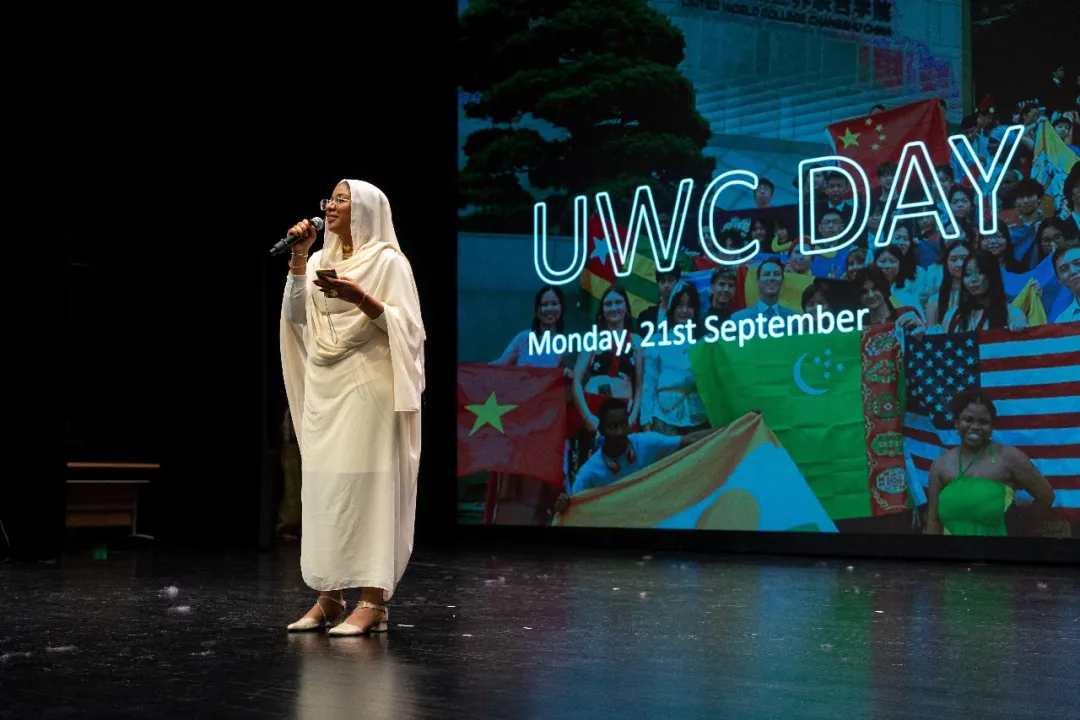
For Razan, singing is not an escape, but a way of surviving in uncertain times. As we move from place to place, we carry fragments of home with us. Wherever we go, we can "build our nests with songs", weaving a sense of belonging through melodies, memories and the courage to keep going. Home, then, is no longer simply a fixed place. It can be a song, a memory, or a person who understands exactly what you mean.
She also spoke about the deep commitment Sudanese people have to weddings. Whatever the circumstances, weddings are not easily postponed or cancelled. A wedding gathers together so much of what remains precious: music, food, family, friends, laughter and the joyful noise of a gathering. It reminds us that life can be interrupted without being erased. In the face of displacement and uncertainty, choosing to celebrate, to love and to remain connected can itself be an act of resistance and a way of affirming life.
In the afternoon, more than 20 workshops and activities took place across campus and beyond.
Students explored different cultures through creative activities such as painting, weaving, paper art, textile printing and pottery restoration. Others engaged with nature and environmental issues by building mini ecosystems, creating with recycled materials, exploring bird conservation and examining coastal ecology.
At the Global Café, students discussed cross-cultural questions. Others learnt community songs and experimented with original music. Through dragon boat racing, basketball, kayaking and other activities, students worked side by side and built stronger teams.
Beyond campus, students hiked Yushan to explore nature, visited Fangta Garden to learn about traditional crafts, and made Chinese herbal sachets at Shanghu, experiencing the local culture of Changshu.
This year, UWC Day focused on action, but at its core was a question of responsibility.
As Simon has repeatedly reminded the community, both at the beginning-of-year whole-school assembly and at the UWC Day opening ceremony:
Be Crew, Not Passengers.
"Being crew doesn't mean having all the answers. It means noticing, listening, taking responsibility, and being prepared to act. UWC gives us extraordinary freedom and agency. But Actions for Peace, Planet and People won't come simply from what we say we care about — they come from what we are prepared to do because we care."
As the day came to an end, students reflected on their favourite moments.
The moments that stuck with me most were the dance performance at the close of the UWC Day ceremony and the free dance session in the canteen at noon.
People from completely different backgrounds moved freely to rhythms I had never heard before. In those moments, I saw what "diversity" looks like in practice. What moved me even more was the connection that grew in those moments: people bumping into each other, bursting into laughter, catching each other's eyes mid-beat, and sharing the excitement and joy sparked by the melodies around us.
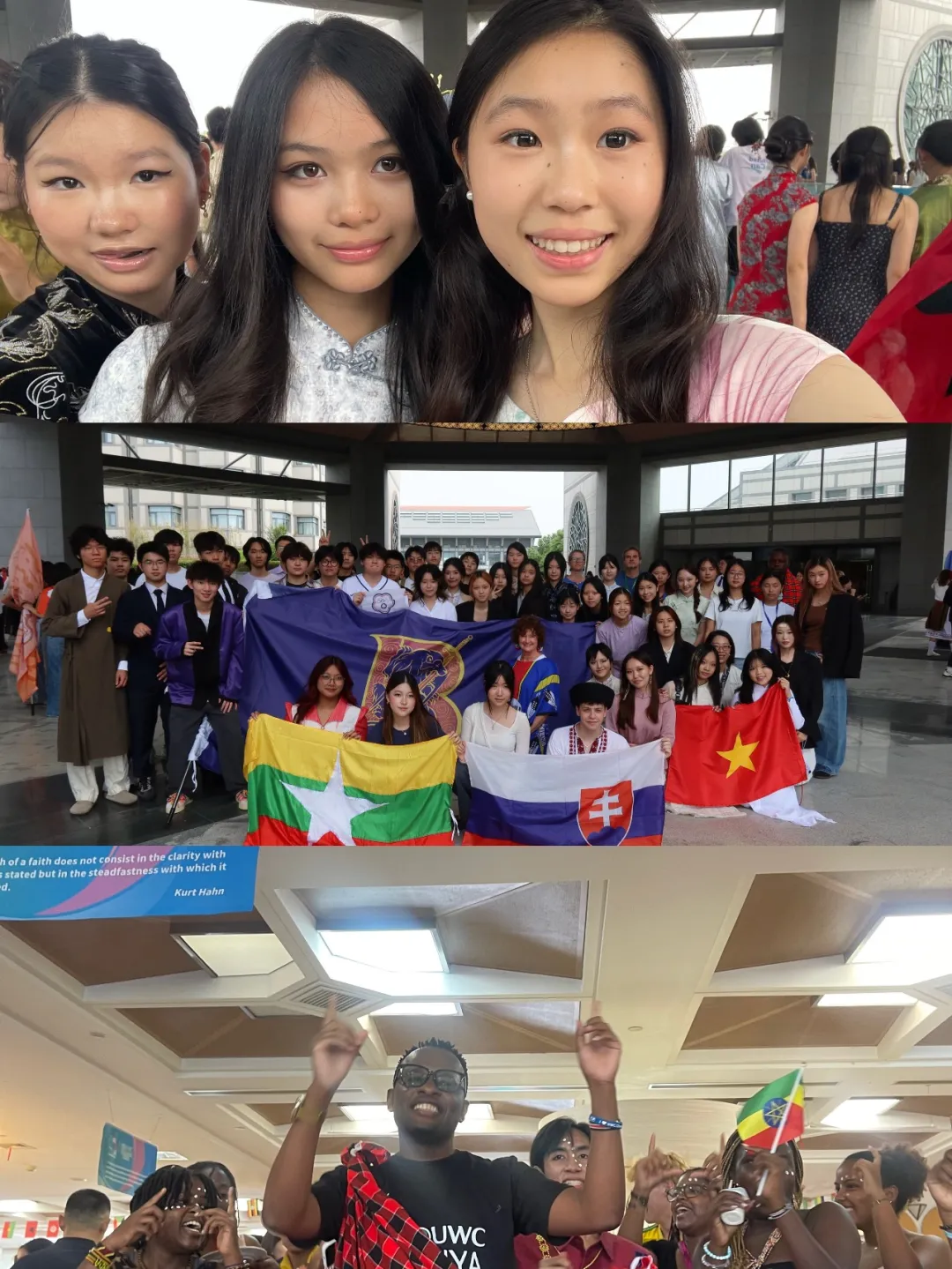
It reminded me of something Razan said in her UWC Day speech: we do not have one fixed home. Instead, we build nests wherever we land. We build them through music, through presence and through the simple courage to show up and move together.
Standing in that canteen, I felt that nest being built around me, right then, on UWC Day.
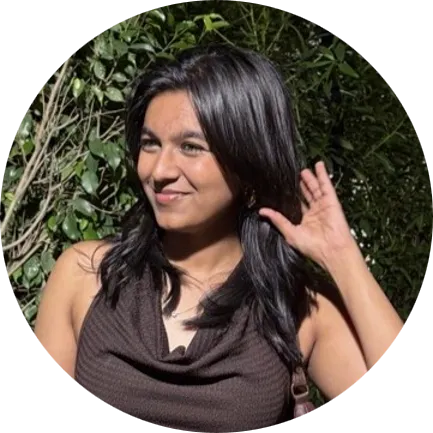
UWC Day was one of the things that inspired me to apply to UWC in the first place. I saw a post about it last year and thought, "Oh wow! It really is a 'United World' College." Experiencing it for myself today felt surreal. Standing among students who represent almost 100 countries and speak more languages than I can count, I felt that the world had somehow become a little closer.
For me, UWC Day felt like a fever dream, something almost too beautiful to be true. Not simply because of the cultural diversity, but because I could see that beyond the colours of our flags and the shades of our eyes and skin, we were all, at heart, just students who want to make the world a better place.
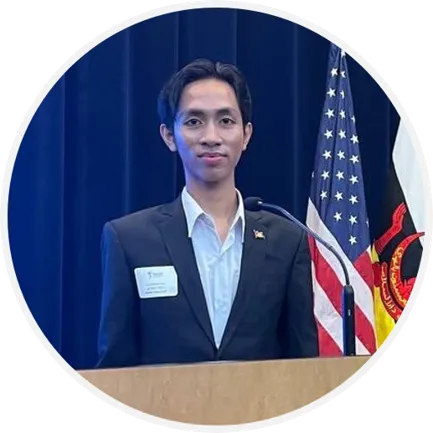
This year, I hosted the Global Café workshop. We had eight discussion tables, each with a different topic, and participants could join whichever discussion interested them. The question I led was: "When we imagine the future and make plans together, who is left out of the negotiating table? What would change if they had a voice, a vote or even a veto?"
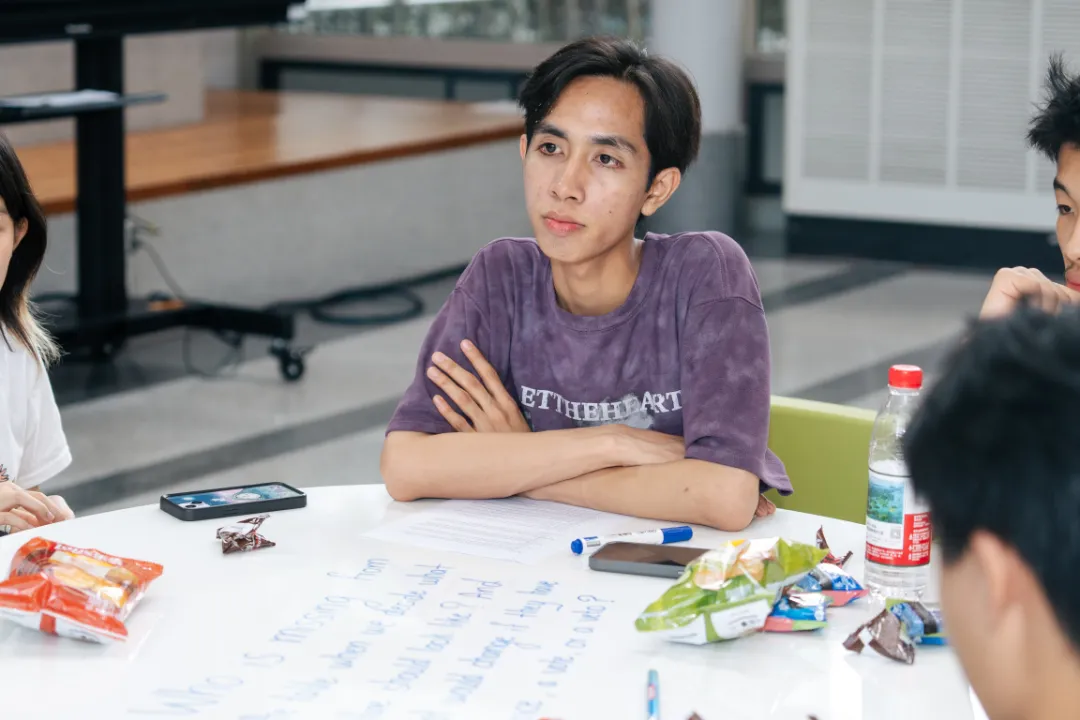
My biggest takeaway was that people from different cultural backgrounds can have very different ideas. The way we see things is shaped by where we grow up and how we are educated. We shared real issues from our own countries and explored how young people can create positive change.
We did not just talk about these issues. We also took action.
UWC Day reminds us that we are not only individuals, but also global citizens. We have a responsibility to create positive change in our communities and learn from one another.
Happy UWC Day to UWCers
around the world!
-End-