

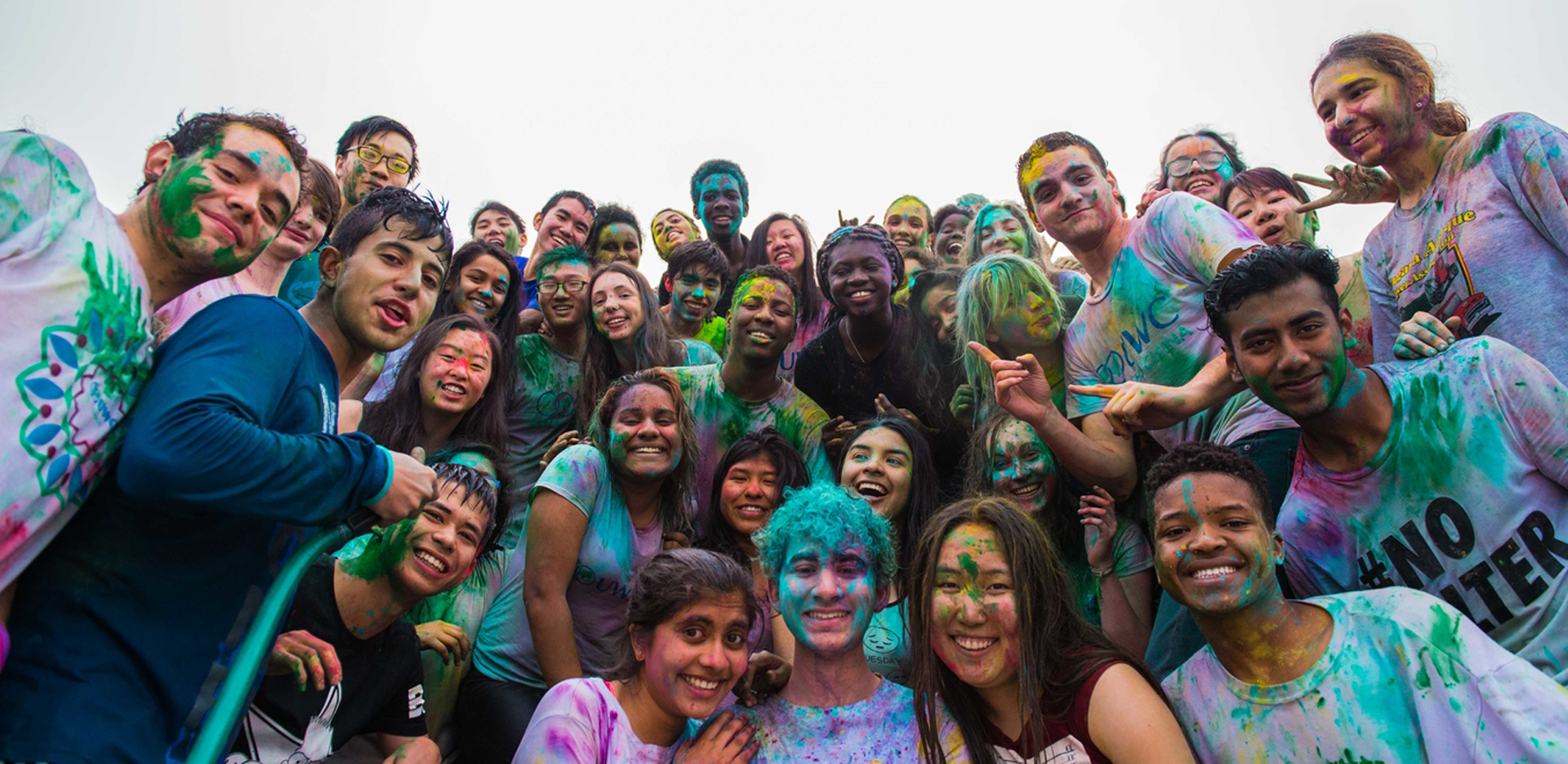



Beyond the Classroom: 2026 Eco Day at UWC Changshu China
Issue date:2026-04-10
"We came all this way to explore the Moon, and the most important thing is that we discovered the Earth."
As the "Earthrise" image from Apollo 8 in 1968 filled the theatre screen, UWC Changshu China opened its 2026 Eco Day.

On 31 March, regular classes paused for a keynote speech, a panel discussion, over 20 creative workshops and off-campus field trips. Throughout the day, sustainability moved from a concept into action, aligned with the global Earth Day theme: "Our Power, Our Planet."

Ideas in Motion: People and the Planet
Simon's Address: The Overview Effect
"Sometimes the most important thing we can do is step back far enough to see clearly."
In his opening speech, Head of School Simon Head introduced the "overview effect" — the realization from space that our planet is a fragile, unified whole, where every ecosystem and life form is bound together. This mirrors the UWC experience: when we listen across differences, we transcend our own perspectives to see the deeper connections between people and the planet.
In an era of environmental crisis and conflict, Simon urged the community to use Eco Day to pause, step back from the noise, and reflect on the larger whole we belong to. He emphasized that seeing clearly means recognizing shared challenges, noting that the action-oriented stories within the community give him hope. He encouraged everyone to listen deeply and "show up" — for one another and for our shared planet.
Panel Discussion: From Idea to Action
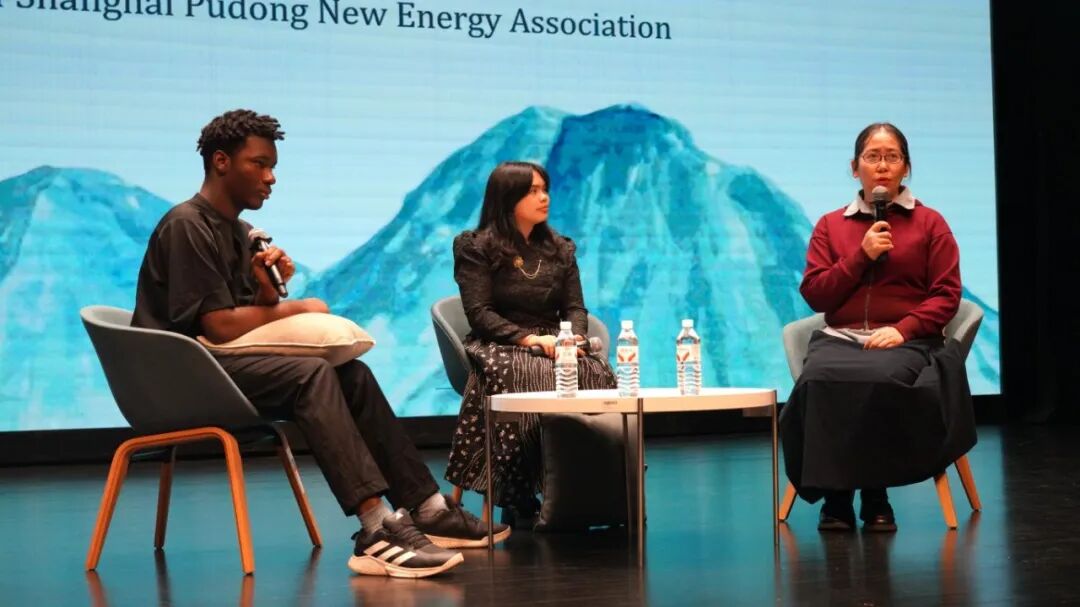
Moderated by DP1 student Reissa (Indonesia), the panel "Beyond Low-Carbon Technology" featured Ms. Ni Huan, Founding Director of Shanghai Green Light-Year and ESG Director at the Shanghai Pudong New Energy Association, and DP1 student Desmond (Nigeria).
Drawing on her experience as one of the first in China to install thin-film solar in a private home, Ms. Ni showed how change begins at the household level. She has practiced a low-carbon lifestyle for years, from using solar energy and aquaponics to composting kitchen waste. Using a vivid "apple analogy," she highlighted the Earth's fragility: "Only one thirty-second of the planet's surface can sustain human life, yet it continues to be degraded."
Ms. Ni argued that the real barriers to sustainability are mindset and inertia, not technology. She also emphasized the importance of scale; without it, sustainable solutions remain expensive and inaccessible.
Desmond shared his own initiative: developing solar-powered flashlights for students studying in darkness without electricity. His work reflects a core principle: sustainability is not about one-way giving, but about enabling communities to build their own capacity for self-sufficiency.
During the Q&A, the discussion remained grounded, addressing practical challenges like waste sorting and balancing environmental goals with economic realities.

Putting Sustainability into Practice
As the morning sessions ended, students dispersed across the campus and beyond for more than 20 student-led workshops. These sessions spanned ecology, art, hands-on making, and physical challenges, while some groups stepped off campus to learn directly from nature and the wider community.
1. Whale House: Connections Through Empathy
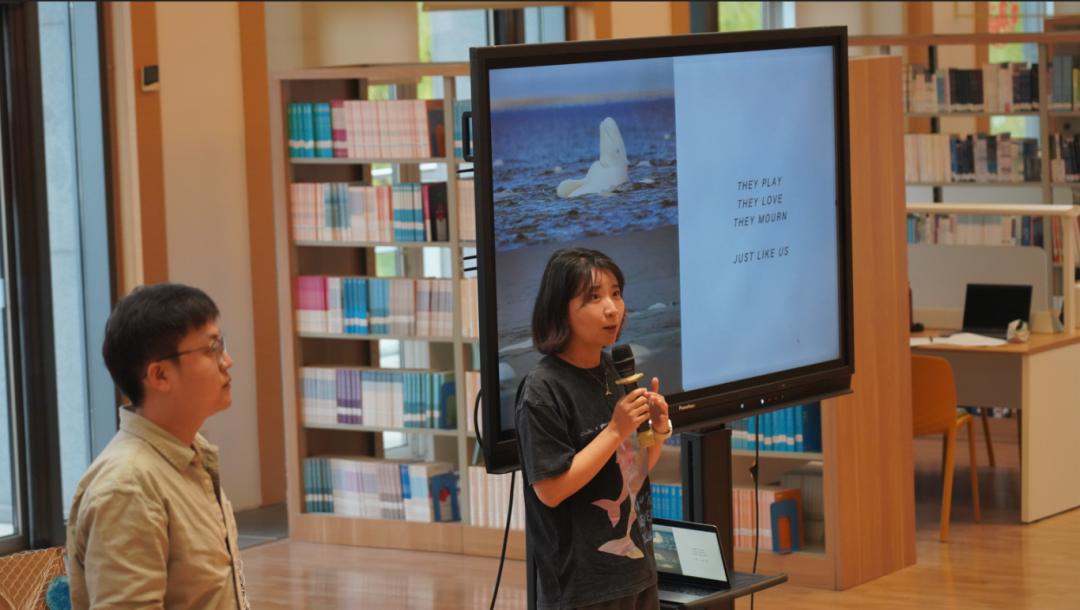
Guest speaker Ms. Shao Ran, a former marine animal trainer, shared her transition to animal rights advocacy. She revealed the emotional suffering of captive cetaceans and recounted a near-drowning incident during a performance with a beluga whale named Sofie, challenging the ethical use of animals for entertainment, cosmetics, and medical research.
In the second half, Carter Wen focused on marine biodiversity. Through a case study on the Chinese white dolphins in Qinzhou, Guangxi, he demonstrated that protecting endangered species requires preserving entire ecosystems while balancing environmental protection with local human needs.
2. One Square Metre Garden: Where Sustainability Takes Root
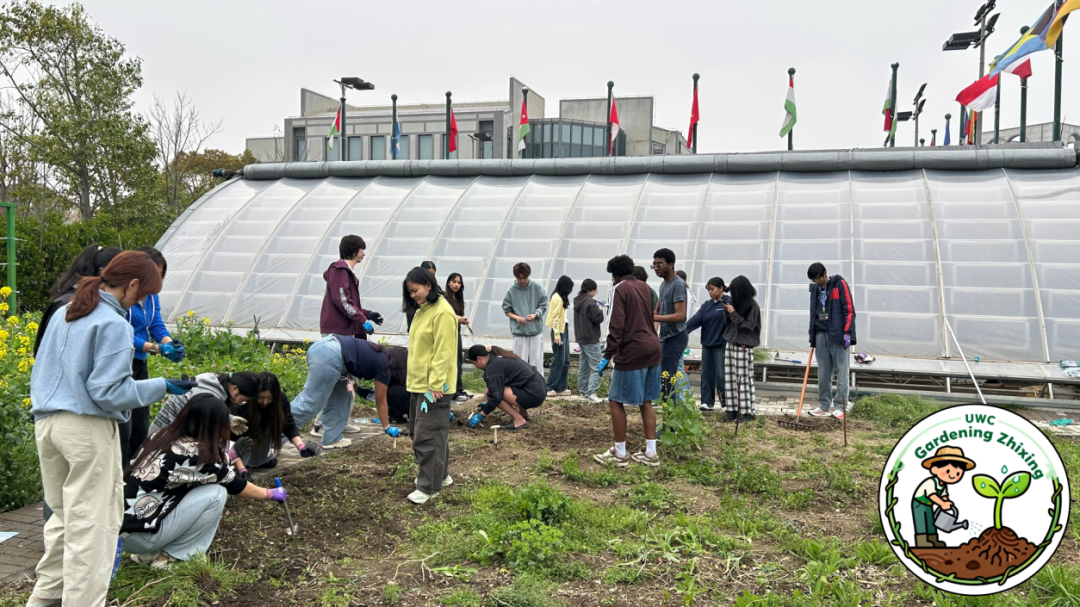
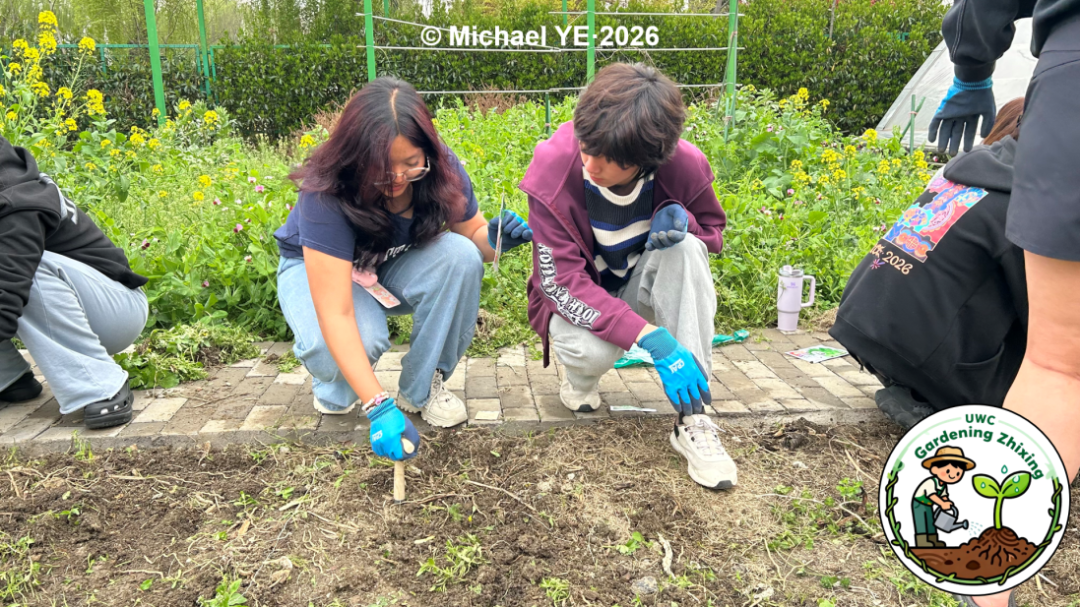
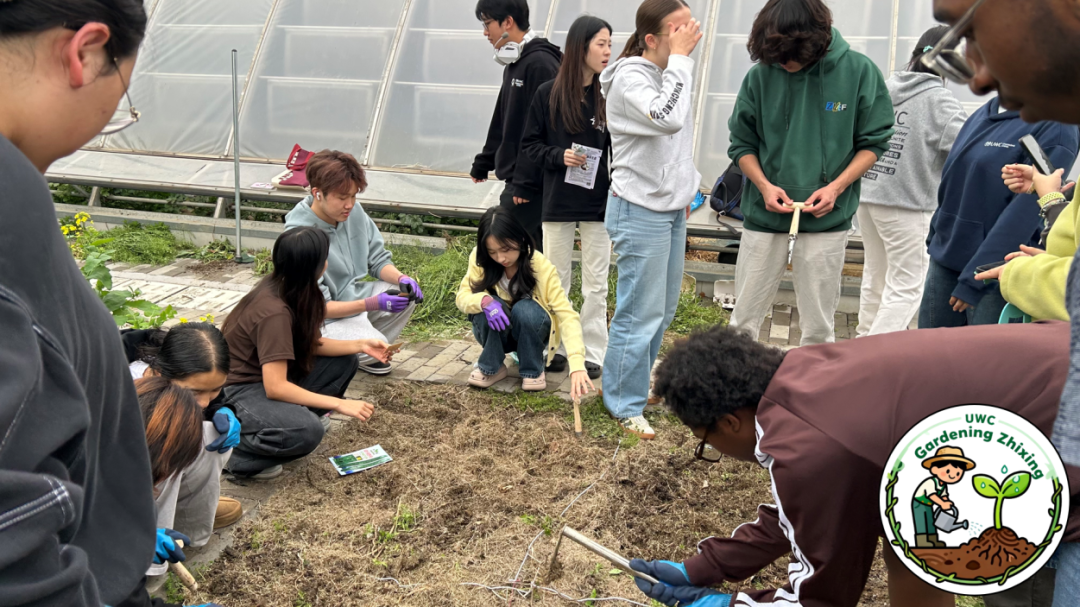
The activity organised by Gardening Zhi Xing centred on community collaboration, with each House assigned a dedicated one-square-metre plot of land.
Each plot was divided into nine sections, where different vegetables were planted side by side, allowing plants to grow alongside one another and form a small ecosystem.
Most students chose easy-to-grow crops such as lettuce and cucumbers, hoping to harvest the results of their efforts before graduation. Some Houses also balanced aesthetics with practicality by incorporating ornamental plants such as sunflowers and daisies.
Project leader Michael Ye, a DP1 student, explained that the team provided detailed guidance on planting techniques and distributed seedlings to support first-time planters. "We hope that through this activity, more people can experience the joy of growing their own food," he shared. "In the future, we will continue to explore companion planting and optimise crop combinations."
3. Critical Thinking: Defining Sustainability Through Dialogue
The ARDEI workshop explored sustainability through a broader cultural and historical lens. Drawing on examples such as traditional dolphin hunting in the Faroe Islands, participants debated whether practices considered unsustainable or unethical today should still be preserved.
They extended the discussion to colonialism and industrialisation, examining how these forces disrupted indigenous sustainable practices and questioning how responsibility should be shared between developed and developing regions.
Finally, they brought the conversation back to the individual: How can we resist consumerism and adopt more sustainable lifestyles?
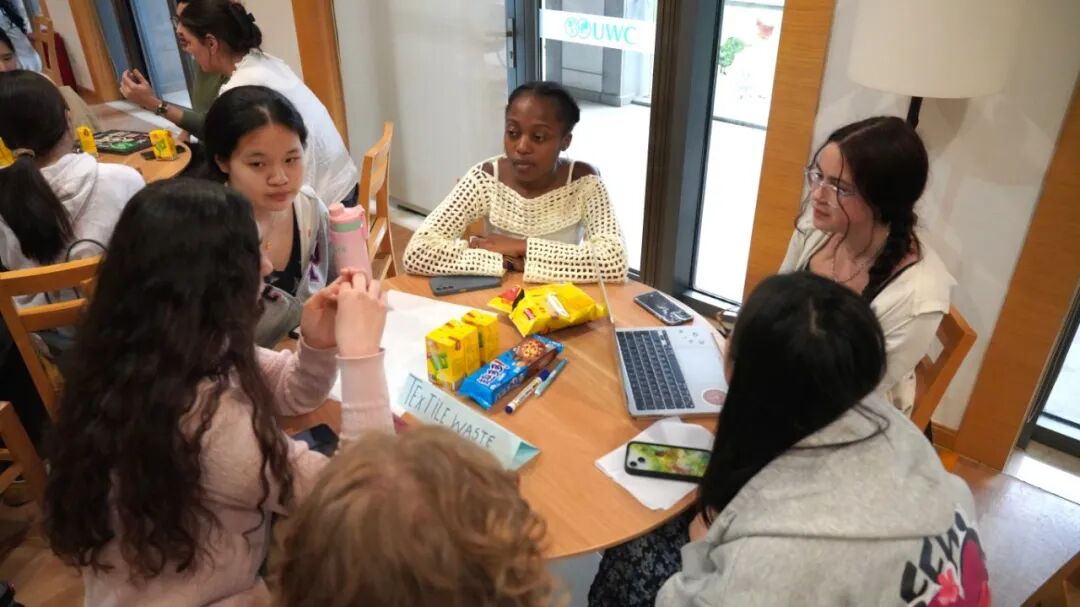
At the Global Café, participants explored global sustainability and its impact on everyday life. The session was led by DP1 student Sudenaz (Turkey) and Anoushka (India) , who introduced key questions: Can comfort and sustainability coexist? Are the Sustainable Development Goals (SDGs) achievable by 2030? What does it mean to pursue a sustainable future? And how much responsibility should consumers bear for textile waste and overconsumption?
In an open and collaborative setting, perspectives from different cultural backgrounds came into dialogue, deepening participants' understanding of sustainability.
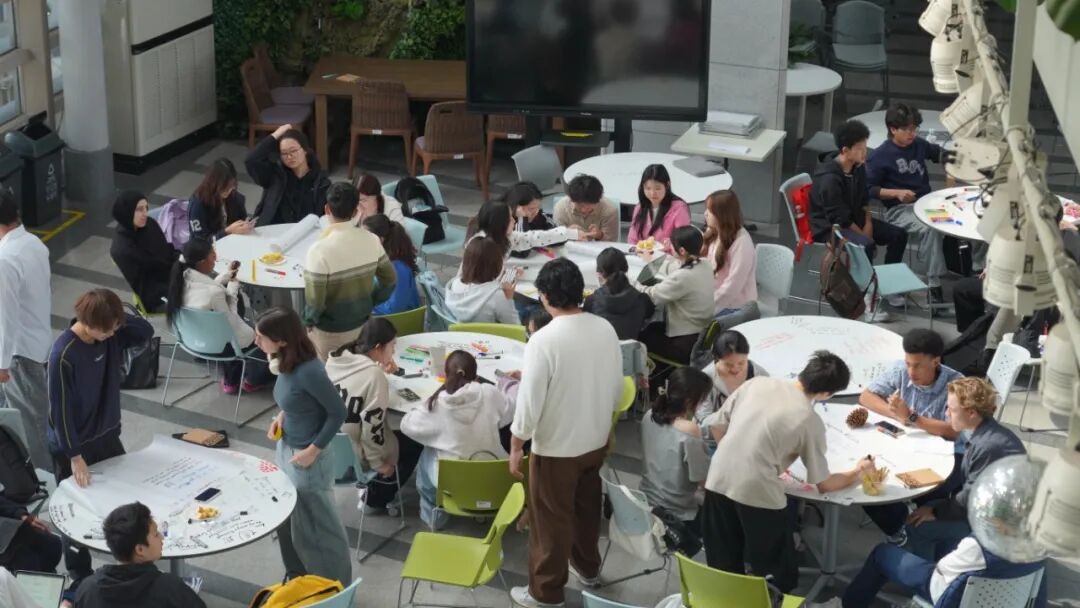
As a key Eco Day event, the "InSynergy Peace and Sustainability Conference," organised by the Sustainability Council, explored the theme "SustainAI."
Students from UWC CSC and CWA worked in teams to tackle questions such as: Can we balance AI's environmental costs with its potential to heal our planet? What does AI mean for global peace and sustainability?
Over two intensive days, participants attended guest talks, worked through case studies, developed policy proposals for responsible AI use, and designed ways to bring their learning back to their home schools and communities.
More Activities:
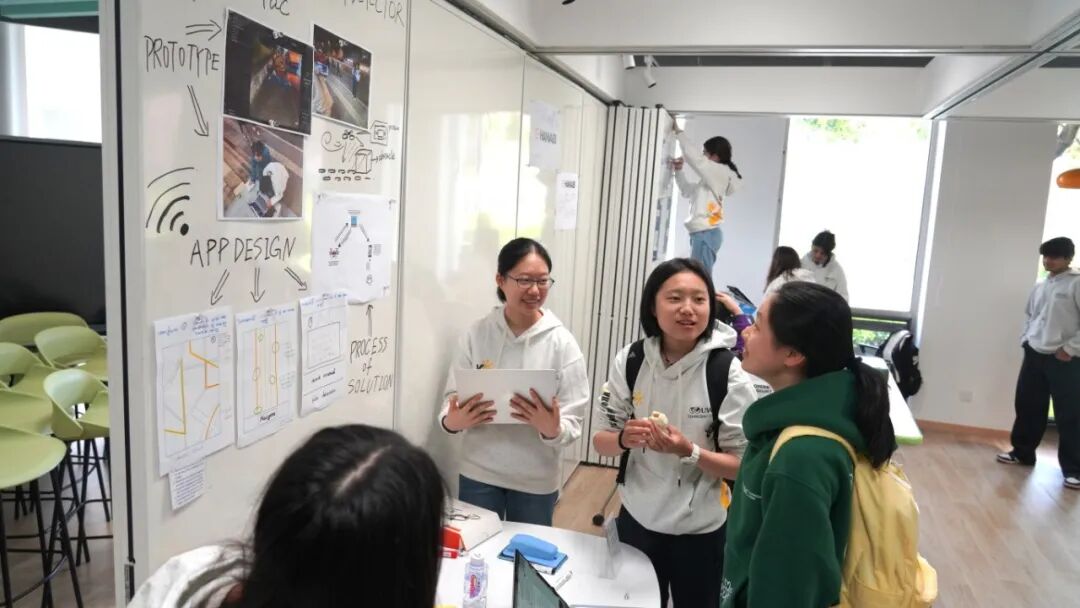
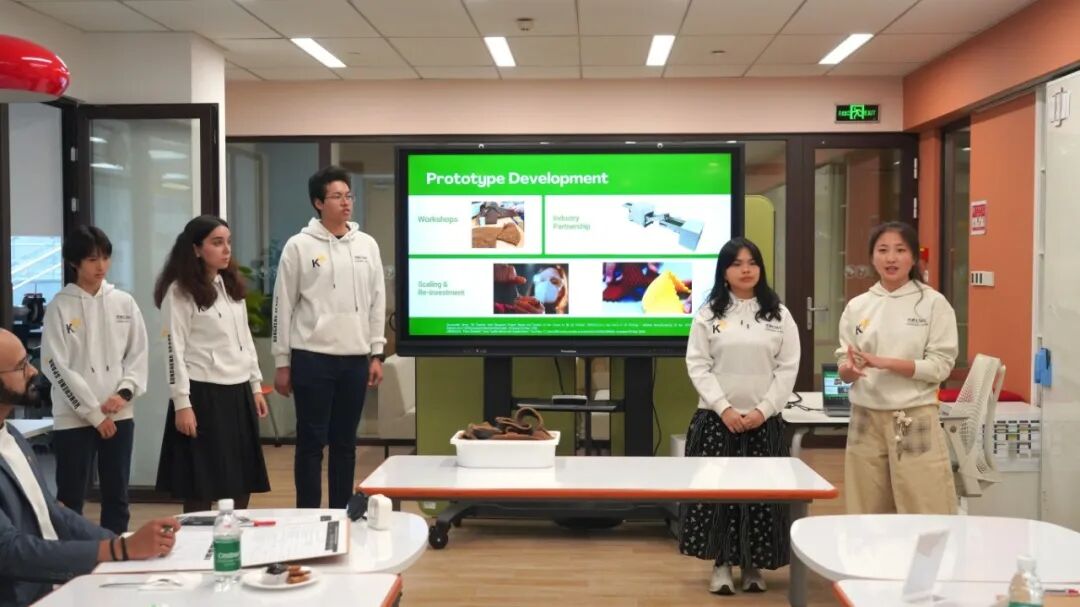
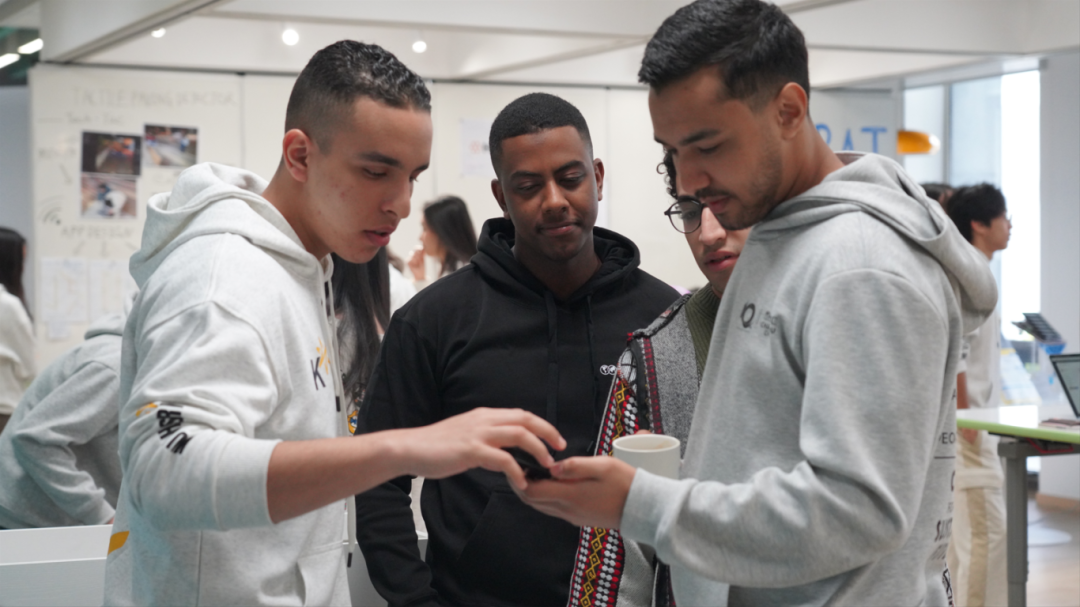
▲ Kuncheng Spark Expo: 20 teams developed prototypes for real-world challenges, including low-cost water collectors and textile recycling systems.
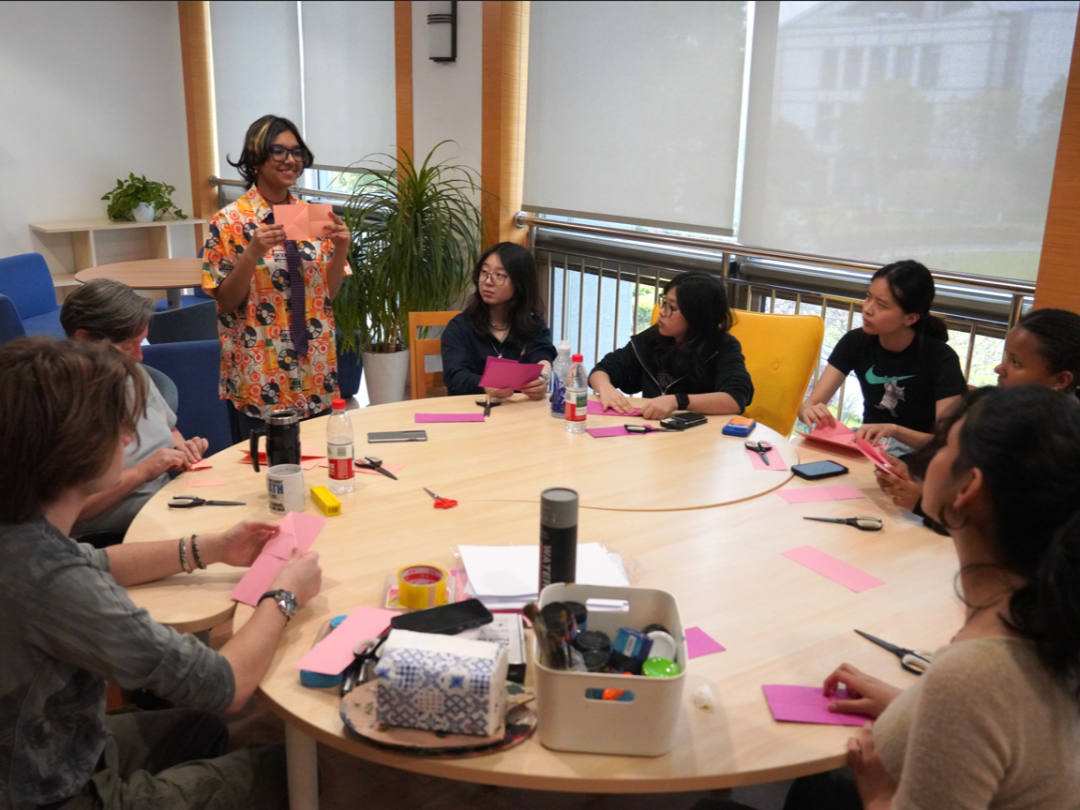
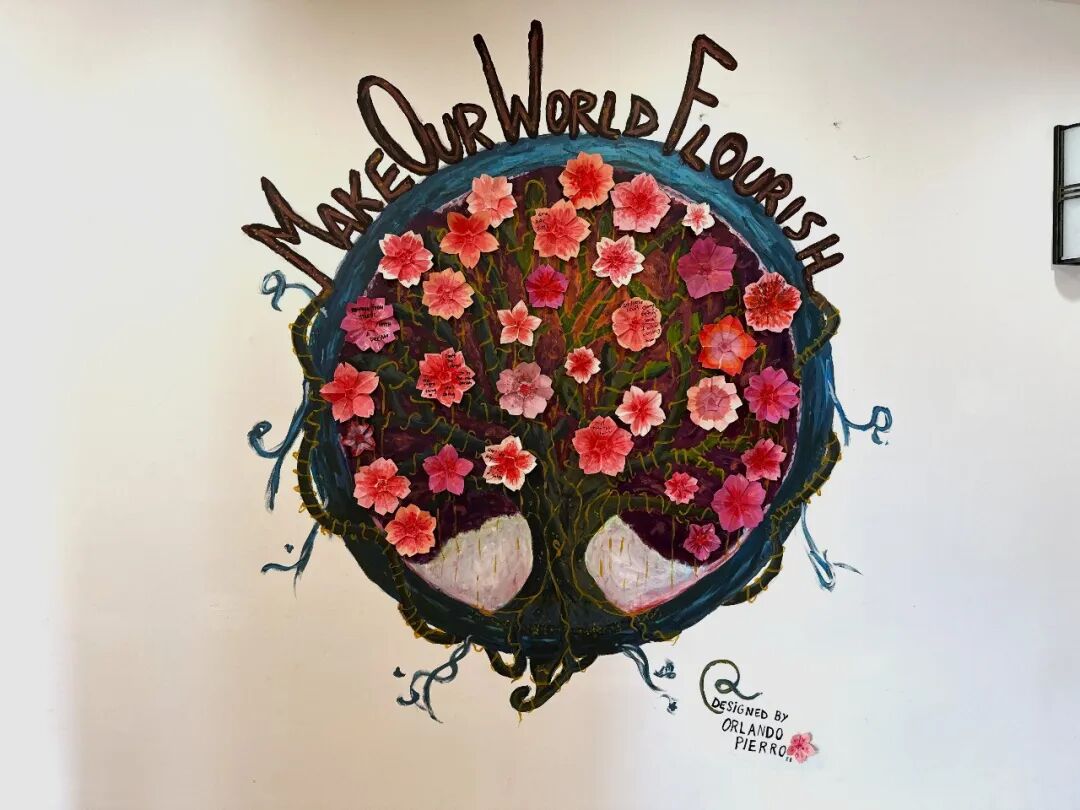
▲Tree of Life Mural: Designed by DP1 student Orlando (Italy), the mural features a peach tree within a circular composition inspired by Celtic mythology and Chinese symbolism of longevity. The message "Make Our World Flourish" connects the artwork to sustainability. Students and staff created paper blossoms and invited members of the community to write their hopes for a sustainable future on each petal, bringing these shared aspirations together.
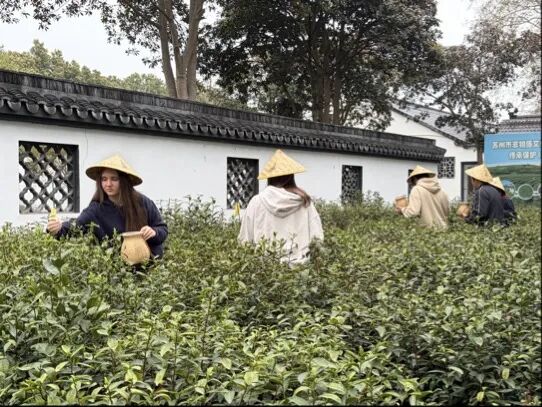 ▲Tea Picking Experience: Students engaged in tea picking and processing, gaining firsthand insight into the relationship between humans and nature.
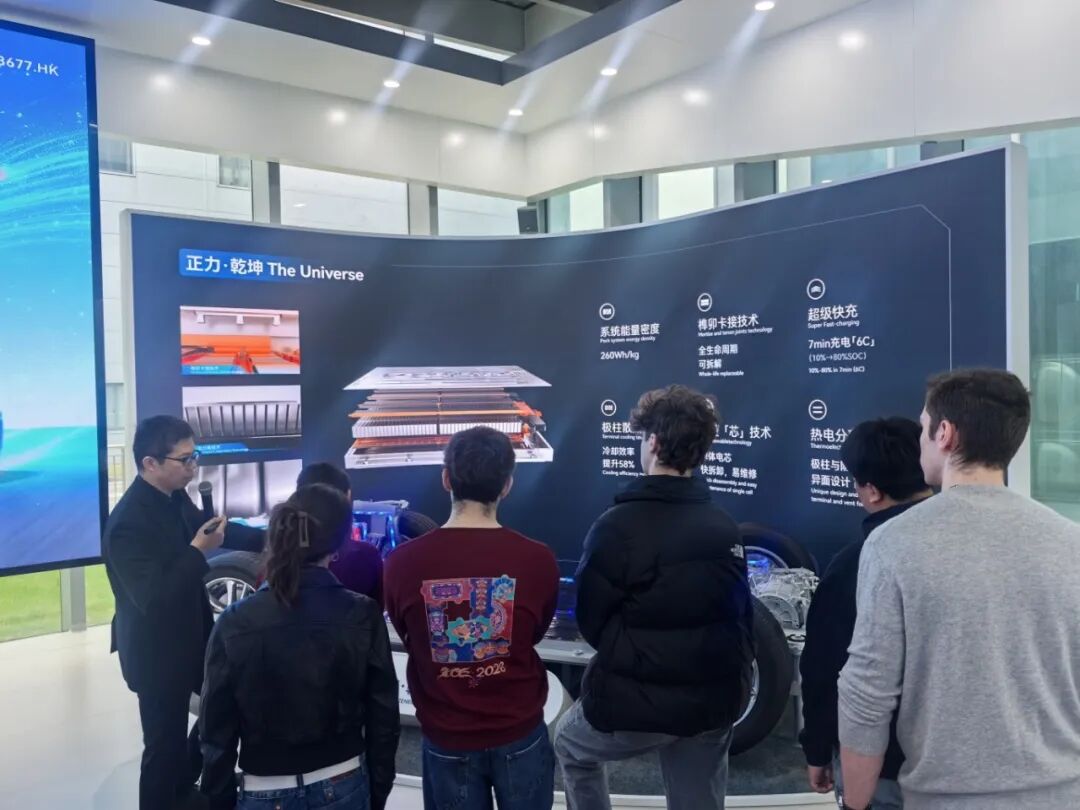
▲Industry Visit: A visit to Zenergy Battery High-tech Enterprise offered insight into green manufacturing and how sustainability takes shape in industry.
As the "Earthrise" image faded from the theatre screen, Eco Day came to a close. Throughout the day, students and staff connected through dialogue, took action, and learned from one another. From panel discussions to garden plots, from innovation projects to field trips, the UWC mission came to life in tangible ways.
At UWC Changshu China, sustainability is not confined to a single day. It is embedded in everyday life within the community. It also reminds us that caring for the planet is not something we do alone, but something we share, shaped by connection, empathy, and collective action.
-End-
Note: The "Earthrise" image is sourced online. All other photographs are contributed by members of the UWC Changshu China community.