



From UWC to MIT SPARK Lab: Multy Xu's Journey
Issue date:2025-12-11
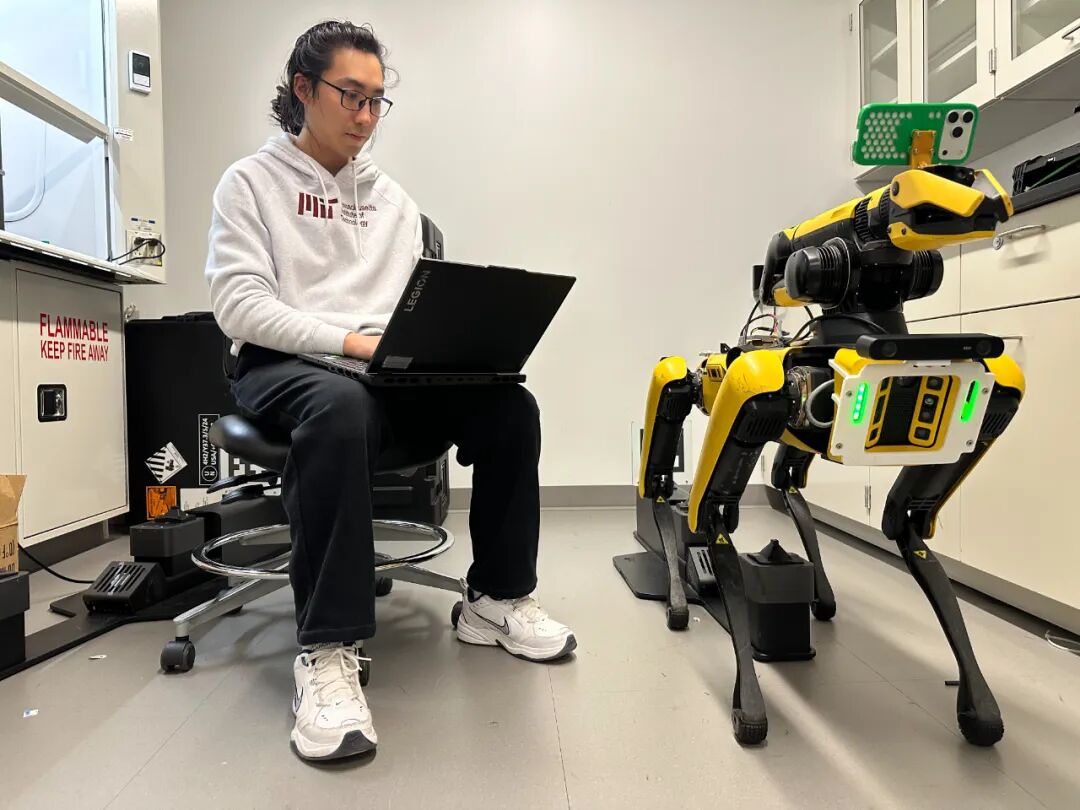
At the SPARK Lab at the Massachusetts Institute of Technology (MIT), Multy Xu (UWC CSC Class of 2020) carefully debugs a robotic perception system.
Now a PhD student specializing in Spatial Intelligence, he helps robots interpret complex scenes and follow human instructions to complete assigned tasks.
Years earlier at UWC Changshu China, Multy spent countless nights in the robotics lab testing motors and rewriting code with his classmates. That "cross-disciplinary explorer" has since grown into a "young research scholar" at one of the world's top engineering institutions. He is driven by the same persistence that kept him building, experimenting, and learning.

A Different Kind of Education
Growing up in Suzhou, Multy never expected to choose an international education. A campus tour at UWC Changshu China changed everything. The student guides, both Chinese and international, spoke with confidence as they shared stories of launching clubs and creating impact. For the first time, he realized that school is not about exams and that education can be completely different.
"At UWC, grades aren't the only measure of success," he says. "Community service, independent thinking, and making ideas happen matter just as much."
That philosophy resonated with him. At UWC, he embarked on many activities—joining a band, performing dragon dances, building robots, launching projects, designing websites, and creating IoT systems. He explored widely, always committed. Robotics, a passion planted in childhood, became his most enduring focus.

A Robotics Journey:
From a Club Founder to an MIT Researcher
Before UWC, Multy had already taught himself Python and enjoyed building robots. On campus, he quickly connected with peers like Qishang Jia, and together they founded the FRC robotics club. They started from scratch, scouring the internet for tutorials, drafting budgets, and eventually pitching their idea to the school. UWC not only funded them but also provided a dedicated lab space.
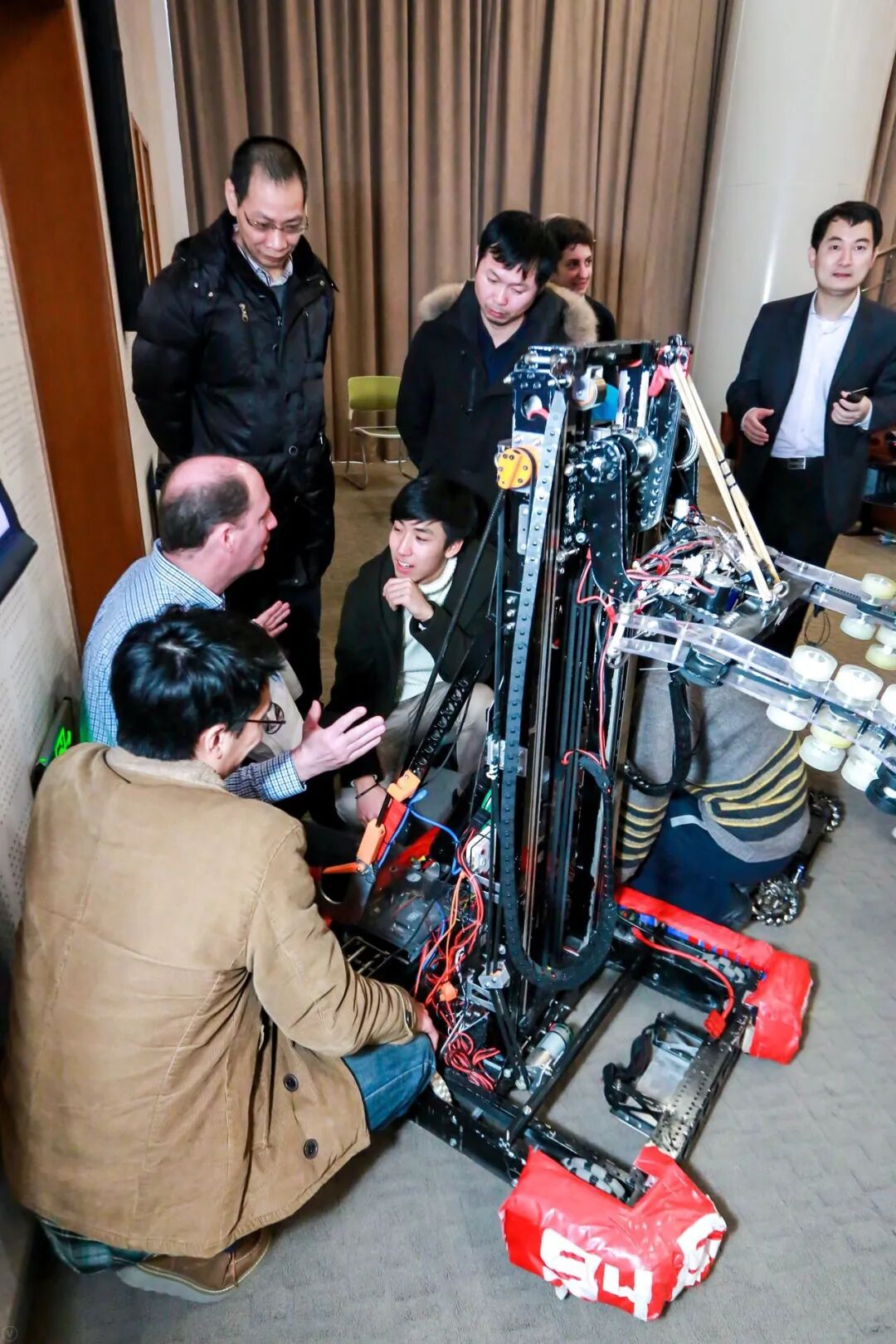
"FRC is expensive and intense," Multy says. "You learn hardware and software from scratch, and pulling all-nighters feels normal."
Their hard work paid off. In its first year, the team reached the national finals; in its second, they competed internationally in Long Island, USA. As a founder, Multy led programming and team operations throughout his time at UWC. Even after graduating, he continued mentoring younger members online.
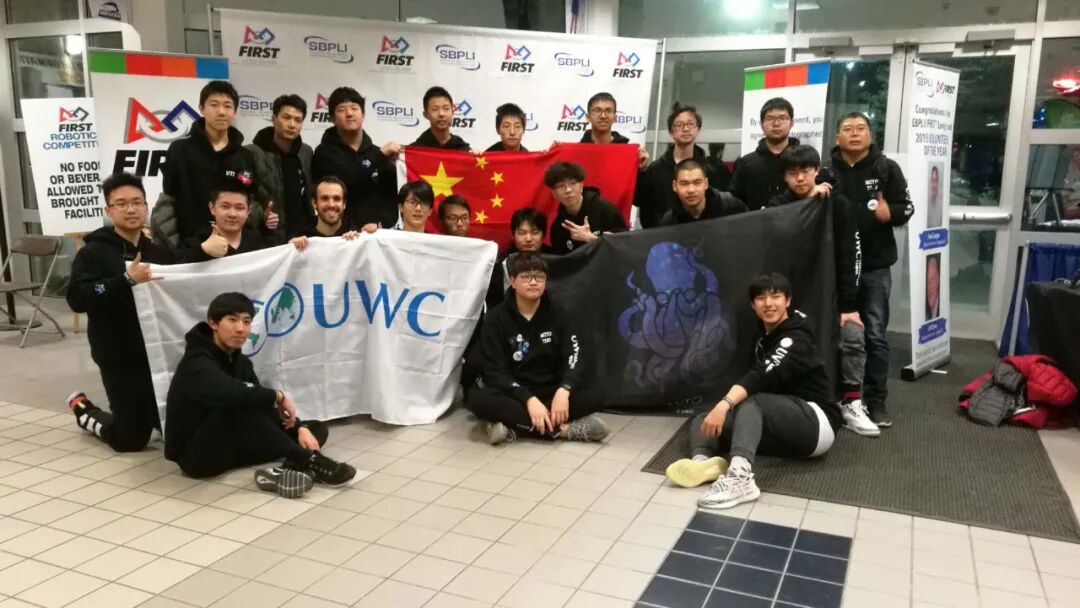
▲ In 2019, the FRC team traveled to
Long Island, USA, to compete
This hands-on experience shaped his academic path. He went on to study Computer Science with a focus on Robotics at the University of Michigan and now conducts research in MIT's AeroAstro department. "I hope that robots can eventually take on dangerous tasks for humans—like search and rescue," he says.
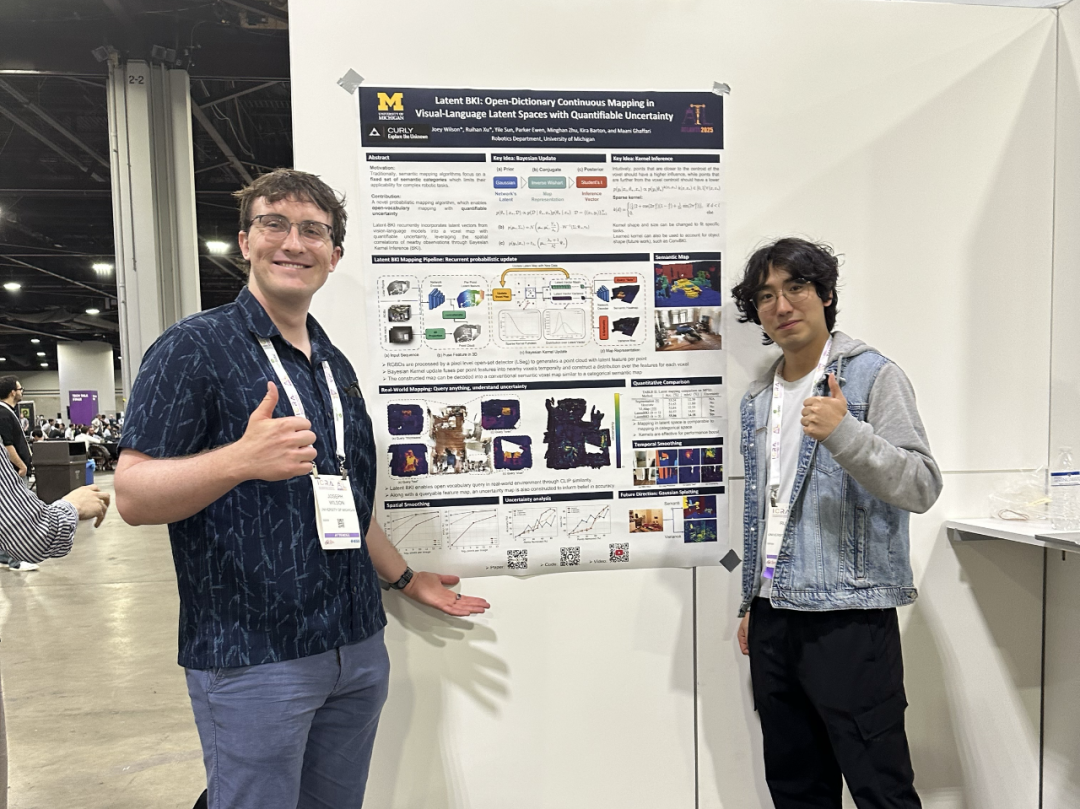
▲ In 2024, Multy presented his work at the
International Conference on Robotics and Automation (ICRA)

Tackling a Real-Life Problem:
The Laundry Room Project
UWC's focus on community engagement sharpened his ability to spot everyday problems. After moving into the dorms, the chaos in the laundry room immediately caught his attention—forgotten clothes, disputes over machines, and piles left on the floor.
He initially planned a simple IoT reminder device, but after taking Design Technology and learning user-centered design methods, he expanded the project. He built an integrated system with automatic reminders and a multi-slot rack that wrapped around the machines to keep clothes separated and clean.
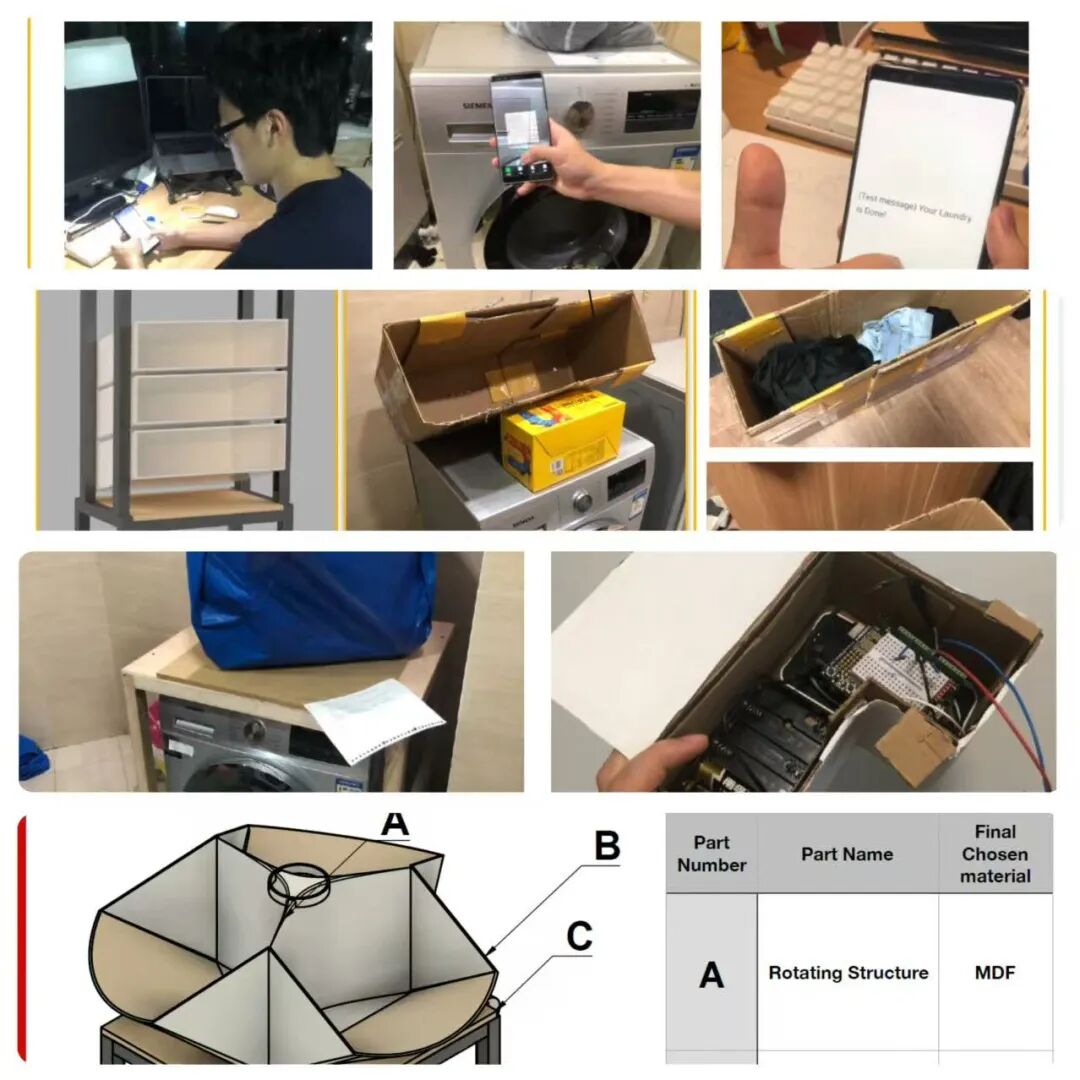
▲ Screenshot from the
DT Internal Assessment documentation
This project became his Design Technology Internal Assessment (IA). He revised the design seven times and wrote a 40-page report covering the design rationale, technical implementation, and testing plan. Unfortunately, the pandemic prevented on-site testing, and the wooden prototype had molded by the time he returned, so the project never went through. "It was a pity, but the process taught me to think from the user's perspective and how to turn an idea into a functional design—skills that still benefit me today."

Leadership Built Through Setbacks and Reflection
UWC pushed Multy to experiment boldly and to learn from failure.
Eager to explore tech entrepreneurship, Multy became the on-campus lead for Launch X. He aimed to build leadership skills and launch startup projects. He quickly assembled a 12-person team and divided it into three groups, each tackling a different project.
After a semester, managing all three proved overwhelming, and progress stalled. "I was frustrated and even started doubting myself," he recalls.
The setback didn't stop him. A smaller team—Yufeng Wu, Tianyi Lu, and Fangting Gu—shared his vision and broke off to develop Islandr, an interactive platform connecting UWC Zhi Xing and its students.
Together, they solved technical challenges, completed the website, and presented it on campus. Though the pandemic prevented an official launch, the experience taught him something valuable: "Leadership is about finding a shared goal and adjusting direction with your team."
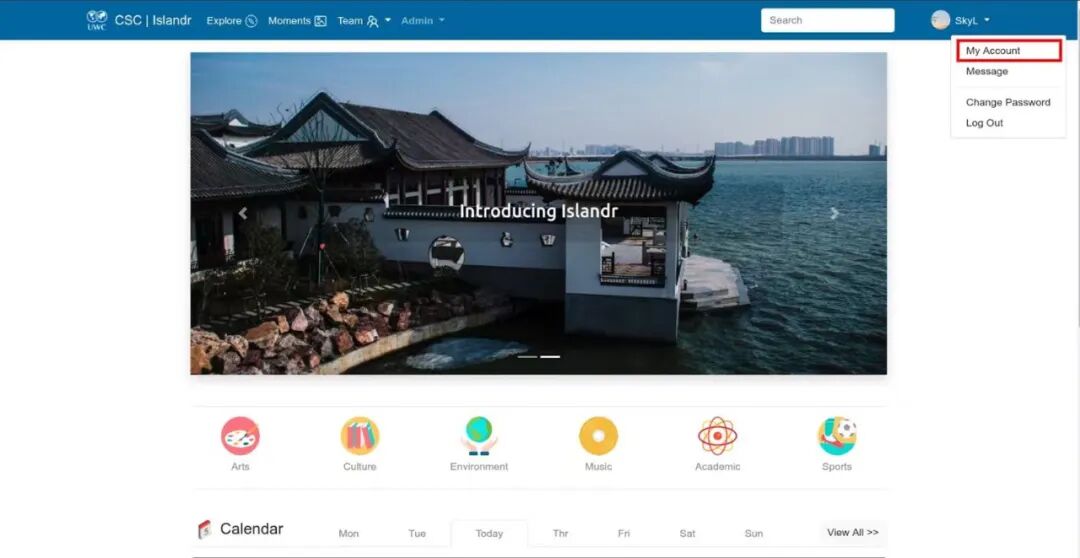
▲ Islandr website homepage
His time on the dragon dance team was also formative. Influenced by his roommate, he joined the team and rose from member to student leader.
Challenges arose immediately. "I was a perfectionist, pushing everyone to practice difficult moves, while some just wanted to experience traditional culture," he recalls.
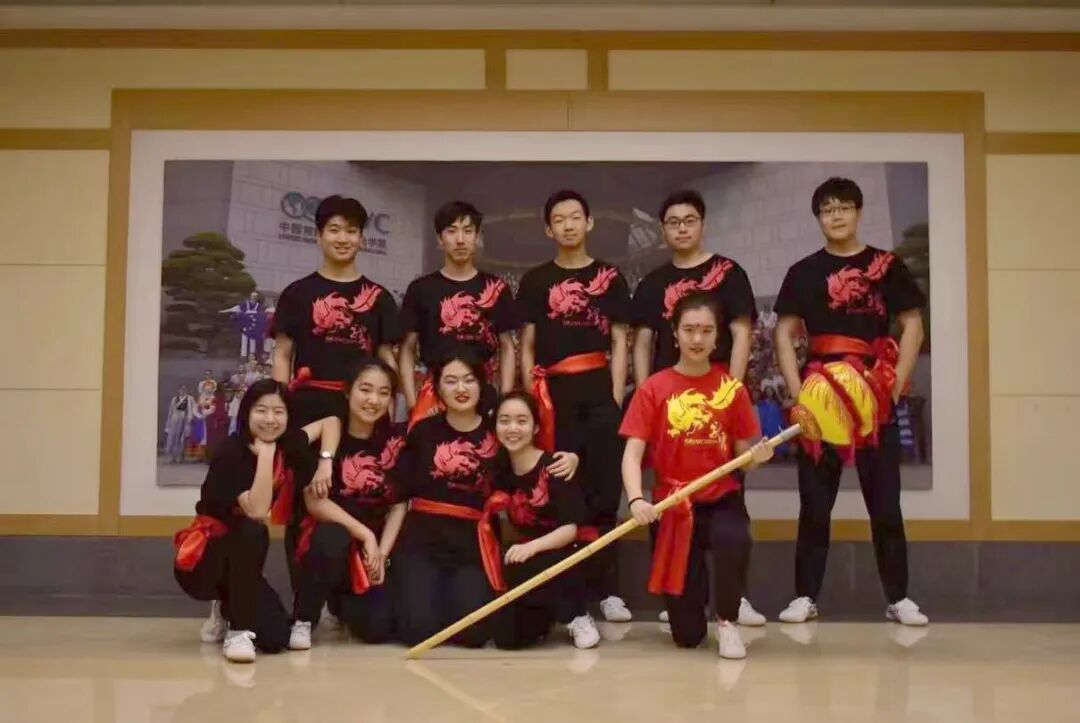
▲ The dragon dance team after their performance
at the 2019 Chinese Culture Evening (CCE)
He gathered feedback and realized people joined the team for different reasons. He assigned basic roles to those participating for fun and advanced goals to those aiming for mastery, so everyone could achieve something.
This approach later helped him lead a university band, balancing members who wanted to have fun with those pursuing professional-level performances. He resolved those conflicts smoothly.

▲ Multy Xu's band performing at the
University of Michigan, Ann Arbor
From a Shy Teen to a Research Scholar: The Gift of a UWC Education
Today, Multy engages with leading experts at academic conferences. In middle school, he was quite shy—raising his hand in class took courage. At UWC, he gradually gained confidence.
"At UWC, no one laughs at a 'stupid question.' In class and discussions, everyone speaks freely," he recalls. He learned to ask questions proactively, in class or one-on-one with teachers. This confidence carried into university, helping him approach professors for research opportunities and present himself calmly in PhD interviews. "My public speaking and communication skills were built at UWC," he says.
UWC's diverse environment also strengthened his cross-cultural adaptability. Today, he easily understands classmates and professors from around the world, regardless of their accents.
When talking about different cultures, he can always find common ground, thanks to the friendships he formed with peers from Nigeria and many other countries at UWC.
Robotics research, community projects, music, and dragon dance have shaped his unique perspective and skills. From the robotics lab at UWC to MIT's cutting-edge facilities, he has taken no shortcuts and commits fully to everything he does.
"UWC didn't just teach me knowledge," he says. "It taught me the courage to try, the resilience to face failure, and the ability to turn passion into a career."
-End-